
The 17th Annual Personalized Medicine Conference – Part V
- September 30, 2025
- 1:52 pm
With confirmed speakers from every sector of the health care system and media participation from representatives of outlets including The Washington Post, Fortune magazine, and Endpoints News, the 17th Annual Personalized Medicine Conference provided business executives, researchers, and patients with an opportunity to demonstrate how far personalized medicine has come — and how far it still has to go — two decades after the first sequencing of a human genome in 2003.
Summary
From Canvas and Wood to Personalized Medicine: Innovation, Barriers, and the Road Ahead
Table of Contents
- Introduction
- Opening Perspectives: From Flight to Genomics
- Michael Ibarra: Personalized Medicine at the Last Mile
- Noise, Chaos, and the “Shotgun” Approach
- Technology vs. Fax Machines: The Last-Mile Problem
- Patients Seeking Personalized Medicine
- Immunotherapy as a Beacon of Hope
- Personalized Medicine Beyond Oncology
- Policy and the Inflation Reduction Act
- The Pill Penalty and Post-Approval Research
- Case Reflection: Cholangiocarcinoma and Research Deprioritization
- Audience Q&A with Dr. Ibarra
- Brian Caveney: Diagnostics at the Tip of the Spear
- Scale and the Challenge of Misdiagnosis
- Multi-Analyte Testing and Reimbursement Barriers
- Price Visibility and Payer Complexity
- AI, Big Data, and Longitudinal Patient Histories
- Microbiome Promise and False Starts
- Alternative Sampling and Liquid Biopsies
- Supply Chains and Public–Private Partnerships
- Patients, Data, and Empowerment
- Neurodegenerative Diseases as the Next Frontier
- Conclusion
- Key Takeaways
Introduction
Day two of the Personalized Medicine Coalition (PMC) conference carried forward the theme of moving from promise to practice. Through opening remarks, keynote talks, and candid discussions, leaders highlighted the breathtaking pace of scientific progress—while also pointing out that implementation, regulation, and reimbursement remain the greatest barriers.
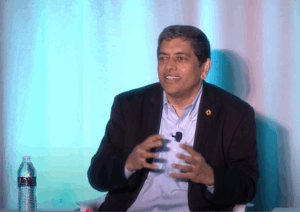
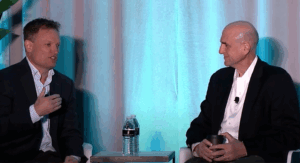
This article captures two major threads: Dr. Michael Ibarra’s reflections on personalized medicine in the emergency room and policy environment, and Dr. Brian Caveney’s deep dive into diagnostics, reimbursement, and innovation.
Opening Perspectives: From Flight to Genomics
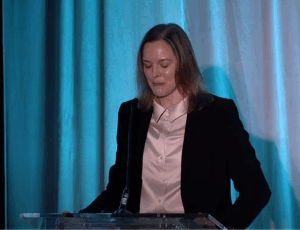
PMC Chair Lincoln Nadeald opened with a powerful analogy: in just 66 years, aviation advanced from wooden gliders to landing a man on the moon. Similarly, in just under seven decades, biomedicine has evolved from the discovery of DNA to sequencing genomes, developing targeted therapies, and engineering CAR-T cells.
His message: the pace of progress in personalized medicine is equally breathtaking—and we’ve only just begun.
Michael Ibarra: Personalized Medicine at the Last Mile
Noise, Chaos, and the “Shotgun” Approach
Dr. Ibarra, an emergency physician and CMO at PhRMA, contrasted the precision of personalized medicine with the chaos of the ER, where “shotgunning”—running broad protocols without deep personalization—remains common under pressure.
Technology vs. Fax Machines: The Last-Mile Problem
Despite advanced devices like remotely interrogated defibrillators, the final step of documentation still relies on fax machines. This mismatch exemplifies the “last-mile problem” where 21st-century medicine collides with 20th-century systems.
Patients Seeking Personalized Medicine
Patients often travel hours seeking second opinions. They may not fully understand the science, but they know they want care tailored to them.
Immunotherapy as a Beacon of Hope
Stories of Jimmy Carter’s metastatic melanoma treatment with pembrolizumab illustrated how immunotherapy transformed once-terminal diagnoses into manageable conditions. Yet, ER physicians must adapt quickly—recognizing that fever in a patient on immunotherapy may mean immune side effects, not infection.
Personalized Medicine Beyond Oncology
Diagnostics for respiratory infections, meningitis, UTIs, and sepsis are transforming emergency care. COVID-19 accelerated demand for rapid, accurate pathogen identification, reshaping expectations.
Policy and the Inflation Reduction Act
Dr. Ibarra emphasized that the Inflation Reduction Act (IRA), while lowering patient costs for insulin and capping Medicare out-of-pocket expenses, also risks disincentivizing innovation.
The Pill Penalty and Post-Approval Research
Key concerns:
- Small molecules (“pill penalty”) face earlier price regulation than biologics.
- Post-approval research—responsible for 50+ new indications for pembrolizumab—may decline due to compressed IRA timelines.
Case Reflection: Cholangiocarcinoma and Research Deprioritization
Dr. Ibarra shared the case of a patient with metastatic cholangiocarcinoma, where research into targeted FGFR2 therapies was recently deprioritized, explicitly citing IRA constraints. The lesson: policy directly shapes which patients will have future options.
Audience Q&A with Dr. Ibarra
Questions focused on:
- US vs EU models: Faster access in the US, but more negotiation in Europe.
- PBM reform: Reducing perverse incentives and aligning patient out-of-pocket costs with negotiated discounts.
- Small biotech risks: Venture funding is already shifting away from small molecules.
Brian Caveney: Diagnostics at the Tip of the Spear
Scale and the Challenge of Misdiagnosis
With 14 billion tests annually and 6,700 available assays, diagnostics drive most clinical decisions. Yet up to 20% of patients are misdiagnosed, highlighting the need for better integration.
Multi-Analyte Testing and Reimbursement Barriers
Combining multiple protein or biomarker signals offers rich insights, but reimbursement systems still evaluate tests one marker at a time, stifling adoption.
Price Visibility and Payer Complexity
Unlike buying a product at Walmart, diagnostics face opaque, payer-specific pricing. With 1,900 payers, lack of transparency distorts both investment and clinical decisions.
AI, Big Data, and Longitudinal Patient Histories
LabCorp’s database of 46 billion test results is enabling predictive models to identify patterns years before clinical diagnosis, supporting earlier interventions and trial recruitment.
Microbiome Promise and False Starts
The microbiome boom showed early promise but suffered from hype and premature expectations. Still, advances like fecal transplants for recurrent C. diff prove meaningful gains are possible.
Alternative Sampling and Liquid Biopsies
Emerging modalities—saliva, urine, breath, and especially liquid biopsies—promise less invasive and more scalable diagnostics compared to biopsies or spinal taps.
Supply Chains and Public–Private Partnerships
COVID-19 exposed vulnerabilities in single-source supply chains. Partnerships with the CDC and large labs are critical for resilience against future pandemics.
Patients, Data, and Empowerment
The information blocking rule now gives patients access to results in real time. While empowering, it also raises challenges around interpretation and clinician burden.
Neurodegenerative Diseases as the Next Frontier
As populations age, Alzheimer’s and Parkinson’s loom as the next great challenge. Concordance between blood biomarkers, CSF, and imaging will be critical to enabling earlier detection, subtyping, and targeted therapies.
Conclusion
The conference highlighted a dual reality: science is advancing at breakneck speed, but implementation, regulation, and reimbursement lag behind.
- For clinicians like Dr. Ibarra, personalized medicine must be reconciled with chaotic, real-world settings.
- For diagnostics leaders like Dr. Caveney, innovation depends on fair reimbursement, payer alignment, and integration into workflows.
The challenge ahead is not whether science can deliver—it already has—but whether our systems and policies will allow patients to fully benefit.
Key Takeaways
- Personalized medicine is real and transformative, but adoption depends on bridging the “last mile” between innovation and patient care.
- Policy choices shape innovation: IRA timelines threaten small-molecule investment and post-approval research.
- Diagnostics are undervalued: Despite being the “tip of the spear,” inconsistent reimbursement hinders innovation.
- AI and big data offer hope: Longitudinal test databases could predict disease years in advance.
- Equity and access remain challenges: Patients in rural areas or under complex payer systems face barriers.
- The next frontier is neurology: Blood-based biomarkers may soon transform detection and treatment of neurodegenerative disease.
Raw Transcript
[00:00] Welcome. We're ready to start day two. Glad you're all here. My name is Lincoln Nadeald. I'm CEO of Culmination Bio and chair of the
[00:20] Personalized Medicine Coalition Board. It's really a pleasure to be here with you this morning and to welcome you to day 2 of the conference. I just want to highlight a few things about the conference thus far. Some of you may know that we have had over 300 attendees at this year's conference and what I learned in our board meeting preceding the conference
[00:40] conference is that approximately a third, a little over a third, are presidents, CEOs, principals or managing directors of their respective institutions. And so this represents what might be one of our most distinguished list of attendees to date for the PMC conference.
[01:00] Thanks, Roger. Yesterday was an outstanding kickoff to the conference. In this morning, we're going to continue along that theme of taking personalized medicine from promise to practice. The consensus opinion as I walked around at the reception and talked to people was that this yesterday
[01:20] was filled with rich content, deep insights, and unparalleled expertise, and today promises more of the same as we look forward to talks from Dr. Michael Ibarra, chief medical officer of pharma, also an interview with Brian Cavani, who is CMO of LabCorp, and what promises to be a revealing inter-
[01:40] interview with our dear friend Kathy Justi who has been a luminary in this field for over two decades. We'll conclude the morning with an extraordinarily talented panel on multicancer early detection if we can just tolerate the moderator for that panel. And I just want to take a minute and specifically thank
[02:00] Chris Wells who's here in the front you've seen him walking around with his headset. Thanks to Chris, USA Today put out an educational piece this morning on personalized medicine and that was thanks to Chris. Not only that but all of the behind the scenes work that you don't necessarily see.
[02:20] that makes this conference flow so smoothly is thanks to Chris. If you see him, shake his hand and congratulate him.
[02:40] 15 year old daughter to Washington, D.C. to see the sites and learn some history. This was just a few weeks ago and as we traveled around to the various museums and memorials, we found ourselves in the aerospace museum and we moved from to display to display and I saw the look on her face.
[03:00] And finally as we finished she turned to me and said, Dad, do you mean to tell me that we went from canvas and wood gliders to landing a man on the moon in the space of 66 years. She was startling. She was stunned.
[03:20] politically. And she's right, it is startling. We went from wood and canvas glider on the beaches of the outer banks to propelled flights, then single passenger flights lasting an hour, then flying across the country, then flying across the ocean, then flying around the world, then flying hundreds of people at a
[03:40] time in passenger planes and ultimately leaving this world altogether to fly into space and land one of us on the moon. All of that in just under seven decades. So the perspective that I would add is to consider that from the time that Rosalind
[04:00] Franklin, James Watson and Francis Crick first discovered the double helix nature of DNA to then understanding the paired nature of DNA bases to uncovering individual genes, then identifying oncogenes and tumor suppressors, then sequencing the entire human genome, then
[04:20] sequencing disease genomes, including cancer genomes, and prescribing targeted therapies to take advantage of specific individual point mutations in someone's DNA and ultimately to the recent FDA approval of CAR T therapies where we're now taking cells out of patients genetically
[04:40] engineering them and putting them back into fight disease, that journey has also been just under seven decades. So it has been breathtaking and the best part is we've only just begun. So the progress in this field is exciting, it's equivalent to or perhaps surpassing landing a man's foot.
[05:00] on the moon and we're going to hear more about the ongoing progress this morning. So join me in welcoming the next set of speakers. I'm just going to introduce Michael Ibarra. Dr. Ibarra is vice president and chief medical officer at the Pharmaceutical Research and Manufacturers of America. Dr. Ibarra
[05:20] manages a team responsible for coalition building, stakeholder engagement, and strategic partnerships. He engages with organizations across the healthcare ecosystem, including patient advocacy, civil rights and multicultural organizations, as well as medical societies. He is an emergency physician and graduate of Stanford University.
[05:40] in Georgetown University School of Medicine. He is an assistant professor of emergency medicine at Georgetown University, where he continues to see patients in the emergency department, while also mentoring medical students, residents, and health policy fellows. He currently sits on the board of the Society for Women's Health Research, and he accoutes.
[06:00] Academy of Physicians in Clinical Research, and he is a delegate for the APCR in the American Medical Association House of Delegates. Please join me in welcoming Dr. Ibarra.
[06:20] Good morning, everyone. It's been 16 incredible hours of conference, so I want you to, without falling asleep, just close your eyes for a second and think about what comes to mind, what image comes into your head.
[06:40] when you hear personalized medicine. For me, it is accuracy, efficiency, precision, high tech. And so you might wonder what an emergency room physician is doing talking about personalized medicine. Because if you've ever been to an ER, you know that's not exactly what it's like.
[07:00] It's quite possibly the noisiest workplace that you can imagine. Funny story about noise, a couple of months ago, because it's so loud in the ER that I work at, the hospital hired a cellist to come play to calm us all down.
[07:20] They sat in the middle of the noisy emergency room. They played music to help the patients, to help the physicians be able to stay calm. And keep in mind, I work one shift a week. So I work at pharma four and a half to five days a week to seven days a week or more. But then I go to the ER on a Thursday or Friday evening and I see patients.
[07:40] I went to the shift, I saw and I heard the music and I thought, well, that's kind of cool, it's a little amusing, but I went back to my pharma world and I came back the next week and I said, where's the musician? And they said, well, it was a little too loud for them to be able to think and make the music that they wanted to make. So when you think about the ER,
[08:00] It's chaotic, it's noisy, it's rough, it's vague, and it involves a lot of caffeine. So you can imagine what it's like to incorporate everything we've been talking about here in this incredible setting. In fact, one term that we use in emergency medicine that I think is
[08:20] quite a juxtaposition to the discussion that we've been having over the last day and a half is the term shotgunning, which is not my favorite term in the world for a variety of reasons, but it's the exact opposite of personalized medicine and it's what we have to do when things get really really crazy. When it's so busy, there's one doctor taking care of you know 30
[08:40] to 50 patients that are waiting in the waiting room where we just do protocols. We start the patient's work up without even sometimes having seen them for very, very long. We do algorithmic medicine in order to move things along. It's not my favorite part of being an emergency physician or being a doctor, but it's sometimes what we have to do. And it's not just the normal.
[09:00] noise and the volume that can make the ER an impersonal experience, there are a lot of barriers to the adoption of personalized medicine that occur in the last mile of healthcare distribution. So when I say last mile, I mean the doctor and the patient, that interaction that occurs where we want to get the people the best treatment that they absolutely can. So I'm going to tell you a story.
[09:20] story that involves an incredibly fancy and high tech machine. Does anybody know what the technology is on the left hand side of the screen? Anyone? It's a fax machine. It's the glue that holds the US healthcare system together.
[09:40] I recently took care of a patient that actually did have incredible technology and personalized medicine. They had on their right an AICD or an implanted defibrillator. So I take care of a lot of patients that have these, but patients that have them typically have some sort of cardiac condition that puts them at higher risk of an out-of-hospital cardiac arrest.
[10:00] So of course you use the external defibrillators. If somebody has a cardiac arrest in public, what we saw with DeMar Hamlin was an incredible example of this. But these are implanted in individuals who are at high risk of out-of-hospital cardiac arrest and they need this to potentially save their life. So I see them in the emergency room fairly often. It's not uncommon for somebody to come in when they're.
[10:20] defibrillator has fired. So it's our job as the ER docs to understand why did that happen? Did that happen because they were in danger, they experienced that life threatening rhythm, or was it a misfire? And honestly, both happened and we have to figure it out. So when I first started practicing emergency medicine, I did residency in the
[10:40] late 2000s, so 2008 to 2011. We would interrogate pacemakers by using fancy devices like pagers. We would call the rep. We would page them. They would come into the hospital. They would use their proprietary machines to determine what the rhythm was. They would print it out. They would tell us. We would sit with the patient. We'd make a decision as to what the most appropriate
[11:00] three next steps would be. So fast forward and of course over the last 15 years, things have gotten better in a variety of ways. I got my first iPhone when I was an intern in 2008. And since then, iPhone technology, I couldn't live without it. And of course, medical devices have incorporated the same technology to make life better for patients and make life better for physicians.
[11:20] So I saw a patient a few weeks ago. I phoned the rep to interrogate the pacemaker. And it was incredible because they were able to interrogate the device totally remotely. They didn't have to come into the hospital. They could access the device from home. All you need is an internet connection. My IT department can access my computer being 3,000 miles away.
[11:40] We could do the same here. I was sitting with the patient, the rep was at home interrogating the pacemaker wirelessly. It was incredible. So the most important part of the healthcare journey though is the documentation. We saw the patient, we interrogated the pacemaker, we determined it was a misfire. We changed the settings, we were able to make it a little less sensitive so that it didn't misfire again.
[12:00] But how am I going to document this? I didn't have any of this information. This was the rep sitting at home. This is where the fax comes in. They couldn't email it to me because it wasn't HIPAA compliant. They faxed it to the hospital. We printed out a label. We put it on the piece of paper. We scanned that piece of paper.
[12:20] into the chart, we upload it into the right patients chart. I finished the documentation and that to me is the dichotomy of the world we live in. You have personalized and highly precise 21st century medicine that meets 1980s technology to get that last mile and get the patient over the finish line. So when I sit in the emergency room, amidst all the noise, feeling these incontinence,
[12:40] congruities, I see the promise and then I also see the gaps and where we need to fill those gaps, get patients what they need and I see it every single day, I see it every shift that I work in some way, shape or form. There's patients that drive five hours from rural West Virginia in order to come to the place that I work in DC, an academic medical center where they want a second opinion.
[13:00] opinion for their cancer diagnosis. And what am I going to provide is that emergency physician? I'm happy to connect them to our cancer team. I'm happy to make that connection and met him if they need to. It's such a humbling thing though when patients come and they want that personalized medicine. They don't know what it means to have personalized medicine, but they know what they want. They know that they want that. So being in the trend
[13:20] It shows you sometimes the worst parts of the healthcare system, but it also shows you the hope and what we can strive to and how we can give the best. I want to turn to a famous family, lots of famous families in the news today. Super heartbreaking to read about Sandra Day O'Connor, who actually gave the commencement address at my college graduation almost 20 years ago. But this famous family...
[13:40] has been top of mind for me for the last almost 10, 15 years. The Carter family is top of mind likely for you as well because of the passing of Rosalind Carter just last week. But for me, it's even more sort of thought-provoking. I'm a child of the Reagan era, but Jimmy Carter has made a big impact on my life.
[14:00] Many of you probably remember that the former president announced in 2015 that he had metastatic melanoma. The tumor had gone from his skin to his liver to his brain, but in spite of that, he was declared cancer-free in 2015 as a result of a treatment with a drug called Nivas.
[14:20] called Pembrolizumab. That's a class of treatment, that drug belongs to a class of treatments that's completely taken off and changed the standard of care for patients. Even so much that today, patients that express the tumor marker, PD-01, can benefit from the treatment regardless of where the tumor started, whether it was melanoma or any number of
[14:40] other types of cancers. There have been 50 indications for this treatment since it came to market. Since Jimmy Carter was treated, 50. That means 50 studies were done to show a benefit in patients and many more were done that didn't show benefits in other forms of cancer. These types of studies are what we need to incentivize. These types of studies
[15:00] are what's at risk because of the policy environment that we're working in DC with things like the Inflation Reduction Act. Even still, in my relatively brief career in medicine, metastatic melanoma is one of those diseases where it's been a true beacon of hope for me. There are a number of patients that have come through my door that I have seen their lives completely changed because of this.
[15:20] this?
[15:40] and a fever. Now as someone that studied in medical school and knew what I knew about cancer and melanoma, I knew, I knew, I thought I knew that this patient had a very low chance of survival and the fever meant they could have neutropenic fever. That's where my head went. When you're in your late 20s and you see somebody in the early 30s that's potentially dying from a cancer
[16:00] cancer, I walked into the room, I saw their parents, I saw their spouse, it impacted me incredibly because this was somebody that could be me. And I walked out of the room and in the chaos of the emergency department, I made a call to that patient's oncologist and they told me, you got it all wrong. This patient's on a clinical trial, a combination immunotherapy.
[16:20] There's a good chance that they're going to do well. Their tumor is responding, and you're thinking of the wrong things. I was thinking about neutropenic fever. That wasn't the right thing to think about in a patient on immunotherapy coming to the ER with a fever. So he taught me a lot. Obviously I needed to read up on this in the early 2010s, which I did. I studied a lot to understand how to take
[16:40] care of patients in the emergency department receiving immunotherapy and experiencing side effects. It was not the traditional workup, but he really opened my eyes to understanding what the next 10 and now 15 years could be taking care of patients with cancer receiving immunotherapy. And many more patients have benefited from these treatments, but of course, too many gaps remain.
[17:00] So as an emergency physician, I'm really relying on technology, personalized medicine to close all of the gaps that we experience. And that's because cancer is a huge part of the healthcare that I provide. Working in an academic medical center, attached to a cancer center, I would say upwards of 50% of the patients that come through my doors that
[17:20] taking care of or impacted by cancer in some way. So it's a huge part of my life even though I'm not an oncologist. But the other big part of my life is all the routine stuff, the fun stuff that you see on TV, the stuff that you might experience, the stuff that your kids might experience. And there's a lot that we can do to make the mundane aspects of emergency care more personalized for patients.
[17:40] especially in the thriving thoroughfare of a crazy emergency department. So increasingly we're seeing personalized medicine impacting our understanding of a variety of emergency medical conditions. So things like strokes, things like thromboembolism, acute coronary syndrome, respiratory infections, and sepsis. Now as you all are probably aware,
[18:00] respiratory infections hold a very near and dear place in my heart. Having worked through the pandemic, taking care of far too many patients impacted by COVID-19, the way we think about patients with respiratory infections is completely different than we did even three or four years ago. We went from telling patients they had viral infections to now wanting to understand exactly
[18:20] what viral infection they have and it's probably very obvious to you why that is. Knowing whether someone has COVID is very different than saying you probably have a flu-like illness. So the way that I trained is incredibly different and focus on diagnostic accuracy and using new technology to better diagnose and more quickly diagnose infectious disease is really really critical to support.
[18:40] so much of the care that we provide. And it's not just respiratory illnesses, it's infections like urinary tract infections, STDs, even more serious illnesses like meningitis. How can we get to the diagnosis more quickly using biofire assays, more rapid diagnostics, and be able to tell the patients what they have, be able to treat them appropriately with antibiotics.
[19:00] antivirals. I want to tell you a little bit about the patient that you see in the middle here, obviously de-identified. This is an example of where knowing the diagnosis was so so critical to providing the right care for that patient. As an emergency physician I do a much different job caring for kids than I did before I had kids. There's nothing that opens your eyes to the
[19:20] of parenting like having kids of your own. I have two, they're 9 and 11. And they of course were in day care because I worked two jobs and my wife worked as well. So they were sick all the time just like the kid in the middle here. But before COVID, I likely would have seen a child that had a cough, runny nose, and fever and said your child has a virus and they are going to be okay.
[19:40] in a couple of days. But getting this assay was as a result of COVID-19, I needed to know whether this was COVID or non-COVID. Of course it turned out, and this is an amazing case, it wasn't just COVID, it was also COVID, flu, non-COVID coronavirus, and adenovirus all at the same time. So the counseling and the care that I provided for that patient as a result of getting a test that I probably would.
[20:00] wouldn't have ordered four or five years ago pre-pandemic was very, very different type of care. And so that's why getting the diagnosis right, coming to it quickly, having accurate diagnostics is so, so critical. Beyond infectious diseases like respiratory infections, UTIs, STDs, meningitis, we are doing code strokes, code hearts.
[20:20] code spinal cord compressions, all terms that we use that are focused on timely and accurate diagnosis of medical emergencies and quickly syncing up targeted treatment so we can get patients the treatments they need as quickly as possible. So there isn't that barrier in the last mile. So when I see patients in the emergency department I'm focused on doing
[20:40] what I can to help them, to help either save their life or help them get back being healthy at home whenever possible, trying to avoid hospitalizations. And of course, so much of that involves prescriptions. I'm prescribing medicines for so many patients, making sure it's the right prescription at the right time. And yet when it comes to prescription drugs, the things that are talked about in
[21:00] Washington are very different than the questions that get asked of me clinically. The patients want to know is this drug going to work and what's it going to cost me when I go to the pharmacy counter? And yet the only questions that are really talked about in Washington are very, very different. Policies like the Inflation Reduction Act, the Smart Prices Act are less focused on answering the question of what is the patient going to pay.
[21:20] when they go to the pharmacy counter and really focused on what is the government going to pay or in the case of the Inflation Reduction Act what's Medicare going to pay for this product. And we're really confusing those things. We're confusing those things in the policy discussion and it's not helping me on a daily basis be able to tell my patients what they're going to pay. Now that said, the IRA is a huge
[21:40] piece of legislation, it's what we at pharma focus on from morning, noon, and night. So it's top of mind for me. There are things in there that we liked. There's a $2,000 out-of-pocket cap in Medicare for seniors. There's a $35 insulin copay cap. But then there are a variety of other problematic proposals, and the one that I'm talking about you probably know.
[22:00] is this term negotiation. And Medicare negotiation is really sort of an umbrella term that captures a price-setting regime that's gonna have a huge impact on companies. And in fact, it already is having an impact on companies. The biggest thing to know about the Medicare negotiation regime is that negotiation was occurring before the IRA passed.
[22:20] negotiation is still going to occur after the IRA passed. The negotiation was between health insurance companies and pharmaceutical manufacturers. And so as I've told my family, it's not that negotiation wasn't occurring, it's just different than what you might have imagined. So it's like if you were going to buy a car, you would go to the car dealership, you would negotiate with a car dealer. But now,
[22:40] In the case of Medicare negotiation, you have to go to the DMV first, negotiate with the DMV, and then go to the car dealer and negotiate with them. And there's not a whole lot of connectivity between the two. That car dealer can put in place things like prior authorization, utilization management. They determine the out-of-pocket costs. There's all sorts of issues that are going to arise because of this connectivity. And it's not really a negotiation process.
[23:00] process for us in the industry if there's a 1,900% excise tax that's on the company if you don't accept the price that the government sets. So we're making progress. We're making progress in the emergency department. We're making progress in the lab. But the question is, how are things going to change? Everyone that's looked at this
[23:20] including the Congressional Budget Office has determined that things are going to change. There's going to be less or different innovation as a result of the IRA. The question is how much? And one of the themes that has come out in all of these panel discussions is that there is already a shift. I think everyone, every panel has said there is going to be a shift. We're already seeing it as a result of the information.
[23:40] These are some headlines that grabbed my attention. There are two big areas of concern that we have in companies already starting to make shifts in their portfolios. The first is that under the IRA, medicines that come in pill or capsule form, also known as small molecule medicines, I know everyone in the room knows that, will be priced at early $20.
[24:00] than large molecules or biologics. And we call this the pill penalty. And that's because it's really sort of shifting investment away from small molecules and potentially towards biologics, which could be problematic for patients. Of course, patients that I'm caring for in the emergency department very often need a small molecule prescription to be able to go home.
[24:20] think about some of the early medicine selected for price setting and how much they've changed the practice of emergency medicine for me in just the last even five years. When I first was training, I mean every patient that had a PE got admitted to the hospital, they got started on a heparin drip and they stayed for a week and now we're sending patients home and that practice shift really didn't happen that
[24:40] long ago and these are medicines that are already selected for price setting as a result of the IRA when medical practice hasn't changed really all that rapidly. The second concern is the reduction in what we call post-approval research. The fact that the medicine I mentioned earlier that Jimmy Carter benefited from is that
[25:00] 50 new indications over the decade that followed since his diagnosis is really, really incredible. And we want to see more of that. Patients and physicians want to know, is this drug going to work in me? And in order to have an answer to that question, there has to be a company incentivized to study that question and ask and answer it. And with the IRA and the timelines imposed by the IRA.
[25:20] They are not going to be those incentives to study for very long, particularly for the hard questions that take 5, 10, sometimes even longer, 15 years to answer. So these are huge shifts that are making changes, making waves, and changes are already underway. There are other policies that are under
[25:40] undermining this new era of medicine too. The building blocks that have given us the incredible science that folks like Jimmy Carter have benefited from are being undermined both on the reimbursement side and on the regulatory side. We're seeing price controls imposed under the Inflation Reduction Act, in the states, prescription drug affordability boards.
[26:00] mentioned the pill penalty, but there's attention there because we want to get to the moon, but are we going to have the fuel to light the rocket ship to get us there? On the regulatory side, we're also seeing policies that are concerning to us. The administration's taken steps to limit the availability of medicines granted accelerated approval.
[26:20] obvious they've all lived through the last few years of drama around Alzheimer's treatments. And while we're starting to see progress, the administration has sort of backed away from some of the initial policies. It's concerning because the first treatment isn't always the last treatment, right? It's not about that first step, it's about all the steps that follow. And in addition, the support for
[26:40] things like the TRIPS waiver, which undermines intellectual property for COVID-19 vaccines and therapeutics, is hugely problematic and we believe it puts the US innovative ecosystem at risk. And it's getting so difficult that in sort of an unprecedented move, the leaders of research and development for our members recently sent a letter to the White House and to the
[27:00] ahead of the cancer moonshot, putting this all together, trying to make it crystal clear for them that the reimbursement environment, the regulatory environment is gonna make it really hard for them to continue to prioritize investments in the things that they care about, like the cancer moonshot. So we sent a letter just a couple of weeks ago to the White House.
[27:20] If you're interested in reading it, it's at pharma.org slash moonshot. I think it's worth taking a look at and I do believe it's unprecedented because it's scientists, it's our leading, leading heads of R&D from across the industry that all came together jointly and agreed with this tension that exists. So I want to go back to my experience.
[27:40] in the emergency department and something that happened to me recently that really made it crystal clear for why this all matters and why it's not theoretical. A few weeks ago, I was in the ER taking care of a patient with fever and right upper quadrant pain and that individual had metastatic cholangiocarcinoma. That's a rare form of cancer.
[28:00] cancer of the bile ducts in the liver. That cancer diagnosis, along with pancreatic cancer, I don't think of in the same way as I do now metastatic melanoma, where there's a chance with new therapies and immunotherapies that that patient could live, these are cancers that I still think of as really, really concerning. That's my experience, at least up to now.
[28:20] to this point. That individual needed to be admitted to the hospital because of the fever. They likely had a condition called ascending cholangitis. And I always remember the family. Every patient I've interacted with, particularly with cancer, I always remember the family. This patient had a dutiful wife at the bedside who had a spiral-bound notebook and a pen and was taking notes. Every word that I said was being written.
[28:40] down. They were almost like a scribe for the patient, which I loved because it just sort of showed how much they cared and how much they wanted to get the answers. And in this case I asked if they were on a clinical trial and unfortunately they weren't and I didn't have that same experience that I had many years ago with metastatic melanoma where the oncologist
[29:00] assured me they were going to be okay. It was more questionable in this situation. And honestly, the next day, I read an article that's linked right here about a company that deprioritized research of a targeted therapy against cholangiocarcinoma for patients with the FGFR2 mutation.
[29:20] I couldn't believe that this happened in the same sort of week of seeing a patient with this disease, but they cited the IRA as the reason that they were deprioritizing that disease area. They were going to prioritize research into a larger patient population because the IRA dictates the clock. The clock starts with your first indication.
[29:40] So they weren't necessarily just following the science. They were also thinking about the implications of this artificial timeline that was created legislatively. So thinking back to the example of Jimmy Carter, what we did for metastatic melanoma, we can do for diseases like pancreatic cancer, like metastatic cholangiocarcinoma.
[30:00] have to get the right treatment to the right patient at the right time, but we have to make sure the policies are in place to be able to incentivize those things. And that's not going to happen unless we live in a world that puts incentives in reimbursement, incentives in regulation, to make sure that companies are able to chase those incentives and not turn away from roadblocks. So with that, I really appreciate
[30:20] the opportunity to be here, to share my experience, to share the dichotomy of the world of being in the chaos of the emergency department, between the hope and promise of personalized medicine. And with that, I will pause and I'm happy to take any questions. Thank you.
[30:40] Good morning, John Fox. Thanks for your comments. I'm curious, we practice cancer exceptionalism in the United States and say cancer is a different beast and we provide different benefits. And yet we're practicing some American exceptionalism here because in every European country the price is negotiated
[31:00] before the drug even is allowed on market. Here we're giving 13 years or 11 years prior to any negotiation. So, square that, reconcile that with me. Why this is a problem in the United States 13 years after the launch of a drug. And yet in the EU, they've learned to deal with negotiations up front. Yeah, I appreciate that. That's definitely.
[31:20] something that we have to grapple with is the sort of value that is placed on innovation here versus in other countries. And what we see in other countries and what our members tell us is that those other countries are sort of willing to delay access to medicines in a way that we just haven't been willing to accept here.
[31:40] We prioritize getting treatments to patients as quickly as possible, whereas in other countries we see delay, particularly for innovative medicines in the cancer space, where they're just willing to wait more time and have those tough negotiations. And we believe that the patients there are harmed by that ultimately.
[32:00] is not a ton of data, but there is some data that shows if you're diagnosed with cancer, you do want to be here because of the earlier access to certain therapies, that there tends to be better outcomes for certain types of cancer. And I realize every healthcare system is incredibly different. And there are some things good about our healthcare system, there are some things bad. I hope I kind of shared with you.
[32:20] some of those, the reliance on fax machine being one of them. But I think you have to look at it and it's a totality and the balance that we have here, the US really driving innovation and patients here getting access to medicines earlier than in other countries is something that we value and something that we prioritize. Thank you. Thanks. I want to start by saying
[32:40] that I'm definitely on your side, but having spent the last 25 years in the diagnostic industry, we can only dream of the issues you're having on pricing right now. And we're not in the trenches with you. I do understand pricing and the challenges and the middlemen. I guess looking at it...
[33:00] it a little bit on the outside. What we've done to this point isn't necessarily working on pricing because it's complex. It's ridiculously complex. The current administration is taking a shot at it with the IRA. What practical steps can be taken because what it
[33:20] feels like is there's a camp on one side, there's a camp on the other side, there's zero middle ground and that's where the country is on a lot of issues and I'm just wondering what farm is it posing that could actually be done. 100%, yeah no absolutely. I mean yeah don't be mistaken that I think the system is perfect in any way. There absolutely needs to be things done to get at the complexity of the system.
[33:40] And one of the things that I think about is like before the IRA passed, you have this incredibly messy, complex system where there's a variety of different payers and a variety of different requirements on reimbursement. So in our space, we think a lot about things like 340B, the Medicaid Drug Discount Program, all of the liabilities company has in Medicare Part D, the discounts that are in
[34:00] negotiated with PBMs, and this didn't really simplify anything. What it did was it added another complexity that twists things up in more knots. And so from our standpoint, the thing that we're trying to prioritize and encourage in the short to intermediate term is addressing that fourth one I mentioned, the PBM issue, the Pharmacy Benefit Manager Reforms.
[34:20] Now prescription drugs are aggressively negotiated in the US, not by the government, but by pharmacy benefit managers that are owned by health insurance companies. You probably saw this week that Cigna and Humana are trying to merge in large part because of the pharmacy benefit manager business. And so these PBMs negotiate steep discounts on prescription drugs.
[34:40] Across all drugs in the US, the discount is about 50%. In fact, intermediaries keep a little more than half of every dollar that's spent on prescription drugs, somewhat other than the manufacturer. But unfortunately, patients often don't benefit from that negotiation. When they go to the pharmacy counter, they're paying.
[35:00] out of pocket costs based on the list price and certainly an uninsured patient will pay the list price of the medicine as well. So getting at some of the perverse incentives that exist in the PBM space we think is a really important next step. And there is live legislation that's being talked about that could occur. There's sort of three things that are being discussed.
[35:20] discussed, or two things that are being discussed, delinking the way that PBMs make money off of prescription medicine. So in the current world, they get a percentage cut off of every medicine that they dispense. And what that tends to lead to is favoring higher-priced medicines over lower-cost medicines. So if you break the link, then you might start
[35:40] to see some downward pressure. And then the second is if there's a rebate negotiated, so you know say there's a drug that has a 70% discount, the patient shouldn't pay out-of-pocket costs based on the full list price, they should pay out-of-pocket costs based on the negotiated rate. So those are things that are sort of near-term fixes that we could see.
[36:00] And actually, Congress is considering them, so we think that would go a long way to starting to kind of unwind some of the messiness in our space. Good morning. Thank you very much. Julie Ames with Biocom California. So yesterday Scott Gottlieb was here. And I wanted to know what you would say to his statement of yesterday, which basically made it sound like
[36:20] Like, you know, large pharma is really going to find some workarounds about this, that their lawsuits and their complaints was just nothing but performative activism, and they're smart enough and they'll work around it. I disagree. Part A, I'd love to know how you can help us get that message to folks like him. And secondly,
[36:40] Here we are in California, home of Nobel laureates and thousands of early stage companies in the biotechnology and biopharma space. The trickle-down effect of the IRA is real to those small, struggling companies greatly at risk and they don't have the deep pockets of big pharma. What can we say?
[37:00] say to the smaller biotechs earlier upstream so they understand that they are at risk with IRA.
[37:20] comments and I think that's the point that we really need to get out there and I think that actually links to your second question which is that small companies are making decisions now and actually I heard multiple panelists say that VC investment is already changing that programs they looked at in the small molecule space that they would have gone with pre IRA they're not
[37:40] going with now. That I think is the message that's sort of flying under the radar. Small companies and venture investment. I think Scott did say that. And I think that's the point that we really need to get across particularly to legislators because you're right. And you know I'm not a lobbyist or a politician but what I do observe is what you mentioned which is that a lot of biotech.
[38:00] and a lot of this academic investment tends to happen in areas that are represented by more sort of democratic constituencies, and they're the ones that seem to think there's not a problem here. So I think getting those examples out and sharing them with legislators is really important. And then I think we need to just have a really clear and clear discussion.
[38:20] message when it comes to IRA, which is that the law passed and it's already having an impact. And here's some examples why. And I go back to that patient that I saw with calangiocarcinoma and just think, you know, like, why can't we do both? Why can't we study in both patient populations? That's a small company and so they can't with this IRA
[38:40] timeline sort of looming under them and that's going to have a real impact for patients impacted by that disease. Thank you. Thank you. Any other questions? Well thank you again for having me and letting me discuss a non-controversial topic.
[39:00] appreciate the invitation. Thank you all.
[39:20] Coalition and I have the honor of introducing the moderator for our next session which will be a keynote address with Brian Cavani, Chief Medical Officer of LabCorp. So Clifton Leaf is both an accomplished journalist and one of this nation's
[39:40] leading voices in driving improvements that will make a difference for patient care. Clifton is former editor-in-chief of Fortune magazine, former guest editor at the New York Times, and has also held positions as executive editor at publications including the Wall Street Journal.
[40:00] Smart Money magazine. He has won more awards for his efforts to improve patient care than I could I could list here but we're very grateful to have in and appreciate his perspective both as a journalist and as a patient advocate who's so passionate about making a difference that we all want to make here
[40:20] today. So thank you, Clifton, and welcome. Thank you, Chris. Well, let's just bring up Brian Cavity, who is chief medical officer and chief scientific officer of Lab Corporation of America, one of the largest providers of
[40:40] laboratory testing, who also has a law degree, a medical degree, and MPH, and my first question is why did you ever leave school? It's like such a safer space than the rest of us here.
[41:00] This is a great opportunity to talk about the tip of the spear, diagnostic testing. I read that the CDC says there are 14 billion laboratory tests per year in the United States alone. You laboratory group offered a menu of 6,700.
[41:20] tests, which by the way is more than the combined movies and TVs on Netflix. Just so you know. That is an extraordinary amount. Anyone's ever flipping? I didn't know we were competing with them. Well if you're flipping through Netflix and you're trying to think what can I watch and you go through that menu, imagine this is significantly more medical tests you can order.
[41:40] We've had some sort of discouraging remarks about the innovation space. And I'm going to add to that because you, as the tip of the spear, a huge number of medical decisions are based on your laboratory tests. And yet, your margins stink.
[42:00] It's very, very difficult to innovate. We love our biopharma partners. We would love to have their margins as well. Exactly, exactly. We do not in the diagnostics. So will all the pressures, the regulatory pressures now, the pressure of laboratory-derived tests that you now face, and these challenging margins
[42:20] and the fact that you live in an environment where payers can sort of decide one way or another whether they're going to pay for your test or not, and you've got to deal with those results. How do you innovate?
[42:40] But I was lucky enough to practice medicine for about 10 years full time before going into other venues, including being at a payer for a while. And I can say, any doctor, you can't go into your clinic every day without knowing that you're going to have a laboratory available to give you the answers that you need to make decisions for your patients. Now, the issue is
[43:00] are one of the issues is the diagnosis is up front. You want to get a good, precise, accurate diagnosis, but then as soon as you get the diagnosis, then you're onto what matters to the patient and the treating physician, right? What am I going to do about it? A surgery, a particular medication, etc. And so we've got that one point in time up front when the patient comes in to help the doctor make an accurate
[43:20] diagnosis. The problem is even though we have all of these different lab tests, we have an unlimited amount of information, some reports still suggest that up to 20% of patients are incorrectly diagnosed or misdiagnosed for complicated diseases up front. So anything we can do to innovate in the diagnostic space, not just laboratory medicine, but radiology and
[43:40] and all of the other modalities up front, to help a doctor or other clinician make a better diagnosis up front is going to create better outcomes down the road. So a lot more effort needs to go into that space. So when you talk about the classic case where you're looking at a protein, for example, in the blood and you're determining, is this a marker of disease?
[44:00] disease progression or at what level should it be. You talked about the opportunity to look at multiple proteins and see them in complex with one another and look at how that may inform decision making. That's an extraordinary promise. Talk a little bit about the challenges of that.
[44:20] but also the opportunity. Sure. Well, you know, for 100 years, a pathologist or a laboratory scientist has either been getting a piece of tissue and looking inside a microscope to see what's changed with the cells, or we've been looking at one particular biomarker in blood, urine, whatever it is, and that can be incredibly helpful for a doctor taking care of her.
[44:40] patient, making a decision based on the number that we send back to them. But I think more and more, with the computing power that we have, with the information that we have available, you can learn a lot more than just looking one biomarker at a time. We're doing a variety of things, whether it be in complex autoimmune diseases, neurologic diseases, others, where you
[45:00] learn a lot more from looking at the complex of different proteins together to predict disease progression, likelihood of radiographic progression of rheumatoid arthritis as an example, other things like that. Of course the challenge is we don't yet have the coding structure, the reimbursement, methodologies,
[45:20] place to account for the math of looking at individual biomarkers, because sometimes not every individual biomarker may be independently clinically significant, but it's the combination of them together and how they're acting biologically in your body that can give the treating physician more information. We need to get a lot better at figuring out how to look at
[45:40] those multi-analyte algorithmic analysis type situations and get better coding structures. In terms of the reimbursement structure, that really is fundamental to your business. You have talked about the sort of wild west of payers out there where there's no single
[46:00] threshold that determines whether a payer will pay for a test or not. So you have to deal with that every single time you have a test for the thousands of payers you work with. You work with something like 1,900 payers? We do. Helmi from Garden talked about this a bit yesterday as well. It's very complex because not only does every
[46:20] commercial plan have different lines of business with different ways of doing it, but even the different MACs within Medicare are not always consistent either in their coverage or in the unit price. So it causes a distortion in where labs even want to be physically located because of the Medicare MAC that they're submitting their claims to.
[46:40] evidentiary threshold that we can all tell our R and D teams here's the evidence you need to generate to demonstrate clinical utility that we can then take to the public and private payers and have some reasonable likelihood of getting a fair and adequate reimbursement for the work that we're putting into it. So that does stifle innovation or at least distort
[47:00] mechanism by which the funding takes place. Mike's been involved in so many companies that have been trying to crack this nut for years. We just need better visibility, better certainty around the framework of what's going to be expected. If we had more health plan medical directors like Mike Sherman yesterday who was a pioneer in this place, then I think we would have
[47:20] a lot more investment in R&D and diagnostics and we'd be a better partner to pharmaceutical companies to be able to develop more therapy selection and better diagnostic methodologies to get patients on the right drug. It's interesting, this idea of visibility. I know you have obviously a complex
[47:40] process and infrastructure of payment here, but you know I can go into any Walmart in the country and I can pick out a product and I'll have a price tag on it. So Walmart has this extraordinary price visibility. They know exactly what their inventory is, what someone's going to pay for it, and they get that money right there.
[48:00] How do you actually work with a business? How do you actually run a business where you have very little price visibility? Yeah. I guess reimbursement reimbursement. Yeah, a couple of things to that. Even so, in an individual lab test that we do, we may have a different negotiated allowable amount with every individual health plan based on some.
[48:20] some percentage of Medicare or some other kind of thing like that. Another difference which is problematic if we talk about sort of the way the FDA is considering regulating laboratory developed tests is it's more of a service than it is a product that you can follow good manufacturing practices for whether it's a pill or a widget that you would get at Walmart. It's very
[48:40] different in laboratory medicine, particularly for the more complex assays that we're bringing to market. So, this is a solutions-based conversation, so I'm pleased to say. So, you have some thoughts, though. If we were just to take, for example, the publicly paid people who
[49:00] who are Medicare or any of the government programmers. If we were to harmonize some of those rules, we might have a huge benefit from that. I think so. Probably at least half of Americans are on some government-sponsored, taxpayer-funded insurance scheme of some sort, whether it be Medicare, all of the Medicaid plans, VA,
[49:20] care, FEHBP, which 9 million federal employees and their dependents are on. If we even just had some more visibility into the coverage policies and reimbursement policies there, if it was pegged to Medicare or something like that, then I think that may stimulate some more willingness to invest more R&D dollars, take a little bit more
[49:40] risk in the diagnostics industry. So we could have more visibility to do it. How would that be to just harmonize those rules? I think our friends that are more politically connected know how difficult it is to get things done in Washington, D.C. So Michael Barr, he's going to help you do this. Farmers can partner with you on this. So we have we're going to have a handshake deal afterwards.
[50:00] This did come up a couple of times yesterday. Jay Wogamoth and others mentioned that the diagnostics industry is so small as a relative percentage of the total healthcare dollar, call it maybe 3% of the healthcare system. So it's hard for us independently to get a seat at the table and be paid for the value we believe we bring to treating physicians into the industry.
[50:20] think more and more as we work across the industry, as we work with pharmaceutical companies and biotech companies to identify the right patients for their therapies, you know, truly getting to personalized medicine, then I think we're going to be a better partner, maybe get a little bit more opportunity to get innovation dollars going into diagnostics so we can improve the system.
[50:40] At the same time, you are innovating. You've got a group in Boston that's looking at AI and looking at the longitudinal history of a patient, an individual patient, so that you're finding potential signs, red flags early on in that patient's journey. We're lucky enough that we've been doing this for a long time.
[51:00] time, we have something like 46 billion lab test results in our database and we've just not even begun to tap the insights that are in there. But we've done some really fun projects as we discussed with some biotech and pharma companies trying to identify the natural history of disease. So once you eventually diagnose somebody with a particular disease if there's not a pathognomonic test for that,
[51:20] then we might look at every lab test that we have in our database for 8, 9, 10 years before that final diagnosis, and then look for patterns of what you might think are not associated biomarkers to see what's changing over time that might give some element or prediction of the risk of the eventual diagnosis.
[51:40] might enable us to help enroll patients in clinical trials a little bit quicker or get them in a certain pathway where there's an intervention that might stem the type of disease and intervene. Give us a couple of examples of that. Many of the rare diseases, of course, are genetic mutations. Most of the cancer subtype
[52:00] types are just simply a genetic mutation. So any type of a genetic test earlier on in someone's life, often there's a one per lifetime policy for payment for things for the wet lab component, the commodity part of doing a genetic test. But then we've got that raw sequence data available, and then as the variant data
[52:20] banks get richer as we learn more about what particular genetic mutations might mean, there's no current mechanism to sort of retest that sequence data and then identify new insights of potentially a pathogenic variant that has now been discovered that wasn't known. It was a VUS or a variant of unknown significance before. There may be an opportunity to learn about genetic mutation.
[52:40] opportunity to sort of unearth those. There are some of the enzyme deficiencies, for example, where we've been able to see some other proteins, liver function tests, kidney markers that are starting to degrade that may not seem associated with a particular disease a couple of years before the eventual onset of symptoms that then lead
[53:00] to the manifestation of the disease that's eventually diagnosed, but then by then it's usually in one of the later stages. So again, if you can identify those earlier on and there's either a research protocol or some intervention that can be done, that could be helpful to patients. So a key issue if there's an innovation that can be done, that's always a challenge about it.
[53:20] identifying somebody way early in terms of a disease process or telling them they're at risk for Alzheimer's 35 years from now without having an intervention. Exactly. Yeah. Not to mention the ethical and other issues that sometimes get raised by giving people information that they can't necessarily act on right away. Brian, like five years ago, you couldn't have a
[53:40] conversation with people in this room without hearing the word microbiome. Everyone talked about the microbiome and it was in every paper, there was every book about it. Talk a little bit about some of the promise, but some of the false starts that came out of that effort. I think there is an unbelievable amount of untapped
[54:00] information that we haven't found yet and not just your gut microbiome, but others as well. We're learning more about the vaginal microbiome, obviously oral microbiome, et cetera. I think the problem is there was so much media hype about it and I'm sure Fortune never did this. We never touched it. Very responsible media.
[54:20] But there was so much hype about it that I think then when we find out we're many, many years away from actual interventions, and it's not just if you have the raspberry yogurt versus the blueberry yogurt, you're going to magically cure your ex. I think that was a problem because now the public doesn't have the patience to do good science and to figure out what these insights are, and then the.
[54:40] interventions, but we have tremendous interventions already from that early research. Just think of treating recurrent C. diff in hospitalized patients that came from a lot of the early microbiome research. So we're going to get there, but it just takes a long time to do good science and then figure out what the innovation is going to be.
[55:00] is the sort of medium in which you get those biomarkers. For example, instead of blood-borne tests, there are urine tests, but there's also cheek swabs and other things, breath tests. Where are we on that front? Yeah, I mean, nobody really wants a piece of steel stuck in their arm. We know that.
[55:20] even though we do it a million times a day. The problem is the venous blood is just so homogenous and very predictable, and we have decades and decades of great information about what we expect normal to be for certain people in there. But there's a lot of great research being done on alternative matrices, alternative specimen collection. You know, we
[55:40] can get a piece of anything and learn something about it. The problem is doing really good concordance studies between venous blood and anything else that you're taking a look at. There are some issues with capillary blood as well. Everybody wants just a simpler finger prick. That wasn't the only problem with tharanos.
[56:00] most of you know, also violated the laws of physics and what they were suggesting. But we just have to— I hate to tell you, but she was on our cover. I know. I know. I know. I'm sure that was not your editorial decision. No, it was before I was edited. Oh, okay. It was before I was edited. You came in and cleaned it up.
[56:20] And we're more evidence-based. But I think we're getting there. I mean, we're doing quite a bit of research on salivary and capillary blood. Hopefully we can get more from urine. That urine sample is easier to get than a venous blood. But frankly, even if we not just think of a venipuncture as a disease, we're going to get more evidence-based.
[56:40] terrible solution. Think of how amazing it's going to be when we get liquid biopsies rather than having to put somebody under anesthesia and have a surgeon go and try to harvest a piece of tissue from them. Or even think of the emerging science that we have now in CNS and neurodegenerative diseases, nobody
[57:00] wants a lumbar puncture or a spinal tap either. So if we can get better blood-based biomarkers to look for neurodegeneration, Alzheimer's disease, Parkinson's, myasthenia gravis, multiple sclerosis, that's going to be a tremendous advance over giving more patients lumbar punctures.
[57:20] Cancer Moonshot to sort of put a chunk of research money into this, into this sort of new age of diagnostics. I think it's a whole continuum and we shouldn't look at it as little pieces. So for example, again, I mentioned diagnostics and
[57:40] And therapeutics need to be thought of together, particularly for complex diseases like cancer. But even the whole continuum from the early development, drug discovery, non-clinical, pre-clinical animal models that are necessary that have to be homologous to the human immune system, we need better access.
[58:00] access to those animal models. And organ on a chip, organoids, other ways of trying to do quick toxicology screening before we do human interventions. And then a better pathway for the clinical trials necessary to look at both the diagnostic and the therapeutic match together and then commercialization of both.
[58:20] In terms of, I didn't mean to cut you off there, if you look at, for example, the semiconductor industry, they have a pre-competitive organization that allows them to look for these kinds of things which would be of common value to all of the providers. Is there something like that?
[58:40] with the with the diagnostic world that you live in. Do you and your folks at Quest and Garden, I saw Helme before, you know, others, you know, work together to try to solve some of the sort of big pre-competitive problems in terms of, you know, making sure that there are enough reagents, for example, around that your supply chain
[59:00] for all of these critical components in diagnostics are available to you. We certainly learned a lot during COVID about the global supply chain challenges. You know, there's a drive to go to single global suppliers so that you can get maximum volume discounts, do everything at scale super efficiently.
[59:20] In the normal world, that's fantastic. The unit economics of that are really good. We learned in COVID that's a little bit of a challenge though if there's an outbreak in Italy and all of a sudden you can't get swabs. Or there are no more machines because there's no exporting out of Germany and these other kinds of things.
[59:40] So it all comes down to the trade-offs in your supply chain of having some redundancy built in in different countries, different geographies, which is also good for natural disasters too, not just COVID. And so we and others are trying to make some of those balances. Working with state and federal authorities, of course, for customs, importation, exportation laws, all of these kinds of things.
[01:00:00] controversy during the COVID era, especially early on in terms of the CDC and regulating diagnostic tests and who could do those tests and the quality of those tests. What have we learned from that era? We just went through a crucible. I assume there's some good lessons that came out of it. There are. I think
[01:00:20] If there's one thing, as a physician, what I never questioned or thought that physicians would question is the credibility of the CDC, which happened unfortunately during COVID. A little bit because of the reagent issue with the COVID testing itself a little bit with the potential allegations.
[01:00:40] of politicization of what was happening there. That's a shame because they're clearly the best epidemiologists in the world, and we need to rely on the information that they're giving to the industry and to the medical community to work together. So I think public-private partnerships are always going to be important.
[01:01:00] can do good together. Quest and LabCorp did the majority of the genomic sequencing for the CDC to follow the variants. So when you would go to the Fortune website or New York Times or anywhere else and you would see the latest variants, a lot of times that data was coming from Quest and LabCorp who were submitting those sequences.
[01:01:20] to the CDC every week and working with their scientists. Do we owe you some money? No. The taxpayers have already taken care of that. At a very low rate, I might say. I keep hearing that, our best discounts in the federal government.
[01:01:40] what happens when an emerging disease, an emerging virus comes and suddenly overtakes the world that we were completely unprepared for, then monkeypox showed up and you were very very quick to come up with a diagnostic for that. Well the good news is because we do so much infectious disease testing, because we already have electronic interfaces for all of our infectious disease tests.
[01:02:00] diseases with the CDC through the communicable disease reporting standard. We published papers with them on the epidemiology of emerging diseases. Our microbiologists are on their emerging pathogen committees. So we knew about it right away. And I think because we were so quick to act, along with our other industry partners during COVID,
[01:02:20] I think they were quick to call and say what can you do to help because we need scale quickly if this becomes another pandemic on top of the one we already have. So again I think showing that public-private partnerships are critical along with the academic partners that were often involved in some of the research that was taking place there. But it takes
[01:02:40] scale in reach to all of the physicians of America and beyond to be able to actually deliver a service again as opposed to a product or just a digital intervention. And you have to be on the ground as well. There were recent reports about a sort of flu-like disease in China, unknown.
[01:03:00] variable unknown origin. How do you, when you hear something like that, how do you organize your team to say, how do we get on the ground quickly and identify? We're lucky in the fact that because about a third of our company comes from doing clinical trial laboratory work around the world, so we're already in over 100.
[01:03:20] countries, and we are very well connected with public health authorities and the pharmaceutical companies doing work in all of those places. So we tend to be very well connected there. But even just the scenario that you mentioned, because we are partnered so well with the CDC and other public health agencies here in the US, we tend to be ready
[01:03:40] to jump in and or lend our expertise or be ready to scale up the access necessary for different testing as soon as we can. So I'd imagine you'd have some generous profit margins to make sure you can handle all that work. I wish, I wish. We're doing a lot of it out of the goodness of our heart perhaps because it's the right thing to do for the system.
[01:04:00] Speaking of the right thing to do, we're about to hear from one of my personal heroes, Kathy Jousti, who founded the Multimala Myeloma Research Foundation. One of the things that Kathy did, and I hope I'm not stealing the thunder from her conversation, is to organize.
[01:04:20] the patient community with the academic community and the drug development community, the drug makers, and force them to all talk to each other. And it seems to me that there's possibly an opportunity for you to integrate with the patient community in some of the work that you're doing. Have you guys thought about that?
[01:04:40] We have, we and others, we are starting to get more involved in either allowing consumer-initiated testing where they're maybe having difficulty getting access to a physician or they're curious or they don't have regular health care or they have a particular question they want answered and then they might seek out lab testing and other types of tests.
[01:05:00] of diagnostics on their own. We tend to work more with the physician community in terms of where you're going with the next tests that are coming, the innovations, how to interpret it. There was a recent federal regulation effective last year called the information blocking rule where now we and
[01:05:20] other diagnostics, radiology and other, have to provide the information from the lab test results that we provide to the patient at the same time that we're sending it back to the ordering physician or clinician. And there was maybe from the historical paternalistic healthcare system, a lot of our physician customers
[01:05:40] customers were very worried that somebody, that their patient was going to get the results of their BRCA test or another cancer test or the biopsy or an Alzheimer's test, something like that, before the nurse or the doctor at the clinic was going to be able to see it and then jump in front of that. So there are those
[01:06:00] types of issues of people deserve access to their information, but yet at what point is the learned intermediary from the health care system that spent 10 or 15 years learning how to interpret this stuff going to be a helpful conveyor of that? Sure and you know we have sort of talked about the paternalistic nature of
[01:06:20] medicine and with patients. The patient populations oftentimes are very, very sophisticated. Because they're so personally invested in their own diseases, they have a lot of knowledge. And so they may have insights about their own disease condition that would be helpful.
[01:06:40] valuable to sort of give and take with the doctors. But in terms of, you mentioned the natural history, the natural course of diseases. You know, in terms of that longitudinal information, patients are often the ones that have that own history and can give that to the research
[01:07:00] researchers in terms of how did I, what was it that was a red flag in my own blood or my own other markers that might indicate where I ended up? How do we, again, bring them into this? There are situations where there are going to be
[01:07:20] really important. So for example if a patient moves around for a job or for other reasons and they go to different doctors in different health systems who might be using different laboratories that are run on different platforms using different reagents you can't just take all of those numbers and compare them or throw them into one data and plot them out and say oh my
[01:07:40] disease is getting better or worse. Somebody who has to know the context of those variations and nuances to help interpret that is often important, but the patient is often the only one that has that complete set or has access to that complete set of records. Even if it's something like hemoglobin A1, see how their diabetes is doing.
[01:08:00] That's one way to measure over time. Another one that's perhaps a situation that's more complex, and maybe some of you went to the really terrific extra lunchtime session yesterday on pharmacogenomics is a good example, where yes, you can get a pharmacogenomic test because I'm thinking of prescribing
[01:08:20] antidepressant for you and I get a pharmacogenomic test to see how your liver might metabolize SSRIs and it might help me pick the right one. Terrific. That's clinically helpful information. Probably more valuable is three years from now when you're also on a cardiac medication and some other type of medicine and you're seeing a different
[01:08:40] doctor in a different state who doesn't have the cent EMR access. How could we, through either you as the empowered consumer patient or some other mechanism, maybe it's the pharmacy, the PBM, the health plan, the doctor, somebody, the cloud, maybe the lab that performed it, needs to persist.
[01:09:00] that information, add new information from new variants that we find, and then another physician who's going to order a prescription for you, at that point or maybe at the pharmacy, flags and says, wait a minute, Clif had a PGX test three years ago that suggests they're an ultra metabolizer of this. This may not be the right medication.
[01:09:20] or at the right dose. That is, through space and time and different clinicians, a problem that we need to solve. And that's why, again, getting away from this sort of one test at one point in time system that we have now to figuring out how to organize the information, deliver the insights, and get fairly
[01:09:40] paid for this continuum of data persistence and reanalysis. So how do we build that system? How do we take that? Let's assume that we have the given of the empowered consumer who is granting that approval, because that's key. But how do we build that? What sort of systems do we need? Obviously, computer-assisted knowledge.
[01:10:00] AI, anything like that in terms of training, and also some sort of coordinated aspect among these providers to be able to make that history clear. Right. And I'm assuming we're not allowing for a magic wand to reboot the whole system. Yes. Okay. Yes. Okay. In that case, I think the fits and starts
[01:10:20] starts that you see around the country trying to get at that tend to be the integrated delivery networks, whether it be a geisinger, a Kaiser, whatever, where they're the payer, the provider. If you're living in central PA for your whole life and you get all of your health care from a geisinger, they might do a terrific job of being able to do exactly what you just said.
[01:10:40] world where we bounce around, we want choices, we want to figure out any given doctor we want to go to at any time and we are more mobile, it's just harder to make all of that come together unless you are truly empowered enough to want to drive that yourself. But unfortunately, everyone in this room is sophisticated and probably would have that motivation.
[01:11:00] The average American, or the average person probably is not in a position to do that. Is anyone building that though? Is anyone building that kind of system that allows us to integrate the history of those, you know, the history of the biological diseases? I would have asked Amy Abernathy that.
[01:11:20] at the end of yesterday because if anybody has the IT and the money to do it, it's probably Google. There you go. And every one of us uses them every day. But I think we're a long time from that truly perfect system that you're describing because there are just so many difficult interconnected pieces that have to come together.
[01:11:40] Where do you see the next step in your industry? Where do you see you going in terms of, not the sort of modest little incremental step, which I know all of this is built on. Yeah. Incremental steps, which is important and we shouldn't dismiss that. Right. I have a tendency of dismissing that for the big leaps.
[01:12:00] But where do you see the next lead?
[01:12:20] Then one thing we're having conversations with health plans around is what if we take Dr. Leif and all of your patients and we sort of profile you in terms of what are your test ordering habits. For a particular test, what's the likelihood that it's going to be abnormal, meaning your pre-test probably
[01:12:40] ability and diagnostic acumen was pretty good, you were thinking of the right things and the differential diagnosis of what to order for a given patient? Could we use that to not say you're a good doctor or a bad doctor necessarily, but maybe how complex and how could we risk adjust your patients if we're going to get into a value-based care contract? How could we
[01:13:00] maybe give you some better provider education around how to deal with the onslaught of new information, new tests, new opportunities for you to take care of with any given patient every year. How do we deliver that in a way through some clinical decision support mechanism so that you can make better decisions for your patients?
[01:13:20] And then how can we look over populations and learn more? So we're not just suggesting for any given condition that every patient, to take the common example, every woman who turns 50 should get a mammogram this year. That's terrific. And it's easy to implement because it's so simple to say. But it could
[01:13:40] be that in a future we're a lot more risk-stratified than just that because doctors don't want to practice cookbook medicine in reality. They want to be able to refine and stratify the risk of their patient's panel and then have more personalized interventions for them, which is going to start with better.
[01:14:00] diagnostics up front and then have an ever-increasing tool belt of more specific medications and other procedures that they can do once they get a better diagnosis. Is there any coordinated effort to work with, say, Apple Watch and FitBeds and other kind of diagnostic wearable devices, things like that? Is there any
[01:14:20] coordination between any of the tests that you do? We and many others have those conversations all the time and there are all sorts of different programs, sometimes on behalf of employers or with health plans, in particular, to put some of those different pieces of data together on behalf of any given population. I'm not aware of sort of a
[01:14:40] coordinated national effort or state level effort to bring those different disparate players together. But a lot of them are happening organically in the industry. You have such a global perspective. I mean, you've seen this from the insurance side part of your career, obviously as the largest, one of the largest providers in the-
[01:15:00] diagnostic space. You've had lots of different views from various career points on your resume. Where do you see the areas where we're not hearing each other? You know that one side is saying something to the other and you've heard it from both sides.
[01:15:20] I can see both sides, but like, God, I wish they could just hear each other. Yeah. A couple of areas would be, one, again, back to this idea that physicians are trying so hard. They wake up every day wanting to do the right thing and practice really high-quality health care. But they just can't possibly keep up with the data coming at them. And they don't have enough time.
[01:15:40] time to actually think about an individual patient in front of them, do extra research. We talked about the difference between doctors and lawyers as an example, where you'll pay a lawyer to spend 100 or 1,000 hours researching one provision of one contract.
[01:16:00] before they put it in front of you to sign, but your doctor is gonna get seven minutes to decide what your cancer treatment is gonna be. And there's a whole host of different things that go into that, and there's no magic bullet for that either because we're not gonna be able to tenfold the number of physicians we have overnight and have them expect to make the same amount of income that they do.
[01:16:20] they do right now. So why'd you go from being a lawyer to a doctor? No, it's much better work on the healthcare side if you wake up and feel better about the work that you do every day. But given the regulatory and reimbursement challenges that we have, believe me, I use my law school education every single day. Yeah, I'll bet. Yeah.
[01:16:40] Alright, so we've got some time for some questions. We have about 10 minutes, so anybody who wants to have a question, please stand up to the mic. And then, we've got Edward. Wait, is Ed allowed to ask a question? He runs the place. You're the lawyer, so you tell us.
[01:17:00] I just want to ask a simple question. One of my takeaways from this conference is science has never been more exciting. But as we heard from Dr. Yabara just a moment ago, there's a lot of uncertainty in the pharmaceutical industry, which is challenging. We know in the diagnostic industry the uncertainty around
[01:17:20] LDTs has been an albatross around the field for the two decades PMC has been in existence. And I wonder, Brian, if you could comment a little bit about how you see the future of LDT regulation or regulation generally in the diagnostic industry. Sure. Yep. Thank you.
[01:17:40] I mean, nobody would question the idea that we want to make sure and assure patient safety and accuracy and consistency of tests and other products on the market. I think part of the issue is laboratory-developed tests are not a product that can be subject to sort of GMP practices. It's more of a service that has pre-analytic, analytic, post-analytic services, lab science.
[01:18:00] are constantly iterating on them. If we lock something in because of the process, it is going to delay the ability to then do other iterations as we learn about new genetic mutations and other types of things. So it's going to slow down the process. We've already seen some of the startups that we invest in through our venture fund.
[01:18:20] we talk to all the time quite concerned, not necessarily immediately but if implemented, their ability to actually have the time and capital to go through the process. And it's not just conjecture to say we think it's going to slow down innovation and process. All we need to do is look across the pond at the implementation of the IVDR regulations in the European
[01:18:40] union where we already know for sure from some of our customers it has slowed down some clinical trials because assays that have to get CE marked are sort of in queue and bottlenecked from going through the process and we can anticipate a similar thing here. So we just want to make sure that it's rational, it's risk-based. We certainly would prefer it
[01:19:00] to be a legislative response like was in the valid act proposal from before and so hopefully, as Scott Gottlieb said yesterday, hopefully we can win it down a little bit. Those of you in the audience and your organizations, you have until Monday to submit your comments to the notice of proposed rulemaking so that we can
[01:19:20] hopefully get to a little bit more predictable and certain and streamlined, less administratively burdened process of making sure that we're doing really good science for the public. Frankly, I'm as concerned about some of the other regulatory issues as that. We still have the PAMA around our necks.
[01:19:40] And we've got to get clarity on that. You know, it's become almost the same silliness as the SGR, the Sustainable Growth Rate, what used to be colloquially called the doc fix from years ago of sort of waiting how much are they going to cut our reimbursement for lab tests next year. So we need some clarity on that. And the SALSA Act would be a way to do that.
[01:20:00] Even the more insidious, less public ways that are impacting the diagnostic industry are having a real negative impact on us. For example, the NCCI edits are the national correct coding institute. The CMS sometimes will make a coding edit in the system to not cover diagnostic tests.
[01:20:20] tests without going any due process or the coverage process itself. So no notice and comment period. It will just happen and then all of the labs will start to get a certain code denied because of an edit that went into place without the foresight to plan for that and adjust our businesses. And then just the regular coverage process itself is problematic. I mentioned earlier.
[01:20:40] The 6 max don't always have the same coverage decision or unit pricing, so that creates difficulty in the industry. So I think there are a lot of regulatory interventions, the FDA-LDT proposal being the most current one of just back to the theme that we heard a few times yesterday, clarity and predictive
[01:21:00] is going to allow us to invest more in the R&D to deliver more innovation that we know we all need, and to then work better with our biopharma partners to deliver the therapies to the patients who deserve them down the road. Right? Well, that's wild. Please identify. Ed didn't identify himself, but we'll forgive him for that. Everybody knows Ed.
[01:21:20] Dana-Farber Cancer Institute. So I wanted to, first of all, thank you for a very interesting discussion, both of you. But go back to your last comment where you're talking about the burden of physicians, so someone who is a practicing physician. It's very exciting to be here at the interface of industry and medicine. But you talked about something really important and that is really the scarcity of time for providers. And so when we
[01:21:40] think about these technologies and personalized medicine and we'll hear about MSED in just a few moments, really a big focus both an observation and a question for you is how do you bring in new complicated systems without increasing the burden particularly on primary care which is an overburdened industry as it is and physicians don't have enough time. So anything you're developing
[01:22:00] or thinking about, I would argue that you have to, the first thing has to do is how is this making it easier for physicians so that you get uptake and particularly get uptake in the areas which most need it which are in communities and in practices that are either remote or underserved. Yeah, I couldn't agree more. That was terrific. Thank you for what you do at Dana-Farber and for that question.
[01:22:20] brag for just a second. So I practiced for about a decade at Duke and a lot of you have heard the kind of it kind of gets almost sometimes silly in the media that primary care physicians would have to practice 27 hours a day in order to just implement the USPSTF preventive services guidelines and that was a couple a couple of friends in the department where I practiced at Duke who did
[01:22:40] the original work on that and it's almost kind of become silly, but it proves your point. There's no possible way to actually get all of this done within the confines of the current system instruction reimbursement that we have right now. So I can't fix that for you, but one thing that I do promise that we're trying to do, even though
[01:23:00] So we're constantly trying to, you know, we launch maybe 100 new tests a year. We're trying to educate, we're trying to get the collateral out there to explain when to use test A versus test B and then what might be potentially helpful with it. We want it to be as much as possible in the workflow of the clinicians so you're not logging into other places, you know, having to do other types of things.
[01:23:20] That's difficult. We've got to integrate with Epic and Cerner and the 600 other EMRs out there to try to present it in a simple way to be able to do that. But again, as Cliff mentioned earlier, bringing maybe historical lab values and automatically plotting them serially so you can quickly visually see the history of somebody's life.
[01:23:40] study lab tests rather than flipping back 500 pages through a paper chart or 80 tabs over inside Epic or Cerner to try to find a piece of information that you might be professionally liable for is going to be critical. I don't think there's any way we can expect humans to do that and I think we've got to figure out how to not scare clinicians
[01:24:00] decisions by AI and other digital tools that are maybe less than AI helping, collate a lot of that information, sift through all the noise to figure out what's going to be clinically relevant for whatever you're seeing them for their chief complaint today might be, and then serve it up in a way that's augmenting your clinical decision making without frustrating and burning you out. That is easy.
[01:24:20] easy for me to say and ungodly hard and expensive to build, but we're going to have to do it. And again, maybe part B to my answer to Ed would be instead of making every lab go back and revalidate LDTs that we've had on our menu for 20 years, perhaps the limited FDA resources could be diverted to
[01:24:40] to figure out a rubric to regulate and or give us guardrails in a framework for the algorithms to do some of these things that are going to help you do your job more easily and then build the clinical decision support and AI mechanisms to collate all of this disparate information together to help you make a better decision for your patient.
[01:25:00] patient. Thank you. Thank you. All right. Hi, I'm Ital Vrasmosan from Octave Bioscience. So first of all, thank you for this insightful future looking and I wanted to ask you about something you mentioned at the beginning about lab core and
[01:25:20] the multi-biome markers for neurodegenerative diseases. So as you know, neurology, as we all think about, neurology is the new oncology. How do you see the future of personalized medicine in neurodegenerative diseases, but also how LabCorp actually.
[01:25:40] working on panels like this. What's the strategy from reimbursement, from adoption of providers, overall? Oh, thank you. That's a very broad question. I'll try to just summarize it a little bit. I think you're exactly right. Epidemiologically, neurodegenerative disease is unbelievably important.
[01:26:00] important. I mean we've made incredible advances in oncology and autoimmune diseases over the past couple of years, but there are tens or hundreds of millions of people around the world that we expect to be diagnosed with Alzheimer's disease and other neurodegenerative diseases over the next 10, 20, 30 years. It could bankrupt all
[01:26:20] all of the healthcare systems of the world if we don't get on top of it. There has been so much terrific innovation and research going into different pharmaceutical interventions to either slow down the progression of or treat. Alzheimer's disease is an easy one to pick on. There have been a lot that haven't made it, but luckily now we have a couple on the market.
[01:26:40] market that are, I think there are quite a few others in the pipeline that are going to be very promising going forward. So I think we're doing both individual biomarkers, and as I mentioned earlier, if we can show some correlation and concordance between plasma biomarkers or blood-based biomarkers and CSF-based biomarkers.
[01:27:00] markers, or PET scan imaging of amyloid plaques, tau tangles, etc., that is going to be very helpful for both identifying patients for the clinical trials to help us get better medications down the road, as well as treat them with the medications that do come on market. As we get more medications and as we learn a whole lot more about the concordance
[01:27:20] of the blood-based biomarkers. I'm hoping we will eventually get to rather a yes, no, yes, I think you might have Alzheimer's disease, or no, you probably don't, to a whole lot more subtyping to where it may be matched to the different medications. Maybe yours is more on the amyloid side, someone else is more on the tau.
[01:27:40] phosphorylated tau side and different medications might target those different subtypes. And then it could progress from there. I think many, many years of research, we would love to partner with you on making sure that clinicians can get access to easy blood-based biomarkers to identify patients for clinical trials and then eventually for treatment with the right.
[01:28:00] medications. Amazing. Very promising. Thank you, Brian, for giving up the safety of the university life. That's right. Thank you. Thank you, Brian Scott. Appreciate it. I appreciate it. Thank you. Thank you. Alright, so we have about a 30 minute break.
[01:28:20] We'll be back in half an hour.