Episode 1: AANTV at the 2023 Annual Meeting – American Academy of Neurology
- October 3, 2025
- 1:44 pm
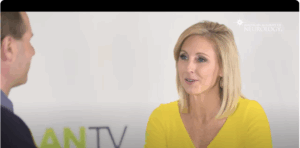
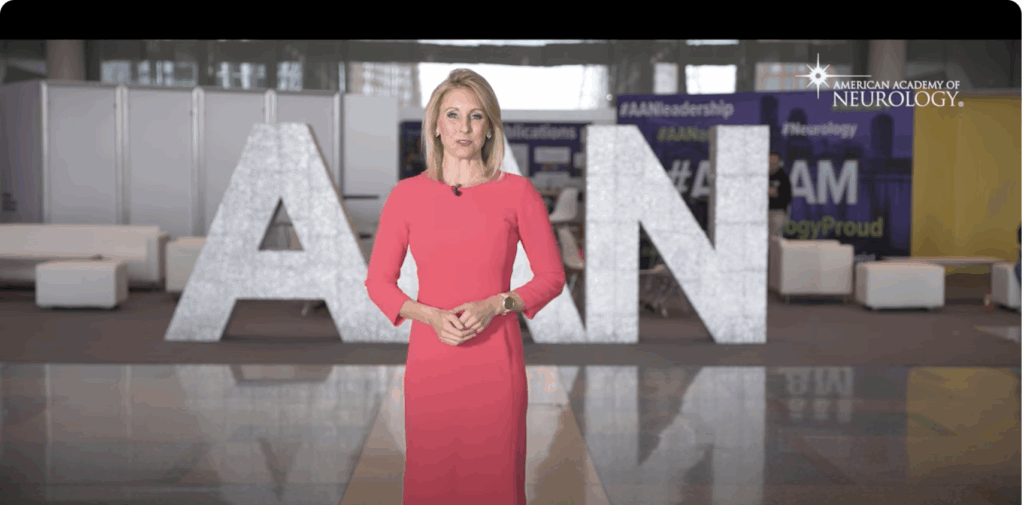
Since 1948, the American Academy of Neurology has been promoting the highest quality patient-centered care and with more than 40,000 members strong, the organization is dedicated to enhancing member career satisfaction. What better place to network and engage with fellow physicians, researchers, and members of the global neurologic community than from the 75th-anniversary meeting? From the beautiful city of Boston, this is the AAN Annual Meeting and this is AANTV. All week long, AANTV will bring you in-depth sit-down interviews with the decision-makers, award winners, and trailblazers bringing new research and innovation to neurologic care. We will also take you around the nation as we highlight the organizations and institutions at the forefront of groundbreaking new treatments and care in the field of neurology.
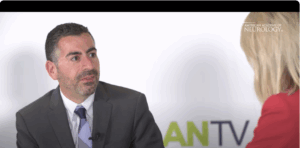
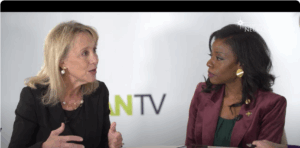
In this episode, we hear from members of the AAN leadership team including Orly Avitzur, MD, MBA, FAAN, American Academy of Neurology President; Carlayne E. Jackson, MD, FAAN, American Academy of Neurology President Elect; Mary E. Post, MBA, CAE, American Academy of Neurology CEO; Jeffrey C. McClean II, MD, FAAN, Chair, Department of Medicine, Brooke Army Medical Center.
We highlight the groundbreaking new research of the LEADS study at the University of Indiana, and the Allina Health Neuroscience Spine and Pain Institute.
Summary
AAN TV—Opening Day Highlights: 75 Years of AAN, Member Value, and What’s Next
As the American Academy of Neurology (AAN) marks its 75th anniversary in Boston, AAN TV kicks off a week of interviews, research spotlights, and institution tours that showcase how the Academy advances education, science, advocacy, and member satisfaction. This first-day program looks back on landmark achievements, outlines priorities for the next two years, and profiles innovative care and leadership development that strengthen neurology worldwide.
Table of Contents
- Where to Watch AAN TV
- AAN at 75: Progress and Resilience (Outgoing President)
- The Next Two Years: Vision from the President-Elect
- Research Spotlight: Early-Onset Alzheimer’s at Indiana University
- Welcome Address: AAN CEO on Community and Impact
- Institution Profile: Allina Health Neuroscience Institute
- Leadership in Practice: Why Get Involved (Dr. Jeffrey McLean)
- Conclusion
- Key Takeaways
Where to Watch AAN TV
Catch the latest episodes:
- On TV stations throughout the convention center
- On the AAN website
- In-house channels at partner hotels
- AAN YouTube and AAN Twitter channels
AAN at 75: Progress and Resilience (Outgoing President)
Guest: Dr. Orly Avedser, AAN President
Membership & retention. The AAN grew to 40,000+ members, with U.S. neurologist retention rising to 95%—a testament to member value during a period defined by pandemic pressures.
Education at scale. The Academy expanded a robust digital learning ecosystem: an online platform, prep courses, conferences, webinars, a Question of the Day mobile app feature, monthly self-assessments, and quick-learning videos and podcasts.
Practice resources. The Medical Economics & Practice Committee delivered toolkits for staffing, efficiency, and telehealth—including coding guidance, case studies, and practical “how-to” resources—while advocacy secured continued patient access to telehealth after the public health emergency.
Hybrid meetings return. AAN’s in-person annual meeting is back, now paired with virtual access to broaden reach.
Breaking the glass ceiling. Building on Dr. Sandra Olson’s trailblazing presidency (2003–2005), the AAN has ensured a pipeline of future women presidents.
Elevating brain health. As editor of Brain & Life, Dr. Avedser emphasized preventive neurology. As president, she convened the first Brain Health Summit, uniting professional societies, patient groups, government, and legislators—and founded the Committee on Public Education to bring neurology to the public. Ongoing columns in Neurology Today helped surface member challenges early in the pandemic and inform Board action.
The Next Two Years: Vision from the President-Elect
Guest: Dr. Carline Jackson, AAN President-Elect
Core pillars. The AAN remains anchored in education, science, and advocacy—with a bold promise to deliver an “annual meeting experience, 365 days a year” through new educational products that are simple, fun, and convenient.
Brain health leadership. Expect expanded engagement with patients and policymakers to build environments that promote brain health.
Workforce crisis. With too few neurologists to meet demand, the AAN will advance solutions that retain and recruit talent and support team-based care.
Global partnerships. The Academy will grow international programs, products, and services and collaborate with global societies to improve neurologic health.
Member engagement—how to plug in:
- 800 committee/subcommittee positions
- Leadership programs for every career stage and setting, including Women Leading in Neurology
- ~40 sections (online communities for Q&A and collaboration)
- Advocacy—with increased emphasis on state-level policy where many critical issues are decided
Policy priorities members care about:
- Protect and expand telehealth access and quality
- Address prior authorization, E/M compensation, and visa policies that impact the workforce and patient access
This year’s meeting highlights. Over 200 educational programs, large abstract sessions, premier plenaries, a 75th anniversary celebration at the Museum of Science, end-of-day plenary “cocktail hour” networking, and leadership meetings with other neurology organizations to drive collaboration on brain health.
Research Spotlight: Early-Onset Alzheimer’s at Indiana University
Focus: The LEAD (Longitudinal Early-Onset Alzheimer’s Disease) study fills a long-standing gap by closely following patients diagnosed before age 65—a group historically underrepresented in both observational studies and clinical trials.
Goal: Improve understanding of presentation and progression, and inform targeted clinical interventions for early-onset disease.
Welcome Address: AAN CEO on Community and Impact
Guest: Mary Post, AAN CEO
Mary Post welcomed attendees (in-person and virtual) to a meeting featuring thousands of scientific sessions and presentations showcasing global advances. She emphasized the Academy’s role in building supportive professional networks, the value of shared insights, and gratitude to sponsors, organizers, volunteers, and staff. The aim: participants leave with knowledge and connections that uplift practice and careers.
Institution Profile: Allina Health Neuroscience Institute
System: Allina Health (Minnesota & Western Wisconsin)
Scale & expertise:
- 75+ neurologists
- 35+ neuroradiologists
- 10+ interventional neuro specialists
Stroke performance:
- Door-to-drug < 60 minutes in ~90% of patients at metro sites
- AHA Get With The Guidelines—Gold Plus awards and Stroke Honor Roll Elite distinctions
Model: A comprehensive, integrated institute enabling rapid diagnosis, advanced intervention, and longitudinal care for stroke, aneurysm, and brain tumor patients.
Leadership in Practice: Why Get Involved (Dr. Jeffrey McLean)
Guest: Dr. Jeffrey McLean, Chair of Medicine, Brooke Army Medical Center; AAN leadership roles
Why lead. Early AAN leadership programs reframed how to understand people and teams, adapt communication, and solve conflict. That lens improved outcomes at work—and at home.
Standout benefits:
- Access to mentors and peer networks for real-time problem solving
- AAN staff partnership that supports leadership growth
- Programs now span every career stage and setting, culminating in Leadership University—an “anyone, anytime” pathway to leadership skills
Advice: “There’s a program for you. Just do it.”
Conclusion
Day one set a confident tone for the AAN’s 75th anniversary: a stronger, more connected membership; education that meets clinicians where they are; research that closes gaps for overlooked patients; and leadership development that empowers neurologists to influence policy, practice, and public health. With a clear plan for the next two years, the Academy is positioning neurology—and neurologists—to thrive.
Key Takeaways
- Member value: 40k+ members; U.S. retention at 95%—driven by digital education, practice toolkits, and advocacy.
- Telehealth matters: AAN helped secure continued access post-emergency; will keep pushing for quality and parity.
- Brain health agenda: From Brain & Life to the Brain Health Summit, the AAN is a convener across sectors.
- Workforce solutions: Address burnout, prior authorization, compensation, visas, and team-based models.
- Engagement paths: 800 committee seats, leadership tracks for all stages, ~40 specialty sections, and state-level advocacy.
- Science in action: IU’s LEAD study elevates early-onset Alzheimer’s—an under-studied cohort.
- High-performance care: Allina Health delivers rapid stroke treatment and national quality recognition.
- Leadership payoff: AAN programs build skills, mentors, and networks that advance careers—and patient care.
- Stay tuned: Watch AAN TV in-venue, online, at partner hotels, and on YouTube/Twitter for daily highlights.
Raw Transcript
[00:00] Thanks for watching.
[00:20] The organization is dedicated to enhancing member career satisfaction.
[00:40] beautiful city of Boston. This is the AAN annual meeting and this is AAN TV. All week long we will be bringing you in-depth sit-down interviews with the decision-makers, award winners and trailblazers bringing new research and innovation to neurologic care. We will also take you all around the nation.
[01:00] as we highlight the organizations and institutions at the forefront of groundbreaking new treatments and care to the field of neurology. There is so much to see and we want to make sure you never miss a minute. You can always find the latest AAN TV episode airing on the TV stationed throughout the convention center.
[01:20] AAN website, on the in-house channels at all of our partner hotels, and on the AAN YouTube and Twitter channels.
[01:40] Our focus today is celebrating 75 years of accomplishments and achievements of the AAN, and we kick things off on this exciting first day with someone who has been a leader within the academy for 20 years and for the past two has served as AAN President Dr. Orly Avedser. Dr. Avedser, thank you.
[02:00] you so much for your time today. Well, what an exciting time overseeing the academy, getting to serve as president during the 75th anniversary. As you take a look back, what are some of your highlights from these past two years? Well, the past two years have certainly been challenging due to the pandemic. In many ways, the A. N. Has excel.
[02:20] and is far more robust for it. But our membership has grown to over 40,000 members and a retention rate for US neurologists has risen to 95%. Our educational offerings expanded even further into the digital space with a robust online experience.
[02:40] learning platform, prep courses, conferences, webinars, a great question of the day for the mobile app, monthly self-assessments, and quick learning videos and podcasts. The Medical Economics and Practice Committee created resource toolkits for managing
[03:00] staffing and other challenges and improving practice efficiencies, and a library of telehealth practice guides, case studies, coding guidances, and resources were also created. The AAN provided policymakers with critical recommendations that have allowed patients to use
[03:20] telehealth to maintain access to neurologic care and to ensure that patients did not lose access upon the termination of the public health emergency declaration. This past year we were excited to return to in-person meetings, especially hosting everyone here in Boston, and we're happy to help.
[03:40] happy to be able to offer the meeting in person and virtually, allowing our members from around the world to join us and get access to all the education. And what have been some of your proudest accomplishments? First, let me recognize Dr. Sandra Olson, who was the first woman president and led this organization between
[04:00] 2003 to 2005. But now times are changing and thanks to my predecessors who invited women like me to chair committees at this organization and provided other opportunities for women neurologists, we are going to have more women presidents for at least
[04:20] another four years and I'm proud that the AN has broken that glass ceiling. When I first became editor of Brain and Life magazine, our patient and caregiver magazine, I added brain health so that people could understand the importance of preventive neurology and people living with neurologic conditions.
[04:40] about the ways to live their best lives. Later, when I became president, I led the board of directors in a conversation about brain health and suggested that the AAN was the right organization to act as a convener and bring together the various stakeholders in the field. A year and a half
[05:00] Later, we held our first Brain Health Summit and met with other professional societies, patient organizations, governmental agencies, and legislators to hold a collaborative conversation. When my term began, I established the Committee on Public Education to bring neurology to public attention.
[05:20] attention and continue to work on brain health. My role as a writer has brought me close to our members and I continue to write for our member publication, Neurology Today, during the pandemic. It was something I had done for more than 20 years. And those conversations allowed me an early understanding first of the stroke.
[05:40] struggles and needs of our members during a novel situation, and I brought these forth to the board of directors so we could help address them. I'm grateful to those members who contacted me and helped me better understand those concerns and to this organization for giving me so many opportunities.
[06:00] to write about neurologists and neurology and hone that craft. Dr. Avitzer, again, thank you so much for your time today. Thank you. Turning now to the next two years, we are joined by President elect Dr. Carline Jackson to discuss what's ahead as she takes the helm of AAN. Pleasure to have you with us today. Thank you. This is such an honor.
[06:20] It's an honor. It really is exciting to be here. Congratulations on your selection as president-elect. What are you most looking forward to as AAN president over the next two years? Well, I just want to say it's an incredible honor to be selected by my peers in this role. It's really somewhat overwhelming to follow in the footsteps of Wirly Abraczer and Jib Stevens and in the history of the organization.
[06:40] So really super excited. There is so much work to do. I can't even begin to tell you all the things that are on our plate for the next two years. But certainly the core mission of the academy has always been education, science and advocacy. And we're gonna continue to focus on those things. And in the light, in the context of our annual meeting.
[07:00] I want to reassure our members that our goal is to try to create that annual meeting experience 365 days a year. So we're really working on some new educational products that will make it easy and fun and simple and convenient to keep up to date with all the changes that are occurring in the field. We're also going to be working with our members to make sure that they're in the community. And that they're in the community. And that they're in the community. And that they're in the community. And that they're in the community. And that they're in the community. And that they're in the community. And that they're in the community. And that they're in the community. And that they're in the community.
[07:20] spending a lot of time focusing on what our role is in this whole world of brain health, what we can do to engage our patients and policymakers in everything possible to create an environment that promotes brain health. We also as a profession are
[07:40] really facing a workforce crisis. We don't have enough neurologists to take care of our patients. And so what can we do as an organization to retain and recruit really motivated people to take care of the vast number of patients that have and face neurologic diseases.
[08:00] We also have an interest in expanding our program's products and services to an international market. And so how can we partner with other organizations across the globe to improve neurologic health?
[08:20] Let's dive into one of those. How do you plan to bolster member engagement? So certainly just coming to the annual meeting, coming to all our educational programs, we'll engage our members, but there's so many other things members can do. We actually have 800 positions on our committees and subcommittees within the organization where people can get involved.
[08:40] We have a whole array of leadership programs from people who are in private practice to young faculty or just starting their career to more senior leaders to women who are leading in neurology. So engaging in those leadership programs is an opportunity and we have about 40 sections so people can.
[09:00] join these online communities and chat and ask questions and converse about topics of interest. But I think most importantly, my goal as president will be to get our members engaged in advocacy. And we've really focused a lot on federal advocacy, but what we're finding is a lot of issues are driven by state.
[09:20] policies. And so getting local advocacy is really g that we're going to be fo you speak to those in the which you just referenced their biggest needs and h offer support? Yeah, I th that I'm hearing. Um, on
[09:40] COVID pandemic is telehealth. And we found that it's incredibly effective in enhancing the quality of care for patients, particularly in remote areas. So doing whatever we can as an organization to advocate that all the telehealth policies continue to promote that highest level patient
[10:00] centered care that is our goal. I think the other thing that I mentioned earlier is this workforce crisis. What can we do to retain and recruit neurologists? A lot of neurologists are burning out because of regulatory burdens that can be changed with policies addressing those issues.
[10:20] issues. So things like prior authorization and all of the compensation for evaluation and management codes. How do we get visas for international medical students who want to come to the states to practice? Those are all things that I think we can continue to drill down and work on.
[10:40] about this year's meeting do you hope attendees will It's hard not to get excit over 200 educational progr abstracts, really wonderf plenary sessions. I think to celebrate our 75th ani
[11:00] opening party at the Museum of Science will hopefully be one of the highlights of the experience. We're going to actually start kind of a cocktail hour at the end of every day where we have our plenary sessions. This is the first time we've gotten together in many years without a mask and so to just be able to have
[11:20] have a conversation with someone and see their face will be on that one. So yeah, lots to look forward to. I'm also really excited we're meeting with a lot of leaders from other neurologic organizations and so I'm excited to sit down with them and talk about how we can collaborate on things like brain health.
[11:40] Jackson, president elect a find on the dance floor. again for your time today these next two years. Tha focusing now on our first Indiana University is at
[12:00] It's the home of several major national research initiatives, including the Longitudinal Early Onset Alzheimer's Disease, or LEAD study. Let's see how they are breaking new ground in the fight against early onset Alzheimer's. At Indiana University School of Medicine, we have a strong focus on Alzheimer's disease. But as with many instances,
[12:20] institutions, our focus is on late-onset Alzheimer's disease, and we recognized that there was a paucity of studies focused on early-onset Alzheimer's disease. Four or five years ago, we realized that there is a chunk of the Alzheimer's disease population that is not studied anywhere, not in observational, not in clinical trials, and that was the early-onset population.
[12:40] that is unfortunate enough to get this disease earlier than age 65.
[13:00] is that we will have a better understanding of early Alzheimer's and how it presents, how it progresses over time, and eventually the hope is that it will help us design clinical interventions.
[13:20] For 75 years, the AAN has promoted the highest-quality patient-centered neurologic care and enhanced member career satisfaction. So who better to welcome us to this year's anniversary meeting than AAN CEO Mary Post.
[13:40] of the American Academy of Neurology, it is my great pleasure to welcome you to the AAN's annual meeting as we celebrate our 75th anniversary. We are honored to have you all here today in Boston and a special welcome to our attendees who are joining us virtually from around the world. This year's meeting promises to be one of the most
[14:00] most exciting yet. We have thousands of scientific sessions and presentations on the latest advances in neurologic research from around the world. But it's not just about the top-rated education and science offerings. We hope this meeting will provide a chance for you to connect and build meaningful networks and relationships with your fellow
[14:20] colleagues and peers. We understand the importance of fostering strong, supportive community, and we hope this meeting will do that just for you. As leaders in the field of neurology, your attendance and contributions to this meeting are invaluable. Your dedication and commitment to advancing the study and treatment of neurologic disorders have a profound impact
[14:40] on the patients around the world. The insights and the perspectives that you bring to the table are shaping the field of neurology. I would like to extend a special thank you to our sponsors who have made this event possible. I would also like to express my sincere gratitude to the organizing committee, the session chairs, and all the member and volunteer
[15:00] peers and staff who have worked tirelessly for this event and its success. Now we officially open the doors of the American Academy of Neurology's annual meeting. We hope you have an enriching experience and take away valuable knowledge and connections that will help you advance your practice and career. Enjoy the meeting.
[15:20] Alina Health Care in Minnesota is a comprehensive, non-profit neurological institute that brings together specialists to take care of patients with neurological disorders. Let's examine their cutting-edge care for stroke, brain aneurysm and brain tumor patients.
[15:40] Elina Health is a large non-profit health system that serves the communities here in Minnesota and Western Wisconsin. Elina Health Neuroscience Institute is part of Elina Health and within the Institute we have over 75 neurologists, we have over 35 neuro radiologists.
[16:00] over 10 interventional neuro specialists. So it's a large health system and we're a comprehensive neurological institute that resides within it. At our metro sites, we have been able to achieve a door to drug time of less than 60 minutes in approximately 90 percent of
[16:20] our patients. Also, our metrosides have been recognized by the American Heart Association Get With The Guideline program with Gold Plus awards for advanced therapy and stroke-honor-roll plus elite.
[16:40] As chair of the Department of Medicine at Brooke Army Medical Center, Dr. Jeffrey McLean oversees the largest clinical department in the largest hospital in the Department of Defense healthcare system. He also makes time to hold many positions with an AAN leadership, and he's also made time to join the program.
[17:00] join us today here in the time. Thanks for having m why you feel it's importa positions within a. Well for me to be part of lea academy. I started as a m leadership programs where to learn about what the a
[17:20] is and how dedicated it is to really promoting the highest quality neurologic care for our patients and member career satisfaction for all of our members. And so as I got to learn about it, I wanted to be part of that and have had great opportunities to really grow and participate and really have an opportunity to impact neurology.
[17:40] across the board. How would you say that being an active participant in some of these leadership programs have impacted not only your professional life but also maybe personal life as well? Sure, you know one of the things that's been really great for me that I took from my early participation in one of the leadership development programs was really a different way of looking about how I really
[18:00] relate to people and thin brings to the table, what personalities bring to the you don't immediately cli have challenges with cert instead of it just being okay, how can you alter h
[18:20] And so that's been one of the things that's helped me a lot throughout my career and personally Like I said, you've held a number of leadership positions within a and is there anyone in particular that stands out to you? As far as helping you achieve, you know, maybe something that you were going after
[18:40] professionally. Sure. Y involved with the leadasi and how we've been able t Um to offer programs for stages in their career. B has been something that t
[19:00] career sort of my day job help develop people that I you have had a very incre has the A. A. N. Helped an you as you've gone throug of your career. Sure. So
[19:20] the skill set of how to a interact with people as I been incredibly important. is just the people I've m been mentors to me, leada who have been willing to me as I've grown, who've I want to. Yeah. And I'm
[19:40] to do, as well as colleagues that are in the same stage of career facing the same challenges that I can call on the phone, say, hey, how are you dealing with this? How are you handling that? And then also just the AAN staff who have been amazing and supportive of me throughout my career. That network of individuals has just been some
[20:00] thing that is impossible to describe how important it has been as I've moved through my career. Last question for you here, what would your advice be to someone who might be kind of toying with the idea of getting involved with an AAN leadership or somebody who just you know might be want to want to get involved with the Academy as a whole? Well what I would say is and
[20:20] And you've heard me say it multiple times, leadership development programs. Our array of programs that we've developed over these years has been truly amazing. Going from an early career leadership program to now offering a suite of programs across the career span, programs for people in different career settings, programs for people in different career settings.
[20:40] for just about everyone, there is a program for you. And now we're opening up with Leadership University, which is really meant to make this available to anyone at any time and where they really need the leadership development. So look at the best offerings that the AN has for leadership development.
[21:00] There's something for anyone and that'll help get you started on the path. Just do it. Just do it. Alright, Dr. Jeffrey McLean, thank you so much. It was a pleasure to have you. It was great. Thank you. Certainly a lot of excitement as we head into this week and celebrate 75 years of the
[21:20] accomplishments and achievements of the AAN. There is still much more to come this week as we dive into emerging science, the future of neurology and AAN's advocacy efforts. But if you missed any part of today's episode, you can always catch up by finding AAN TV airing on the TV stationed throughout the convention center.
[21:40] the AAN website, on the in-house channels at all of our partner hotels, and on the AAN YouTube and Twitter channels.
[22:00] Thanks for spending this first day with us. We can't wait to see you right back here tomorrow. Go have a great one.
[22:20] You