Episode 4: AANTV at the 2023 Annual Meeting – American Academy of Neurology
- October 3, 2025
- 2:13 pm
Since 1948, the American Academy of Neurology has been promoting the highest quality patient-centered care while remaining committed to expanding and supporting Neuroscience research.
As we come together in beautiful Boston to celebrate 75 years of the AAN, we are focusing on the future of Neurology and how the AAN tirelessly advocates for the continued viability and innovation of the practice of Neurology. You’re watching AANTV.
Today we are catching up with the Editor-In-Chief of Neurology Today, the official news source of the AAN.
Plus, our can’t miss interview with a participant in the “No Ordinary Campaign” documentary shining a stunning spotlight on the fight against ALS.
And we will take you to two institutions today fighting to eradicate ALS, how innovative new research in both Boston and Chicago is playing a pivotal role.
Today you will hear from:
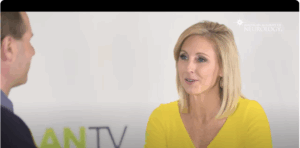
Dr. Joseph Safdieh, Editor-In-Chief, Neurology Today
Dr. Eric Anderson, Synapticure Inc.
Dr. Jinsy Andrews, Director of Neuromuscular Clinical Trials, Columbia University
Today we will visit:
The Healey and AMG Center for ALS at Massachusettes General Hospital
The Center for Motor Neuron Disease at the University of Chicago
Summary
AAN TV — Therapies, ALS Breakthroughs, and the Future of Neurology
AAN TV’s anniversary broadcast from Boston spotlighted the Academy’s 75 years of progress and its future-facing mission: advancing neurologic care through research, education, and advocacy. This episode surveyed fast-moving therapeutic advances, the Academy’s news and education ecosystem (journals + podcasts), and urgent efforts to transform ALS from fatal to chronic—powered by patient advocacy and trial innovation.
Table of Contents
- How to Watch AAN TV
- AAN at 75: Advocacy for the Future of Neurology
- Neurology Today: “The Year of Therapies”
- AAN Podcasts: Learning for Everyone—Clinicians and the Public
- ALS Spotlight I: Healy & AMG Center at Mass General
- ALS Spotlight II: No Ordinary Campaign—Advocacy, Access, and Awareness
- ALS Spotlight III: University of Chicago Center for Motor Neuron Disease
- Innovation on Display: Exhibit Hall
- Conclusion
- Key Takeaways
How to Watch AAN TV
Catch the latest episode:
- Convention center TV stations
- AAN website
- In-house hotel channels (partner hotels)
- AAN YouTube and Twitter channels
AAN at 75: Advocacy for the Future of Neurology
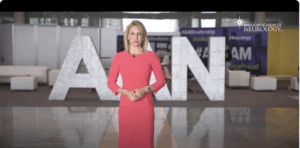
Host Andrea Godfrey opens from Boston, underscoring the Academy’s commitment to viability, innovation, and advocacy in clinical practice—supporting neurologists while accelerating discoveries that reach patients.
Neurology Today: “The Year of Therapies”
Guest: Dr. Joseph Safdieh, Editor-in-Chief, Neurology Today
Headline theme: “Therapies, therapies, therapies.”
Across NMO, epilepsy, MS, stroke, neuromuscular disorders, new treatments are reshaping care. The newsroom’s model:
- Expert-driven scouting: A diverse editorial board flags what’s breaking—and what’s coming next.
- Beyond journals: Coverage includes education policy, board exams shifting pass/fail, residency impacts, and how rankings changes affect training.
- Any format, same trust: Print every other week, robust web/social, and the Neurology Today in 5 podcast (3 stories in ≤5 minutes) to keep clinicians current between patients.
AAN Podcasts: Learning for Everyone—Clinicians and the Public
Brain & Life Podcast
- For all of us (1 in 3 people will live with a neurologic condition).
- Patient stories + expert interviews → boosts health literacy and complements Brain & Life magazine.
Neurology Podcast & Neurology Minute (Editor: Stacey Clardy)
- Clinician-facing pearls you can use in clinic today.
- Formats: ~10–20 minute deep dives; Neurology Minute daily briefing in 2–3 minutes.
ALS Spotlight I: Healy & AMG Center at Mass General
The Healy & AMG Center for ALS (MGH) is redefining trials and care:
- Aim: every patient learns all suitable options and can access an experimental trial.
- Platform trial innovation and compassionate use pathways widen access and speed bench-to-bedside translation.
ALS Spotlight II: No Ordinary Campaign—Advocacy, Access, and Awareness
Guests:
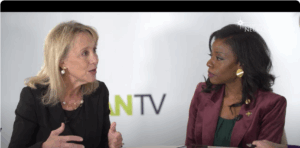
- Dr. Eric Anderson (virtual medical practice founded by Brian Wallach)
- Dr. Jinsy Andrews (Director, Neuromuscular Trials, Columbia University)
The story: At 37, former White House staffer Brian Wallach was diagnosed with ALS the day he and his wife brought home their newborn. His fight—and policy work—anchor the documentary No Ordinary Campaign (premiered at festivals including SXSW; President Obama appears and attended).
Why it matters:
- ALS patients are forced to self-navigate a complex system; Synapticure assigns care coordinators to guide families.
- The film elevates awareness—a crucial catalyst last seen during the Ice Bucket Challenge (2014)—to engage payers, regulators, and cross-disease researchers.
Conference screening: Today, 3:30 PM, Room 157 A/B.
ALS Spotlight III: University of Chicago Center for Motor Neuron Disease
Focus: Generate new knowledge on ALS and related neurodegenerative diseases.
Genetics: ~25 known ALS-causing mutations; C9orf72 repeat expansion accounts for ~50% of inherited ALS and also links to frontotemporal dementia.
Models:
- C. elegans (invertebrate)
- Mouse models
- Patient-derived stem cells
This multi-model approach dissects mechanisms and identifies therapeutic targets.
Innovation on Display: Exhibit Hall
Hundreds of exhibitors feature new diagnostics, therapeutics, digital tools, and services. Open now through Thursday—a hands-on look at the pipeline becoming practice.
Conclusion
AAN’s 75th anniversary edition of AAN TV captured a field in motion: rapid therapeutic progress, a 360° education ecosystem (news, journals, podcasts), and patient-powered advances against ALS. From Boston to Chicago, the message is consistent—collaboration, access, and innovation are how neurology will meet the next 75 years.
Key Takeaways
- Therapeutic surge: Multiple subspecialties are seeing effective new treatments—practice is changing fast.
- Trusted intel, flexible formats: Neurology Today + podcasts deliver reliable, timely updates clinicians can use immediately.
- Public education at scale: Brain & Life bridges stories and science to raise community health literacy.
- ALS momentum: Platform trials, compassionate use, coordinated care, and high-profile advocacy (No Ordinary Campaign) are accelerating progress.
- Bench-to-bedside pipeline: Genetic insights (e.g., C9orf72) and multi-model research are clarifying targets.
- Engage & explore: The Exhibit Hall showcases the near future of neurology—see, test, and question what’s next.
Raw Transcript
[00:00] Thanks for watching.
[00:20] committed to expanding and supporting neuroscience research. As we come together here in beautiful Boston to celebrate 75 years of the AAN, we are focusing on the future of neurology and how the AAN tirelessly advocates for the continued
[00:40] continued viability and innovation of the practice of neurology. I'm Andrea Godfrey, and you are watching AAN TV. Coming up, we're catching up with the editor-in-chief of Neurology today, the official news source of the AAN. Plus, our can't miss interview with a participant in the No Ordinary Campaign documentary.
[01:00] documentary, shining a stunning spotlight on the fight against ALS. And we will take you to two institutions today fighting to eradicate ALS, how innovative new research in both Boston and Chicago is playing a pivotal role. There is so much to see and we want to make sure you never miss a minute. Remember, you
[01:20] You can always find the latest AAN TV episode airing on the TV stationed throughout the convention center, on the AAN website, on the in-house channels at some of our partner hotels.
[01:40] and on the AAN YouTube and Twitter channels. Staying atop the latest breaking news issues and trends in all things neurology is exactly what Neurology Today does, the official news source of the AAN.
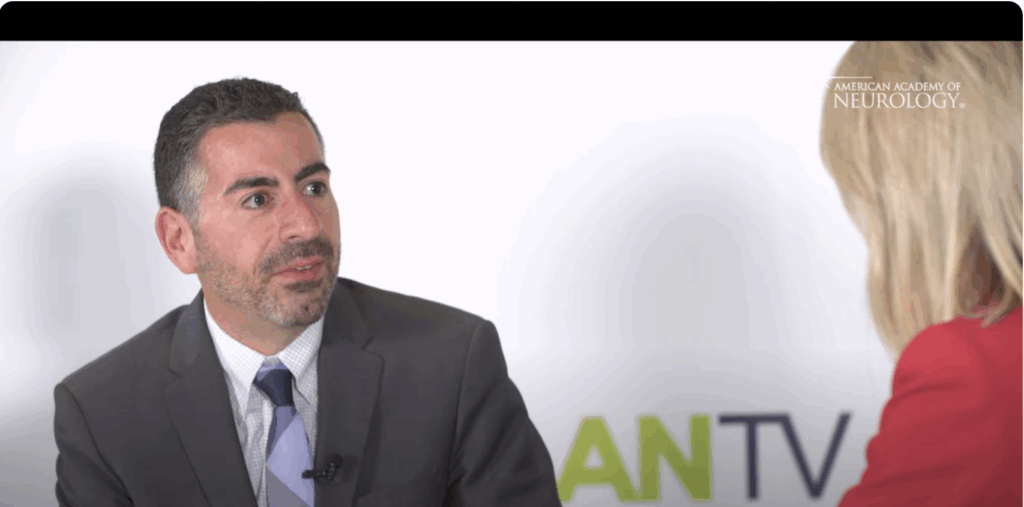
[02:00] Doctor and Chief Dr. Joseph Safdie sits down in the studio with us now to discuss overseeing all the latest information and then making sure that it gets out to the masses. Such a pleasure to have you here today. Thanks, thanks for having me. Well of course, let's get started with right now what you are seeing as far as the best advances in neurology. So I would say it's been the year of therapies, therapies, therapies. We're getting so many.
[02:20] many new therapies for disorders, some of which have had no therapies before that were effective, some of which would have had partially effective therapies. So we're seeing in areas like neuromyelitis optica new therapies that are really, really effective. We're seeing it in areas like epilepsy, MS, stroke, neuromuscular disorders. And we are on top of that covering all those treatment advances.
[02:40] that neurologists can implement into their practices. That's definitely been the highlight of the last year or two. As you just mentioned, by listing those off, there's constantly something new coming along, and I would imagine it's a little bit tedious to try and stay atop all the latest breaking information. How do you do that and make sure that you're not missing something pertinent? Great question. We focus on
[03:00] number of different strategies for that. The main thing is our editorial board. We have a wonderful editorial board of many leaders in the AAN, many people who have content expertise, and we make sure to balance the editorial board with people from different perspectives from all of the sub-specialties, and we ask them all the time, what's happening in your field? What's happening that people are talking about that isn't in the journals yet? What do we need to be under-
[03:20] understanding in terms of trends that's moving forward because we want to catch those early. We want to look at those areas and have neurologists get a sense of what's coming out, what's exciting to get the feedback to make sure people are aware and are on the cutting edge. And you also mentioned a little bit earlier that you're different from a journal in the sense that you can provide in the newspaper a little.
[03:40] tidbit of what's to come. You can do so to keep yourselves up to speed.
[04:00] clinical practice. We're telling stories not only about neurology but about neurologists and we're doing original reporting. In a recent issue we did something on what does it mean that things like board-certifying exams like the USMLE exams for medical students are becoming pass-fail. How does that impact medical schools, residency application, US News and World Report rankings, a lot of medical
[04:20] schools pulled out. What does that mean? So we're not only talking about clinical topics that of course are really important, we're also talking about areas that might impact the field of neurology as a whole. So very all-encompassing. Correct. Alright, like you mentioned earlier, you print, you're a print publication here every other week. Do you feel like there's still an appetite for a print publication?
[04:40] I mean, people are so digital these days. Yeah, I agree completely with that. So I believe very strongly that the information should be available for people in whatever way that they see fit for them. So we certainly have the print. Many people tell me, oh, you are certainly the most important thing that I read, which makes me feel great. They take it with them on airplanes, they take it with them into their offices. They do read it.
[05:00] If somebody reads it online, if somebody reads it through our social media posts, it's perfectly fine. I actually like to think of us not as a publication, but as a source of information. And I want us to be a brand, neurology today should be a brand that people trust for information that's accurate, that's timely, and that they need to know to take better care of their patients and also to have a better sense of what's happening in the field.
[05:20] And before I let you go, you actually have a third way to consume the information, which is your podcast. Yes. Can you tell us briefly about neurology today in five? Yes. What I do in my podcast is that I look at each issue and I pick three articles, usually from different sections. I usually pick something for patient care, something that's more in the pipeline, and something that might be about professionalism or practice. And I just do a quick summary.
[05:40] summary. So I described the highlights of the article and then a little bit about what our experts are saying and I do that in five minutes or less. So every other week for five minutes you can get the highlights of neurology today just by listening maybe on your short commute or just in a few minutes that you have for reputeen patients. Wonderful. Well Dr. Joseph Sapti, we certainly appreciate your time today and we should point out you can pick up a copy of Neurology today right here in the convention.
[06:00] Center before you head home this afternoon. Thanks for your time. Thank you so much for having me. The AAN provides the highest quality scientific scholarship and education to the neurology community worldwide through its numerous prestigious medical journals and now they've supplemented.
[06:20] at those publications with podcasts. We caught up with the host of the Brain and Life Podcast and the host of the Neurology Podcast to find out what you can expect next time you hit that download.
[06:40] of us have brains. But you know what the most recent evidence have shown from the WHO that one out of three people throughout their lifetime will end up living with a neurologic condition. So this podcast is really for all of us. And sometimes the features and content that we explore in the podcast makes it then into the
[07:00] magazine with more added context and helpful tools for the community and to help neurologists improve the health literacy and understanding of neurologic conditions for their patients. Particularly with the podcast, we're really trying to feature individual stories and then having really clear discussions with experts in the family.
[07:20] field about those conditions and or topics related to all of our brain health. I'm Stacie Clardy. I'm the editor of the Neurology Podcast and the Neurology Minute daily briefing. The Neurology Podcast targets all neurology clinicians, neurologists, APPs, nurse practitioners, trainees, all the way up to...
[07:40] neurologists and clinicians who've been practicing for 50 years. You know, with the podcast and with the minute briefing, we try very hard to give a pearl, at least one pearl, every single time that's completely clinically relevant. So when you listen to the episode on your way into clinic, you will be using what you learned that day.
[08:00] in clinic in the hospital. The podcast is more of a long form, 10, 20 minutes per episode. Some people say, you know what, I'm in a phase in my life, I just don't have time, but I know that I need to learn. So they listen to the daily briefing two to three minutes every morning.
[08:20] Today we are highlighting the fight against ALS. First up, a stop at the Healy and AMG Center for ALS at Massachusetts General Hospital right here in Boston. Their researchers are redefining ALS trials and care to provide new treatments faster to people diagnosed with ALS. They are also accelerating the transplant.
[08:40] translation of promising science to the bedside.
[09:00] Everyone who comes here has an option for an experimental trial. My vision for neurotherapeutics at Mass General Hospital is that every patient that we care for comes here, has the best diagnostic care, and also knows about every treatment that might help their illness. I want our scientists and clinicians to be developing those treatments.
[09:20] treatments and bringing them for people not just at Mass General but all over the world. We try to provide every trial that has good science for our patients and then also compassionate use, access to those same medications for people who might not be eligible for those trials. We started this two years ago and it's one of the things I'm most proud of.
[09:40] Now to a truly remarkable story, immortalizing the form of a documentary. At just 37 years old, former Obama staffer Brian Wallach was diagnosed with ALS on the same day he and his wife brought home their baby
[10:00] daughter from the hospital. His ongoing fight, now the subject of a documentary, and Dr. Eric Anderson oversees the virtual medical practice founded by Brian, and Dr. Gen Z. Andrews is the director of neuromuscular trials at Columbia University, and they are here in studio with us now. Thanks for your time today. Thank you. Thanks for having us. I'd like to get started with how Brian is doing. Can you give us an update? Yeah.
[10:20] So Brian's doing as well as could be hope for being that he's six years into his fight. He still works full days and he's optimistic and hopeful that we can eventually transform ALS and other neurodegenerative diseases from fatal to chronic. And he's still a fighter. He is very inspirational to work with. How did you meet Brian? How did you come to have this involvement in the documentary?
[10:40] So I actually, first, I don't know if they remember, but I actually met them through an interaction in our ALS clinical trial consortium called NELES. They came as someone living with ALS and a caregiver to learn about clinical trials and to learn about advocating for it. But really my interaction
[11:00] protection grew after testifying in Congress. So they were asked to testify from their perspective, living with ALS and going through the journey. I was asked to testify to Congress about the state of ALS clinical trials and research. And from there, it was just a journey that blossomed.
[11:20] ordinary campaign, which I should say I've seen the trailer for it. It is absolutely powerful. It's an incredible documentary. But patients like Brian really drive home the point that you have to be your own advocate and take care of your own healthcare. Is that something that you find to be true when it comes to dealing with ALS patients? A hundred percent and they have to out of necessity.
[11:40] The heartbreaking reality of being assigned this type of a devastating diagnosis is that they're thrust into the labyrinth of the healthcare system to go that journey alone. One of the major gaps that synaptic cure fills is by assigning a care team to every person and their family. At the heart of that care team is a care coordinator.
[12:00] coordinator who helps walk them through that journey so that they don't have to do it alone. Okay, so what are you hoping that this documentary will do? What are you looking for it to accomplish? This documentary does one real critical thing, which is raising awareness about ALS and how difficult that journey is and where the gaps are, and I think for our entire field.
[12:20] anything that can bring attention. You know, the last time we had this type of attention was the ice bucket challenge. That was back in 2014, you know, and and we need to continue to keep that level of awareness so that we can continue to develop new therapies with efficient clinical trials and also get other people outside of the ALS system.
[12:40] community get involved. So that includes payers and regulators and outside researchers that are working in other neurodegenerative diseases. I think then only can we really make change. And I know the film has premiered at a series of film festivals, including South by Southwest, where I understand you pretty much had some incredible
[13:00] star power to help bring attention to the documentary. Who was your guest? That's right it was President Obama had come in person for that showing. That's incredible so he's still you know very active in his support for Brian. 100% and he's in the documentary as well and gives quite a testimonial. Amazing okay so for people that are here at this conference where my
[13:20] they be able to screen the documentary. So the documentary will be today, later today, at 3.30 in room 157 A and B. Thank you both so much for your time. Thank you for the involvement in the documentary and for getting this message out there and of course all of our best to Brian and his family. Thank you.
[13:40] Continuing our ALS focus now, we turn to Chicago, where the Center for Motor Neuron Disease at the University of Chicago is seeking to generate new knowledge and advance the understanding of ALS and other neurodegenerative diseases. Let's take a look.
[14:00] ILS is amiotrophic lateral sclerosis. It is the most common motor neuron disease. And sadly we don't have any treatment. Up until now we know that there are about 25.
[14:20] mutations in humans that cause amyotrophic lateral sclerosis, ALS. One of these mutations is located in a gene called C9R of 72 and is responsible for 50% of the inherited forms of ALS.
[14:40] Because of a nucleotide repeat, if you have hundreds or thousands of these repeats, this mutant C9 or F72 can cause ALS or frontal temporal dementia.
[15:00] To study how these gene mutations cause ALS, we use three different models, a very simple invertebrate model, the nematode C. elegans, a laboratory mouse, stem cells that come from human patients in my lab and in collaboration with other labs.
[15:20] The exhibit hall is open and hundreds of exhibitors are just waiting to show you what's new in the world of neurology. Let's go.
[15:40] Stop dreaming, eyes closed, jump out and we'll take them tight Let's go, cause they've got the feeling Do-la, kimmy, kimmy, kimmy, kimmy, kimmy, kimmy, kimmy, kimmy, kimmy, kimmy, kimmy, kimmy, kimmy, kimmy, kimmy, kimmy, kimmy, kimmy, kimmy, kimmy, kimmy, kimmy, kimmy, kimmy, kimmy, kimmy, kimmy, kimmy, kimmy, kimmy, kimmy, kimmy, kimmy, kimmy, kimmy, kimmy, kimmy, kimmy, kimmy, kimmy, kimmy, kimmy, kimmy, kimmy, kimmy, kimmy, kimmy, kimmy, kimmy, kimmy, kimmy, kimmy, kimmy, kimmy, kimmy, kimmy, kimmy, kimmy, kimmy, kimmy, kimmy, kimmy, kimmy, kimmy, kimmy, kimmy, kimmy, kimmy, kimmy, kimmy, kimmy, kimmy, kimmy, kimmy, kimmy, kimmy, kimmy, kimmy, kimmy, kimmy, kimmy, kimmy, kimmy, kimmy, kimmy, kimmy, kimmy, kimmy, kimmy, kimmy, kimmy, kimmy, kimmy, kimmy, kimmy, kimmy, kimmy, kimmy, kimmy, kimmy, kimmy, kimmy, kimmy, kim
[16:00] Make sure you check out the exhibit hall anytime between now and Thursday. We still have much more to come this week at the 75th anniversary meeting.
[16:20] of the AAN. Remember if you missed any part of today's episode or if you would like to re-watch any part of today's episode you can find our latest content on the TV station throughout the convention center on the AAN website. on the in-house channel
[16:40] channels at some of our partner hotels and on the AAN YouTube and Twitter channels.
[17:00] back here tomorrow for ano