Brain Health: It’s SPECtacular (Ep. 1) | Teaching Brain Health in Schools and Communities
- October 4, 2025
- 9:48 am
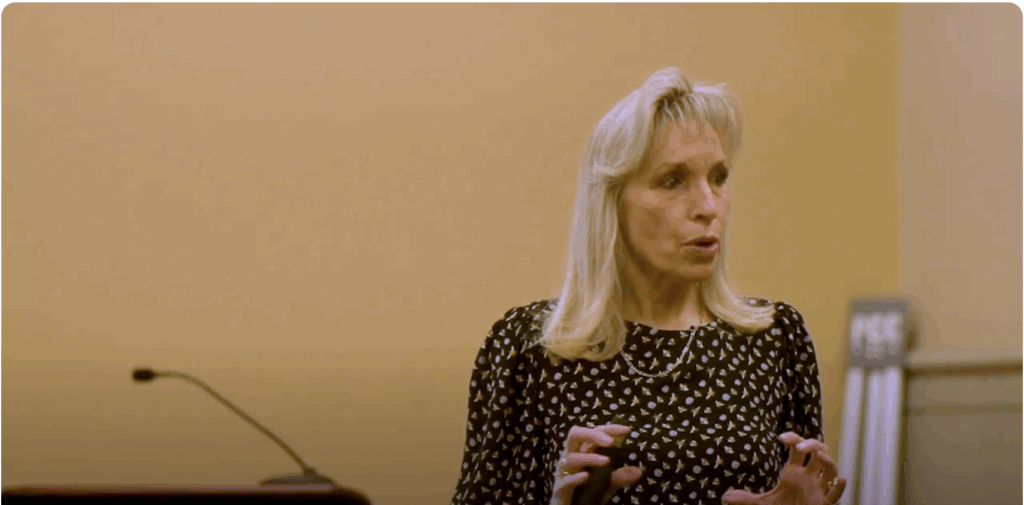
Ready to bring the “Brain Health: It’s SPECtacular” program into your school or community? In this final video of a six-part series, Linda Gorman, neuroscientist and Founder of Making Neuroscience Fun, LLC, walks through how the full SPEC program — centered on social, physical, emotional, and cognitive health — can be easily integrated into Pre-K through 5th grade classrooms.
Backed by 30 years of neuroscience research and developed in partnership with Johns Hopkins University, the program uses age-appropriate stories, lesson plans, hands-on activities, and flexible delivery models to help kids build lifelong brain health skills.
Whether you’re a teacher, counselor, parent, medical student, or volunteer, this video gives you everything you need to make neuroscience fun, accessible, and impactful for young learners.
Summary
Making Neuroscience Fun: Bringing Brain Science to Schools
Table of Contents
- Introduction
- What Is “Making Neuroscience Fun”?
- Program Design and Educational Approach
- Program Components and Classroom Resources
- Accessibility and Delivery Options
- Expanding Reach through Collaboration
- Conclusion
- Key Takeaways
Introduction
How do you bring neuroscience into schools in a way that young students actually enjoy and understand?
That question inspired Dr. Al Gorman, a neuroscientist at Johns Hopkins University, to create Making Neuroscience Fun (MNF) — an open-source, story-driven program designed to teach children about their brains, emotions, and overall health.
Initially developed as a classroom enrichment initiative, MNF now provides a complete, evidence-based toolkit for educators, counselors, parents, and volunteers to engage students from pre-K through 5th grade in brain science through stories, activities, and interactive lessons.
What Is “Making Neuroscience Fun”?
Making Neuroscience Fun (MNF) is an educational outreach program hosted by Johns Hopkins University and supported by the Society for Neuroscience (SFN).
It offers age-appropriate stories, activities, and assessments to help children understand key concepts in:
- Social health
- Physical health
- Emotional regulation
- Cognitive development
- Overall brain health
All materials are free and downloadable from makingneurosciencefun.com, which links directly to the Hopkins repository.
Program Design and Educational Approach
Story-Based Learning for Young Minds
Dr. Gorman’s approach centers on storytelling:
- Seven grade levels, each with six stories, teach neuroscience through relatable scenarios.
- Stories are anchored in real science but crafted in fun, accessible language.
- They are designed to match how children learn — through imagination, curiosity, and repetition.
Example:
A third-grade story called “I Want It Now” teaches emotional regulation — showing how the brain helps manage impulses and patience.
Grounded in Scientific Research
Every story is backed by over 30 years of neuroscience research conducted by Dr. Gorman and his colleagues.
Each module includes:
- Three main learning objectives
- Explanations of underlying brain science
- Citations from peer-reviewed journals with replicated experiments
- References you can verify — so teachers and parents know it’s credible science
Aligned with National Education Standards
The curriculum aligns with:
- Next Generation Science Standards (NGSS)
- American School Counselor Association (ASCA) developmental guides
- CDC Health Education Standards
This ensures lessons complement what students are already expected to learn in school.
Program Components and Classroom Resources
Stories and Lesson Scripts
Each story package includes:
- A PowerPoint presentation with visuals
- A teaching script to help educators guide discussion
- Notes on student behaviors and cognitive development for that age group
Scripts serve as a support tool — so even if a teacher “goes brain-dead,” as Dr. Gorman jokes, they can still deliver the material confidently.
Hands-On Activities
Each story includes five classroom-friendly activities that reinforce the lesson.
- Activities use common, inexpensive materials easily found in schools or at home.
- Each comes with an instruction sheet, listing required materials, preparation steps, and clear directions.
- Designed to be open-source, the activities promote accessibility and inclusion.
Power Your Brain Challenges
To assess understanding, each story has a 10-question quiz called “Power Your Brain Challenges.”
- Questions test comprehension of key concepts.
- Can be done as PowerPoint quizzes, classroom games, or group polls.
- Encourages discussion and engagement, not rote memorization.
“What to Do Today” Lesson Plans
The “What to Do Today” sheets act as ready-to-use lesson plans — or as Dr. Gorman puts it, “the idiot-proofing of the program.”
Each plan includes:
- Preparation steps and materials
- Cues on when to play or pause videos
- Prompts for age-appropriate discussion
- Flexibility to adjust timing or student energy levels
Whether the class is quiet and focused or “hyper and all over the place,” these guides help teachers adapt smoothly.
Accessibility and Delivery Options
Self-Guided and Facilitator-Led Formats
The MNF program was designed for flexibility:
- Students can access stories independently online by selecting their grade level.
- Videos are hosted on YouTube and embedded in the Hopkins site for easy viewing on tablets, laptops, or phones.
- Facilitators — teachers, counselors, volunteers — can lead interactive sessions using the provided materials.
Partnerships with Universities and Volunteers
To scale access, MNF encourages college and community partnerships:
- Universities and medical schools can adopt MNF for community engagement.
- Undergraduates, especially in neuroscience and health fields, can deliver the program to local schools.
- Retired professionals — teachers, librarians, and clinicians — are invited to volunteer.
Through a partnership with the Society for Neuroscience (SFN), universities now have step-by-step implementation protocols, piloted and refined through real classroom use.
Expanding Reach through Collaboration
Since launching, MNF has grown through collaborations with educators and organizations nationwide.
Dr. Gorman continues to connect schools with universities to facilitate delivery and training.
He credits:
- Johns Hopkins University President Dr. Ron Daniels, who championed the project’s development.
- The MNF team and student contributors who shaped lesson design.
- Families and colleagues who supported years of research and outreach.
What began as a “labor of love” has become a scalable, evidence-based model for bringing neuroscience literacy to elementary students everywhere.
Conclusion
The Making Neuroscience Fun program exemplifies how science communication can start early — turning complex neuroscience into meaningful, age-appropriate lessons.
By combining storytelling, scientific accuracy, and open-source accessibility, MNF helps children understand their brains, emotions, and health while supporting teachers with ready-made, research-backed resources.
Ultimately, the initiative shows how education, science, and community partnerships can work together to build a generation that understands not just how to learn, but how their brains help them do it.
Key Takeaways
- Storytelling bridges science and learning — making abstract concepts relatable for young students.
- Evidence-based curriculum: Every story is backed by 30 years of neuroscience research and peer-reviewed references.
- Comprehensive tools: Stories, activities, lesson plans, and quizzes are all freely available online.
- Flexible delivery: Can be student-led, teacher-led, or volunteer-facilitated — in schools, camps, or community centers.
- Aligned with national standards: NGSS, ASCA, and CDC guidelines ensure educational relevance.
- Partnership model: Colleges, universities, and retired professionals can deliver MNF to local schools through structured engagement protocols.
- Free and open-source: Accessible to all at makingneurosciencefun.com.
Raw Transcript
[00:00] Okay, how do you bring this program to your schools? Now again, when I created this program, I was creating content and I thought once I had the content, I could throw it out in the world and the schools would just use it. But you guys have so much to do. So that's why I've partnered with SFN and basically
[00:20] The whole content is around stories. I've written stories for pre-K through fifth graders that all follow the same fundamental concepts. They're anchored in science, so there's science to back up where these stories are coming from. They're fun and informative, they're age-appropriate, and they're accessible.
[00:40] open-sourced to everyone. Now I went with pre-k through fifth grade because when I was little that's what was elementary school. Now fifth grade is falling more into the middle school realm. But I know that for pre-k through fifth graders telling stories, telling them stories is a good way to teach them information.
[01:00] So I have all of these stories. I've got seven grade levels. I've got six stories per grade level. Brain facts because you have to know something about your brain. Social, physical, emotional, cognitive health. And then we summarize it all into brain health. What we have is on the Hopkins website, we basically
[01:20] basically have all of the materials that you need in a downloadable format. You can, I show you the link later on, but you can go to makingnurassciencefund.com. It gets you directly to the Hopkins website. Everything you need to present this program to your school is there.
[01:40] Now it's anchored in science. I was really adamant about doing this because basically I don't want you to think I'm just making things up. There's science behind what I'm doing. There's actually 30 years of science and research that I've done myself that are behind this. So every story has a science behind the story.
[02:00] And basically it lists the three main points of the story and it also tells you how that fits in to what the students are supposed to be doing at that particular age. It describes the science and lists the references. So you don't have to take my word for it, you can go read about it. And these references are
[02:20] in reputable journals, journals that have been peer-reviewed, the experiments have been replicated, and deemed that yes, this is how the science is as we know it right now. Remember, we can learn something today that's going to change things, so we need to keep changing this. And then it also describes
[02:40] the correlation with some other metrics that schools use. The next generation science standards, the Counselor's Association development guides, the education standards from national health and CDC. We made it fun and informative. I found that when you make anything fun,
[03:00] It's so much easier to learn. It's so much more fun to learn. So we have PowerPoints that we have that this is a third grade emotional health story. I want it now. Obviously this is about regulating our emotions. And so we've made the stories and I've worked with curriculum development people and making sure that
[03:20] the concepts that we're using, not only do they fall into the realm of where the brains development is, but what the students' behaviors can be at various ages. We have a script only because that's just me. Once I do a PowerPoint, I have the script with it. Once the script is there, I know.
[03:40] know it, if I go brain dead, it's there. So it's there. So I figured I wrote it. I'll give it to you guys. The activities. This was something when I developed M&F, Making Neuroscience Fun, and we were delivering it to schools, teachers wanted more activities for the kids to do that reinforced the concepts.
[04:00] Every story has five different activities and we did this before AI popped up and kamingo and all those other things. Now you can basically go in and type in what the main point of the story is and you get tons of activities. Now the activities that we have here we
[04:20] wanted to make it open-sourced, accessible to all. So basically all of the materials that you need are going to be things that kids can find in school, out of school, anybody can find them. So we also have along with the the summary of the five activities, every activity has an instruction sheet which tells you the materials you need.
[04:40] tells you how to prepare to do this activity, gives you step-by-step instructions. We then have power your brain challenges. These are the summative assessments and for each story there are 10 questions which basically see if the kids learn the concepts and again we use these in lots of.
[05:00] of different ways. Sometimes we put a little PowerPoint presentation with them so that students can answer them. Sometimes we do a hand-raising thing. But you know, kids love to do those kinds of things. They're age appropriate. Every story has the story general information, which gives you the basics of what the story does and is all about it.
[05:20] about and make sure that it tells you how it matches to the curriculum for that particular grade level. We have a what to do today. This is something that we've just recently done and piloted over the last year and a half. This is basically a lesson plan. So, I call it my idiot-proofing
[05:40] of the program. So it basically tells you, okay, for this presentation, if you're going to present it, this is what you need to do. This is what you need to have. Then it goes through and says, start the video. And it says, go to this part of the video and then stop the video. And it tells you
[06:00] you how to engage with the students in an age-appropriate way. And these are totally modifiable. So it depends on how much time you have, depends on, you know, what your class is and you know. Sometimes your class is very good, you can engage them. Sometimes they're like hyper and all over the place. So it sort of gives you hints on how to
[06:20] deliver the program. Now making it accessible to all, when I developed this program and I developed this program with the Office of the President at Johns Hopkins, he basically funded the development and now Hopkins is supporting it so that's why all of the information is there on the website.
[06:40] The website, like I say, if you go to makingnuracciencefund.com, it will take you right to our website. All of the videos, you can access them through our website, but they're also housed on YouTube. So we make it accessible to all. Now in terms of distribution, and this is the thing that keeps changing.
[07:00] So I originally wanted it to be, students could do it by themselves, they could watch the videos, so self-administered. So students can go in, all they have to do is click onto what grade level they're in and it will show them the stories and they can start watching the stories. But we and they can watch the stories on their computers, tablets, phones.
[07:20] Also, we have it facilitator-led. Now again, originally I was doing it for teachers, but now what we're finding is that the best way to deliver this program for teachers is to partner either with a college or a university or a medical school or with volunteer organizations.
[07:40] so that they can come in and they can deliver this program. A lot of teachers have used it in their classrooms. Some teachers have made clubs after school that they do this. And again, partnering with volunteers is a good way to do it. That's probably the best.
[08:00] parents or caregivers, they can do it, school counselors, camp counselors, and again, medical professionals, undergrads. They love to get out there in the in the school systems. And so we've had under, as I said, I've piloted with undergrads at Johns Hopkins. We're currently working on protocols and that's
[08:20] That's one of the reasons I partnered with SFN so that basically if a college wants to do this or a university wants to do this as a way of improving community engagement, it tells them exactly what to do. Step one, do this. Step two, do that. And again, I've piloted this for the past year.
[08:40] past year and a half, we know what works, we know what doesn't work. So basically, that's the program. And again, I know I talk fast, I know there was a lot of information, but all of this will be in little blurbs on the Society for Neuroscience Brain Facts website. And if you have any questions...
[09:00] any comments, any anything, you can reach me, Al Gorman, one at JHU.edu. And again, one of the things that I've started to do is schools that have learned about the program and they want to partner with a university or college, I've been working to facilitate that to make a-
[09:20] easier and again now that we have protocols that we've done it really can be universities and colleges can do it relatively easily because the students basically are running the show and we find that that works really really well plus you know I'm finding myself
[09:40] I have lots of friends now who are retired who are, you know, they're either medical professionals or they're former teachers, former librarians, and they just love to be able to partner with schools to do these kinds of things. So yes. So want to thank SFN because, as I said, once I developed this program,
[10:00] I got a little bit depressed because it wasn't getting out there. I'm like, this is all good content. Why don't people want to do it? Well, then I realized you guys are busy and you guys have lots of other stuff to do. So how can we get it and make it more accessible? Because I really, as I said before, this is a labor of love. I really, truly believe that it
[10:20] if we can teach our kids early about their social, physical, emotional, and cognitive health, that it will help them to lead spectacular lives. I want to thank, of course, Johns Hopkins, all of my colleagues, the students who have worked with me, and then, of course, Dr. Ron Daniels, the president who had enough faith in me.
[10:40] to say yes, that when I was going to retire, he said, I know you're going to do something, I want to know what you're going to do. And so he backed this. My M&F team who helped me to put this together, and of course I always thank my family because, you know, I'm talking to them about this all the time. They're all business-y people. So they have put up with it.
[11:00] Thank you, thank you, thank you. If you have any questions or anything, let me know. Thank you. Thank you.