MHA’s 2024 Policy Institute: Social Drivers of Mental Health- Panel 2: Housing and Food Security
- October 28, 2025
- 12:56 pm
This discussion focused on policies to support housing-first, and supportive housing programs as well as nutrition security (SNAP, WIC, reduced lunch programs). It described ways to align eligibility across systems so that systems work together to better share data across programs. It tied food and housing indicators to mental health and highlighted research that indicates the greatest impact on mental health is on children in families.
Summary
Housing, Nutrition, and Mental Health: Building Stability from the Ground Up
Meta Description (SEO):
A deep dive into how housing and food security programs—from HUD’s housing initiatives to USDA’s nutrition policies—intersect with mental health and community well-being.
Keywords:
housing and mental health, homelessness prevention, food insecurity, SNAP, WIC, HUD, USDA, behavioural health, social determinants of health, nutrition and mental wellness
Introduction
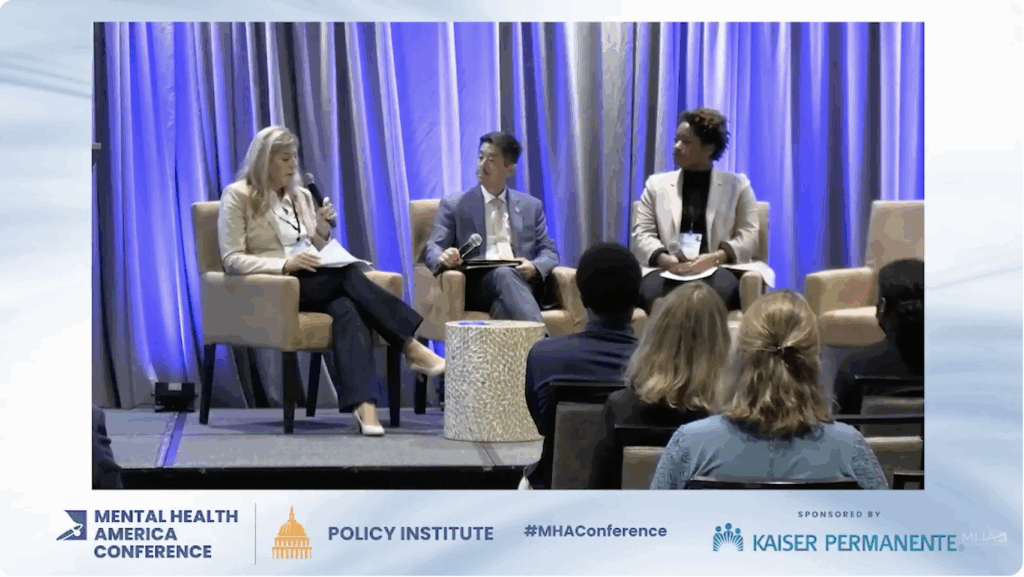
Housing and food are more than basic needs — they are foundational to mental health, recovery, and dignity. At the Mental Health America National Conference, a powerful panel on Housing and Food explored how stable housing and nutrition access shape well-being. Moderated by Mary-Jene Jones, President & CEO of Mental Health America of South Central Kansas, the discussion featured insights from:
- Richard Cho, Senior Advisor at the U.S. Department of Housing and Urban Development (HUD)
- Sakina Chabaz, Senior Policy Advisor, U.S. Department of Agriculture (USDA) Food and Nutrition Service
Together, they highlighted how cross-agency collaboration and community partnerships can turn housing and nutrition policy into tools for prevention, stability, and mental health equity.
Table of Contents
- Why Housing and Food Matter in Mental Health
- HUD’s Vision: Housing as a Healthcare Solution
- USDA’s Mission: Nourishment, Dignity, and Mental Well-being
- Lessons from the Pandemic: What Worked and What Lasts
- Equity and Access: Addressing Vulnerable Populations
- Upstream Prevention and Policy Innovation
- Community Questions and Federal Responses
- Conclusion
- Key Takeaways
Why Housing and Food Matter in Mental Health
Every week, more than 17,000 Americans enter homelessness. Families living without stable housing face higher rates of psychological distress, hospitalization, and emergency care. Similarly, food insecurity—especially among Black, Native, and Latino households—correlates with higher anxiety, depression, and poor health outcomes.
Housing and nutrition are not separate social issues; they are intertwined social drivers of mental health. Stable shelter and consistent access to healthy food protect individuals from the cascading stressors that lead to mental health crises.
HUD’s Vision: Housing as a Healthcare Solution
Richard Cho explained HUD’s central mission: to make housing an integral part of healthcare. Under the Biden–Harris Administration, HUD has launched its largest investment in homelessness prevention in history.
Key initiatives include:
- $10 billion from the American Rescue Plan for rental assistance and emergency housing vouchers.
- $5 billion in Home ARP grants to create non-congregate shelters and permanent supportive housing.
- $530 million in new grants for communities addressing unsheltered homelessness.
- $3.5 billion through the Continuum of Care Program — now redesigned for multi-year support.
Cho emphasized that mental illness does not cause homelessness, but people with mental health challenges are more vulnerable due to systemic barriers and income instability. For this population, “housing itself is treatment.”
HUD also worked with CMS to align Medicaid funding for tenancy supports, case management, and pre-tenancy services, making it easier to blend housing and healthcare resources sustainably.
USDA’s Mission: Nourishment, Dignity, and Mental Well-being
Sakina Chabaz highlighted how USDA’s Food and Nutrition Service (FNS) runs 16 national programs — from SNAP and WIC to school meals and the Summer EBT (“Sun Bucks”) initiative — ensuring that nutrition and mental health are addressed hand in hand.
These programs are permanently authorized, with the majority of funding going directly to benefits for families rather than administrative costs. USDA’s innovations include:
- Sun Meals to Go: Providing rural families with non-congregate summer meals.
- Farm-to-School Programs: Supporting local farmers while improving school nutrition.
- Food and Mood Project: A collaboration with SAMHSA promoting healthy eating and behavioral health in K–12 students.
- Indigenous Food Sovereignty Initiatives: Centering cultural relevance in food access for tribal communities.
Chabaz emphasized that food access is a mental health equity issue: hunger amplifies stress, disrupts focus, and deepens social inequities.
Lessons from the Pandemic: What Worked and What Lasts
Both HUD and USDA used the pandemic as a proving ground for reform.
- HUD’s emergency vouchers and rental assistance kept thousands of families housed and prevented an expected homelessness surge.
- SNAP expansions and free school meals dramatically reduced food insecurity, cutting child poverty nearly in half.
- New infrastructure for summer feeding and rental assistance systems was built nationwide.
Cho reflected: “The pandemic proved what we always knew — that when people are given stability, they thrive.”
Equity and Access: Addressing Vulnerable Populations
HUD reinstated the Equal Access Rule, ensuring that transgender and LGBTQ+ individuals cannot be denied housing or shelter based on gender identity. The department also partners with fair housing initiatives to expand enforcement of discrimination protections.
USDA now allows veterans, homeless individuals, and foster youth to access SNAP benefits without restrictive time limits. These adjustments acknowledge that economic recovery requires flexibility, not punishment.
Upstream Prevention and Policy Innovation
Both agencies stressed the importance of prevention.
- HUD’s affordable housing construction and eviction prevention proposals aim to stop homelessness before it starts.
- Proposed FY2025 federal budget includes billions for eviction prevention, senior housing, and rental aid for at-risk populations.
- Medicaid’s new ability to fund pre-tenancy and housing navigation services marks a major shift toward upstream care.
Chabaz added that updating dietary guidelines and expanding culturally relevant food education (via MyPlate and community-based initiatives) play a similar preventive role — stabilizing families before crises occur.
Community Questions and Federal Responses
Audience members raised real-world challenges:
- Transgender housing insecurity — HUD reaffirmed protections and training for inclusive shelters.
- After-hours food access — USDA noted that reimbursement for “supper” meals remains restricted but encouraged local innovation through community centers.
- Public misinformation on Housing First — HUD continues public education campaigns and partnerships with mayors and advocates to reaffirm that “the solution to homelessness is housing.”
Conclusion
Housing and food are not privileges — they are public health imperatives. Stable homes and consistent nourishment prevent crises, reduce healthcare costs, and strengthen communities.
The takeaway from both HUD and USDA is clear: cross-sector collaboration — not siloed programs — will close the gap between housing, nutrition, and mental health.
As HUD’s Richard Cho concluded, “We’ve proven these solutions work. Now it’s about sustaining them.”
Key Takeaways
- Housing is healthcare. Stable housing is a treatment platform for recovery and mental stability.
- Food access drives mental wellness. Consistent nutrition improves mood, focus, and emotional health.
- Pandemic programs proved what works. Expanded vouchers and meal programs prevented homelessness and hunger at scale.
- Cross-agency collaboration is essential. HUD and USDA are aligning policies and funding to reach vulnerable populations more effectively.
- Equity remains central. Transgender protections, indigenous food programs, and rural initiatives ensure inclusion.
- Prevention saves costs and lives. Early intervention in housing and nutrition reduces crisis spending downstream.
- Community input fuels innovation. Sustainable solutions emerge when federal policy listens to local experience.
Raw Transcript
[00:00] Alright, thank you so much for taking time and realizing who else is in the room and catching up with folks. We're going to go ahead and start the next panel on housing and food. I'm very pleased to introduce our moderator of the housing and food panel, Mary-Jene.
[00:20] Jones, who is president and CEO of Mental Health America of South Central Kansas. Mary is also adjunct faculty at Friends University in Wichita. She's developed community-based programs for people with mental illness for 25 years, and her professional highlights include housing and development.
[00:40] for people with mental health conditions and seniors, opening and expanding outpatient treatment programs, including therapy, medication, and treatment for substance use, and advancing innovative treatments. In recent years, her focus is on policy and advocacy, and she serves as president of the Kansas.
[01:00] Mental Health Coalition and as chair of the Kansas Behavioral Sciences Regulatory Board, she's a licensed clinical marriage and family therapist, a licensed clinical addiction counselor, and holds an approved supervisor designation from the AAMFT. Please welcome Mary Jones.
[01:20] loans.
[01:40] To the acting secretary and his role, he advises the secretary and helps set HUD's policy strategy for solving homelessness, coordinating health with housing, and meeting the housing needs of people with disabilities, older adults, and people involved with the criminal justice system. Richard brings to his role over two decades of experience.
[02:00] is a Biden-Harris appointee serving as senior policy advisor at the United States Department of Agriculture Food and Nutrition Service. This work that she does there includes leveraging the momentum of historic White House conference on hunger, nutrition, and health, and implementing USDA actions put forth in the corresponding national school.
[02:20] strategy with specific focus on better health and integrating nutrition and health. Please help me welcome our guests today. These are on.
[02:40] Thank you so much for that. And as Karen mentioned, I think one of the reasons I was so excited about this panel today is because my own organization has a lot of work in housing and homelessness efforts and all of those intersect with food insecurity and nutrition and when you're working with those particular social drivers, it's important that you're looking at that
[03:00] comprehensive vision of all those things. Our own organization serves kind of a continuum of housing from transitional crisis housing to permanent housing to permanent supportive housing and really everything in between focusing on severe and persistently mentally ill. So this is a near and dear topic to my heart certainly.
[03:20] There are some key points I think will be important for this dialogue and set the stage a little bit. The number of individuals who are experiencing homelessness continues to grow and according to the National Alliance to End Homelessness roughly 17,000 people enter homelessness weekly. Quality affordable housing as you know is a
[03:40] protective factor as we talked about for reducing psychological distress in families. Supportive housing and housing first models are evidence based and do prove to work. Through scarce permanent supportive housing is also known to reduce hospitalization and emergency
[04:00] department's visits, which helps the whole service continuum of care. Other affiliates, other than Kansas, they're South Carolina, Oklahoma, and other states provide robust housing to individuals and families, partially funded by federal and state grants because they understand the importance of housing security as described in MHA's position statement on housing.
[04:20] and homeless policy. MHA of Westchester administers the intensive and sustained engagement and treatment program which utilizes peer support and to engage people with significant mental distress of involuntary commitment. The program is known to show an increase in independent housing, reduce homelessness, and save thousands of dollars in cost.
[04:40] As it relates to nutrition, a couple of things I think that are important to help set the stage for our dialogue here is the food insecurity and the lack of consistent access to food. We were even talking about this before the session started, is associated with poorer mental health globally.
[05:00] has significant factors for socioeconomic and demographic issues. And in fact, black American and Native American and Latina households are more than twice as likely to experience such food insecurities. We know the intersection of food insecurity as it relates to mental health and some real
[05:20] excited again to engage in this conversation with you as well. Approximately 24% of the affiliates are using 41% of their unrestricted budget to run pantries to alleviate food insecurity. So it's important to all of us in this room as we talk about it. If we could just kind of get started, Richard.
[05:40] you would want to talk a little bit about your role and what you're doing as it relates to some of the great efforts at HUD. Sure. Well, first of all, thank you, Mary, and your bio is incredibly impressive. I can't imagine how much you have spare time to do this session given all that you're involved in. But as Mary mentioned, I'm Richard Cho, and I was
[06:00] I joined the Biden-Harris administration at HUD pretty much at the beginning. So it's been over three and a half years. And I was hired with a specific charge, which was to figure out how do we can, at HUD, can advance housing as a solution to health, including mental health. And so kind of simple charge, simple.
[06:20] mandate to achieve. So what I'm really proud of is the work that we've done to advance housing as a healthcare solution really in three ways. First and foremost, as Mary noted, our priority was to tackle the nation's homelessness crisis, which was growing. It's been growing since 2017 and the trend line has been just increasing.
[06:40] Obviously, we had a very large spike at the beginning of 2023. But if you look at the trendline on homelessness, we actually, there was a blip where we actually staved off that increase and that was in 2021 and that I think just shows the impact of when you invest in housing assistance programs that help keep people housed
[07:00] as well as provide housing assistance to those that are already homeless, you actually can help prevent a spike in homelessness. And remember, that was after the pandemic. I think, as Mary noted, Housing First, Permanent Support of Housing, those are proven solutions to addressing homelessness, including and especially among people who have mental illnesses.
[07:20] I want to be clear, and I think everyone here agrees, mental health and mental illness is not the cause of homelessness. I want to say that again. Mental illness does not cause homelessness, but people who have mental health challenges are more vulnerable to homelessness because they have lower incomes because they have health care challenges. It is not the cause, but again, it is a vulnerable.
[07:40] ability to homelessness and exacerbates people's risk. Homelessness also increases people's symptoms and exacerbates their mental health symptoms. If you didn't have mental health challenges before you became homeless, be certain that you will if you are experiencing homelessness. So I know I need to say that. I know you all agree with that.
[08:00] But we all need to say that more loudly and clearly because there are many people out there trying to continue to put out the myth and the disinformation that if we only were able to hospitalize people with mental illnesses, then we would be able to cure homelessness. We all know that is a fallacy. What we at HUD have been doing is to try to help ensure that
[08:20] We are providing adequate resources to communities to provide housing, which we believe for people with serious mental illness who are experiencing homelessness, housing is not only the best solution, it is a form of treatment and it should be the starting point for treatment. And I'm proud that in this administration, we've actually provided communities with more resources to address homelessness through housing
[08:40] than any other prior administration in history. With the American Rescue Plan, we provided $10 billion in dedicated resources, both rental assistance through a new program called Emergency Housing Vouchers. We have Section 8 vouchers, Housing Choice vouchers, you all are familiar with that. We created the first ever dedicated housing voucher program called Emergency Housing
[09:00] vouchers targeted to people experiencing risk of homelessness and require housing authorities that administer those vouchers to partner with homelessness continues of care to make referrals for those vouchers as well as provide supportive services. We also provide communities with $5 billion in home ARP grants. Anybody here ever heard of home ARP?
[09:20] Okay, this is like the quietest American rescue plan program that we provided, but there's $5 billion. Only a tiny bit has been spent still in communities today. If you have not found out how your community is spending home ARP, go ask your cities, your counties, or your governors how is the home ARP money being spent. The intended uses are to expand.
[09:40] permanent supportive housing to convert hotels into non-congregate shelters to provide supportive services and short-term mental assistance. So that was just an American Rescue Plan. On top of that, HUD also provided the first ever package of grants and vouchers specifically targeted to people who are sleeping in encampments, who are unsheltered, as well as a weak.
[10:00] This was the first time we ever did this, coordinated housing vouchers, a new program called Stability Vouchers with those grants. We essentially coordinated the allocation of these resources. In total, 62 communities received over $530 million in grants and vouchers to address on children.
[10:20] That work is just beginning in many communities, but you're starting to hear Dallas, you're starting to hear Los Angeles, Chicago, Tucson. These are the communities that receive these grants that are actually pairing dedicated housing for people in encampments, and what they're doing is using those resources to not sweep encampments and not just
[10:40] displaced people who are sleeping outside, but actually put them into permanent housing. And then if that were not all, we just this year made available the largest ever annual amount of funding through the Homelessness Continuum of Care Program, $3.5 billion. We also are now making that into a two year competition.
[11:00] Anybody here involved in homelessness COC work? You know it's a lot of work every year to put those applications together. We're now making that an every other year process. But that's $3.5 billion, the largest ever homelessness assistance programs. We also have provided, we know housing vouchers are in extremely short supply, only one out of every five households.
[11:20] that qualifies for vouchers based on their income actually receives it. But what we've done is actually issued more housing vouchers in the last three and a half years than has happened in about 20 years. So we're really working to try to increase housing resources. I'll just touch on two other quick things we're doing, because it's not just housing
[11:40] only that is needed to address homelessness or to meet the needs of people who have mental health needs or psychiatric disabilities, you need housing and services. And so we've worked really closely with Dr. Lee and our colleagues at CMS to help states to leverage the flexibilities under their Medicaid programs to cover the full range of housing.
[12:00] related supportive services, individualized case management, tenancy sustaining services, pre-tenancy services, which basically are housing search and navigation supports, as well as some transitional services like move-in costs, short-term rental assistance, search and utility assistance. And what we've been doing is working to not only advise CMS on how the-
[12:20] These flexibility should be structured for states but also working to provide tech assistance and you already heard a little about the housing services partnership accelerator. But we've also been doing things with our programs to make it easier to blend with Medicaid resources. Our homeless discontinuity of care grants, I saw some folks here involved in COC, you receive COC
[12:40] grants? So you know that the way you get funded for any supportive services is you have to accrue a bunch of costs and then you have to do a quarterly drawdown. It's kind of a pain. I've been a grantee in my past. It's not the most fun thing to have to do. But it's a clunky way to finance models. Well, we were approached by the city of Dallas,
[13:00] who I mentioned received those dedicated grants under the unsheltered funding opportunity. And through that, under Nofo, they actually received funding for six permanent supportive housing programs that included supportive services costs. What they actually did was really smart. When they applied for HUD funding, they also asked and they partnered with their
[13:20] local regional behavioral health authority to say can you provide ACT teams or intensive case management supports and we'll try to use the HUD funding to kind of blend and braid with those resources and lo and behold their local behavioral health authority to do that. And so what they actually came up with was a scheme to have the behavioral health authority use
[13:40] a blend of Medicaid and other county resources to fund about $11,000 to $13,000 per person per year in ACTIM or intensive case management costs. And they applied for HUD to pay the equivalent of about $6,000 per person per year. So now you're thinking you're at like $17,000 to $20,000 per person per year.
[14:00] and cost is pretty robust amount of funding for supportive services. And they said to HUD, can you set our payment model because the behavioral health authority is paying us on a per member per month rate, can we get the HUD money to be done in that same way? And we went through the legal process through our waivers and basically gave them a waiver to do that. And I give that as a weedy example, but to show.
[14:20] So what we're trying to do is to align the way that our funding works so it makes it easier to blend and braid with Medicaid or other mainstream behavioral health care resources. I think we're just scratching the surface of new opportunities to be able to find those flexibilities. Dr. Lee also mentioned mainstream vouchers. We have the special
[14:40] financial voucher program that specifically intended to help people with disabilities to either exit or avoid institutional settings or exit or avoid homelessness. These are called mainstream vouchers. Well, just a few weeks ago, we issued new guidance that allows public housing authorities to actually manage those as a separate program, which they've never been able to do, so they can now create
[15:00] separate waitlist and they can also adopt admissions preferences for those vouchers that enable them to say we're going to prioritize people who are referred by agencies like behavioral healthcare agencies, by Medicaid, Money Falls to the Person programs, Centers for Independent Living. In other words, what we're trying to do is make it easier so that the
[15:20] healthcare agencies that not only have the people and also provide services, they are the ones who are able to help make referrals to the housing authorities and also provide services that can be paired with those vouchers. So again, the second thing we've really been doing is working to make sure that our programs can be modular and fit together with supportive services.
[15:40] programs. I always give this example. It's like giving a bunch of kids Legos and Tinkertoys and Lincoln logs and say go build the Millennium Falcon, right? There's no way they can do that. But like if things we can do to make those pieces fit better together, right, that's how you can start to build, make it easy for you all to build complex things like Millennium Falcon.
[16:00] or supportive housing. And finally, the last thing I'll just touch on is the work we've been doing to try to make mental health just a part of what HUD does and what our grantees and housing providers do. We've been doing a lot of work as part of this president's national mental health strategy to destigmatize mental illness and mental health challenges.
[16:20] and provide a lot of education. And I'm really proud that just this year we launched for the first time ever mental health first day trainings for frontline workers who work in the housing system. Housing counseling agencies, fair housing grantees, as well as service coordinators who work in multifamily housing at HUD.
[16:40] who face housing challenges, that can be a triggering event for mental health and emotional distress. And so what we've done is we're trying to provide more tools for people who work in the housing sector who sometimes may encounter somebody experiencing mental health distress and actually don't know what they're seeing. And so may think, oh, this person doesn't need help or this person is in
[17:00] is threatening me or engaging in other kinds of behaviors, the more we can equip people on the front lines of the housing sector to recognize when they're seeing somebody in mental health or emotional distress, the better we can actually help not only connect people to care, but make them do a better job of addressing their housing needs. So I'll stop. That's fantastic. I mean, it's just amazing the amount of.
[17:20] work that HUD is doing. I think so many of us don't even understand, unless you're really doing the housing, if you're in the housing business, you don't understand how much there is available through HUD. I also just have to say the work to find intersections with other departments, and I know Sakina will probably talk about that a little bit too, is really incredible.
[17:40] We see that, we feel that, how these departments work independently of each other and there's such opportunity to pull all of these social driver areas together. So thank you for that. We'll get back to you in just a second. Sakina, it'd be a great opportunity for you to talk a little bit about what you're doing over there on food, nutrition, and how to
[18:00] to help families. Thanks, Mary. It's really, really wonderful to be here with you all. My name is Sakina Chabaz. I'm a senior advisor at the USDA Food and Nutrition Service. Just from a raise of hands, how many of you all have heard of the Food and Nutrition Service? How many of you have heard of the SNAP program? School males?
[18:20] WIC, that's us. We run a suite of 16 different nutrition programs, the most newly permanently authorized program. Is the Sun Books program or summer EBT? Are any of you all familiar with that program or was it operating in your state? I'm so happy to hear that. We just came off of a really, really
[18:40] robust time during the summer promoting our sun programs, which are sun meals, the Sun Meals to Go, which is a rural non-congregate option for children living in rural areas, and then also our Sun Books program, which initially started off as a pilot program, but is now permanently authorized and makes funds available for families to purchase groceries throughout the summer.
[19:00] I see a very positive hit and not over there. I really appreciate that. The portfolio of work that I cover at the Food and Nutrition Service is a little bit broad, but primarily focuses on the White House Conference on Hunger and Nutrition and Health and the corresponding national strategy. We also have FNS programs and policies, operation
[19:20] within the US territories. A big part of my portfolio is also the local and regional food system, so thinking about how do we get local foods into our schools, into our early childcare settings, into our adult daycare settings. And really thinking about how our programs can shepherd in new and better access.
[19:40] farmers and producers so that they're supported as well. Another part of my portfolio that I think touches on some of the work that has been highlighted already is our interagency work. I specifically focus on interagency work related to veterans, people experiencing homelessness, and also system-impacted youth or youth aging out of foster care.
[20:00] And that is a really important part of our work, partly for public education around our programs and making sure that our partners know that a lot of the populations that they serve, whether they're experiencing homelessness or within a healthcare setting, if they have children, are eligible for many other programs that we operate at the Food and Nutrition Service.
[20:20] And also wanting to make sure that the experience that people have trying to get into our programs is one that is as easeful as possible, is as dignified as possible, and is one that helps to facilitate access to the food resources that folks need from pregnancy to birth and
[20:40] and beyond. We have a lot of priorities and pillars that have been formed, that are informed by the White House Conference on Hunger, Nutrition, and Health, and probably over the course of our conversation, be able to touch on some of those. But for the time being, I just really want to highlight that food and mental health and our overall physical health are deeply,
[21:00] deeply intertwined. The services that we operate at the USDA specifically within the Food and Nutrition Service are not designed to get people into housing but we do a significant amount of work on coordinating services within our seven regional offices with our partners and making sure that
[21:20] people who are eligible for our programs are being served by them. And so I'll just pause there and just I'm so thrilled that we get to highlight these intersections between food and housing and that we get to play a part in that. Thank you, Sakina. Again, incredible things. I think we'll be able to get to some of the more specifics in there, but what was really important.
[21:40] important to our panelists when we were preparing for this was to find out what's happening in your communities and knowing what those high level things are and the things that you're concerned about in your communities. So there's the interactive part of every session. If you would take out your phones and take a picture, we have a little survey here.
[22:00] give us some real-time feedback about the things that are most important to you, and we'd love to have you spend just a second putting a couple of those things down, and it can help maybe guide some of the conversation we have a little bit through this session.
[22:20] Okay, it says responses in. So lots of things here if I can see from the screen over here, it might be easier for me to a bit a lot. Immediate and short-term housing, housing costs.
[22:40] competing budget priorities, veterans' housing, lots of food insecurity, access to care, supportive services, infrastructure is in place but not the supportive services and sure we'll have some talking points about that. I think it's just really important as you look at what's happening
[23:00] And on the ground that will help inform some of the conversation and what's happening from your offices in terms of policy. Richard, I'm going to turn it back to you really quickly and talk a little bit about some of those HUD's housing programs that are funded and they help states and organizations like MHA Affiliates, including mine, to
[23:20] provides safe, supportive, and affordable housing. Can you describe how these funding streams are being used to individuals with mental health conditions, especially any newer or innovative ideas? Yeah, so, I mean, I touched on what we've done on vouchers. So, I've been working in homelessness, worked for 25 years or so.
[23:40] And, you know, for many of those years, housing vouchers was not something that people experiencing homelessness had a lot of access to. In most communities, you had to apply to your housing authority and you get on a waitlist that was, you know, many years long, thousands of people on that waitlist. And if you're experiencing homelessness, you probably either did not apply.
[24:00] apply or when you did apply you definitely didn't get priority access or you faced a lot of barriers because you didn't have your documents. You didn't have your verification of your Social Security number, verification of your disability, proof of your income sources, and all of that. You maybe didn't even have an income. So one of the things we did, and again,
[24:20] started through that emergency housing voucher program where we forced housing authorities to partner with teams of care. What happened as a result of that was that 600 housing authorities who received those vouchers, they kind of realized that a lot of the myths and misconceptions that they had about addressing homelessness were really unfounded.
[24:40] in that they had a really great experience working with homeless service providers, not universally and certainly they were challenges, but for the most part, housing authorities felt, hey, those vouchers are great and for the first time ever I've heard housing authorities come to us and say, if there's any more of those emergency housing vouchers laying around, we'd love access to those because we really would have more people experiencing homelessness.
[25:00] And now you have some of the public housing authority trade associations, they're in industry groups, they're coming in and they're talking more about the successes that they've had with homelessness. So first and foremost, just the fact that vouchers are now an actual real tool for helping address homelessness and housing authorities are willing partners, that's a huge success. As I mentioned, we also
[25:20] have done work to try to address some of the barriers that people face like documentation. So we've been giving out extending flexibilities where if housing authorities want to be able to issue a voucher to a person experiencing homelessness and that person doesn't have their verifications of social security number, date of birth, etc., etc., we will
[25:40] consider waivers where we allow them to issue vouchers to people based on their self-certification that they say who they are and that their income is what they are and then we will give them 90 days to actually obtain those verifications. That was something we tried through the pandemic and we realized actually kind of works. So we're now made that something we can extend.
[26:00] last thing I mentioned was those flexibilities on mainstream vouchers. Now the idea for that came actually from disability advocates who said we have a lot of people still stuck in institutional settings where we're facing an Olmstead lawsuit and we still can't get these mainstream vouchers which were and I always think of mainstream vouchers as Olmstead vouchers.
[26:20] community living vouchers, these were intended to help people with disabilities, particularly psychiatric disabilities, move out of institutional and segregated settings and live in the community. And yet the linkages were not being made by the agencies that support transitions from institution to community and the housing authorities that administered those. So we've added those new flexibilities.
[26:40] that really strengthen the partnership and enable a more direct connection where a mental health, a state mental health agency or a Medicaid money falls a person program can make a direct referral to those housing authorities. And the housing authority can put them at the top of a separate waiting list, which enables them to have a faster turnaround to provide to those individuals.
[27:00] individuals. Basically, a lot of the work that we've done at HUD is to try to make our resources easier to use as supportive housing, as Housing Plus Services. And I think we've done that in vouchers. We've done that in our homeless program grants. And I think we're continuing to look for ways that we can reduce barriers and make it easier to blend Housing Plus Services.
[27:20] Yeah, those are the exact approaches that are needed, right? Reducing those barriers that people can access. CECHINA, USDA administers 16 nutrition programs, including SNAP and WIC and some others that you already mentioned earlier, which are funded to help individuals and families afford food. Can you describe how the funding is used to meet
[27:40] nutritional needs? Absolutely. One of the important things that I want to point out about the 16 programs that we administer is that they have permanent authorization from Congress, which means that these programs will continue to be funded as long as Congress makes that funding available and we have the capacity to administer.
[28:00] them. One of the really important pieces as well that I want to point out in terms of the funding that comes to our programs for a program like SNAP, the Supplement and Nutrition Assistance Program, the majority of the funding that comes to USDA is goes out in the form of benefits to participants in the
[28:20] program, I think 1% or less of that funding goes towards administrative costs. When thinking about the investment that our federal government is making in making food assistance available to Americans that are either financially or categorically eligible for our programs, know that the majority of the money that you might see
[28:40] in a budget document or might be talked about in the news or sort of comes through our doors is going into the homes of Americans and children who need that particular food assistance. And so during the COVID-19 pandemic, we also saw some really interesting and flexible uses of funding to bolster our program.
[29:00] because the situation was dire for many Americans. Many people experienced increases in economic insecurity, food insecurity, and that circumstance would have been more difficult had there not been more funding available through, you know, the American Rescue Plan or the inflation reduction.
[29:20] Act and different investments that came from Congress and were prioritized and invested into our programs to, you know, make school meals free for all children for that particular time when the emergency exemptions were still in place. And so just know that the funding that comes
[29:40] the USDA to run our programs, are feeding people, are largely used to get benefits out the door, or are made available to reimburse meals to schools or for child and adult care food programs, for school time meals, for snacks, for supper if you're operating that in an emergency.
[30:00] shelter environment and the funding that we have, you know, we have to be good stewards of that and to make sure that we are operating our programs in accordance with federal statute. But just know that the majority of that money is going to feed people from the USDA. That's fantastic. You both mentioned something that I kind of want to highlight and it's this post-pandemic
[30:20] pandemic place that we're in, I mean, you know, locally in our community, we saw our need for our voucher waitlist go up by 7,000 people. So and I'm sure this isn't unique to our community. It's happening everywhere. But as each of you mentioned this, we learned this during the pandemic, what can we learn and take from it? And is there any thought
[30:40] in your agencies to ensure that we do take these lessons learned forward. We learned a lot during the COVID-19 pandemic. We learned that we could operate school lunch service for children outside of the school environment. We learned that we could do grab-and-go. We learned that we could serve children in rural
[31:00] areas better than we ever have with our mail delivery model or the pilot where children can come and pick up enough school breakfast and school lunch food items for the entire week. We know that geography and lack of mobility and access to transit is a huge
[31:20] issue for many rural communities across the United States and we really wanted to step up to the challenge of making sure that we could you know feed families, that we could feed children and that we can partner with organizations on the ground and with our regional offices to be innovative and also you know know when things were challenging in
[31:40] needed to be changed if a particular model wasn't working very well and having the flexibility in the funding to be able to do that and also do a review to the point where this past summer we were running that as a permanent authorization for the first time. That is for something a long time that Congress has permanently authorized one of our programs. So we also saw
[32:00] raise and snap benefits, which was crucial. But also in May of 2023, we also saw that expansion of benefits go away because of the declaration for the emergency having gone away as well. And so one of the things that we want to prioritize is making sure that, you know, folks who are eligible for our programs are still
[32:20] being reached and participating in them. One of the other big advantages, important changes that came out of the Fiscal Responsibility Act of 2023 last year is that veterans, people experiencing homelessness and youth aging out of foster care are able to
[32:40] able to continue to participate in SNAP without the pressure of the time limit that individuals who don't have dependents and who are not disabled are typically subject to out of a three-month period, a three-month period out of a 36-month period where that would be the only time that they were eligible.
[33:00] So for a lot of the folks who you all might be serving, if they are experiencing homelessness, if they are a veteran or a youth, a young person aging out of foster care, they have a little bit more time to figure out their work circumstances. They have a little bit more time to figure out their economic security without the pressure of being kicked off with a program because they've been working with them.
[33:20] exceeded that three month limit. So a lot of innovation. We learned a lot from the pandemic and continue to try to be better in our program administration. And I'll just add to that. I think I'd say there's like sort of three things that we learned. One is like some of the programs that we had because of the American Rescue Plan were things that just proved the point.
[33:40] I mean, the goal was really to just assist as many people as possible, but as a result of that, we proved things. We proved vouchers can solve homelessness and people experiencing homelessness can succeed in vouchers. We proved that if you provide people with emergency rental assistance when they're falling behind in rent because of circumstances beyond their control, you can keep them housed and also prevent a spike in homelessness.
[34:00] The Emergency Rental Assistance Program, that was our, a treasury program, actually proved that. You prove that if you provide families with a little bit more money in their bank accounts than in their wallets every month through the enhanced child tax credit, you can actually cut child poverty in half. And so I think these have begun to change the conversation here in Washington, D.C. about
[34:20] Why are these programs things that we should only have in the pandemic when we've proven that they actually have long and enduring benefits? Number two, we built infrastructure. I think the summer feeding programs and things that the USDA did has created a new infrastructure. There's now systems in place for how to actually provide food to families.
[34:40] with the emergency rental assistance program that Treasury implemented, there's now more of a local infrastructure. When that program first began, it was $46 billion and most communities had no way to get, even identify who was at risk of eviction or facing rent arrears, no way to get money out to the landlords. There was just no infrastructure, no way to write checks to those landlords.
[35:00] handlers and provide money, community to scramble to put together an infrastructure of how you identify families and get emergency rental assistance out. That's been put in place now and a lot of communities have continued that through local resources or at least continue those collaborations. Number three is that we've actually changed the conversation. As a parent in my own local
[35:20] school district, it's no longer a question of why should we do summer feeding or why should we try to provide free lunches. It's actually a debate in the school board, like, how can we find the money to do this? It's more a question of how as opposed to weather. And I think the same thing is true with the work that we've done on evictions. It's no longer like, why should we do this? It's like, how
[35:40] can we continue this work? And I think that's the maybe the ugly truth about things in Washington is ideas really never go away. They may not have the political moment because we're in an election year or other things, but they actually last. And so I'm hoping that we've permanently changed the conversation about the way that our
[36:00] safety net programs, the way our housing assistance programs, the way our nutrition and food programs actually work and that will have long-term and enduring changes to those policy conversations.
[36:20] disabilities. In our work, a lot of it is based on prevention work. So can you talk a little bit about HUD's maybe more upstream programming or thoughts about how to work with housing? Yeah, I mean, I guess the first thing I'd say is that most of what HUD does is the prevention of homelessness, the scaling of affordable and
[36:40] low income housing is the prevention of homelessness. And of course, we are dependent on Congress providing enough resources for us to do that. But we've done a lot already in the last three and a half years. In the last three and a half years, HUD has actually helped to either build or rehabilitate over half a million homes in the country. Scratching the surface of our nation.
[37:00] of housing needs, but significant efforts that we've started. There's more developments in the pipeline. And actually in 2022, new housing construction actually reached a new peak. It's now at 1.7 million homes that are under construction. So I feel like we've begun an engine of just expanding affordable housing.
[37:20] prevention of actually help people. You know, I think it is sad that programs like emergency rental assistance were not continued. But again, there's a conversation happening in Washington about how do we continue that. The president's budget requests for FY 2025, which again, this is an election year and they're debating a bill right now. It's
[37:40] Some of those ideas are not likely to be passed in the appropriations bill that they're debating as we speak. But the president's budget reflects an understanding that we need to invest at scale in homelessness prevention programs. There's $3 billion for an eviction prevention program. There's $3 billion for rental assistance for older adults so we can prevent seniors from becoming
[38:00] homeless, there's $8 billion for both the prevention as well as to address homelessness. The president's asking for those things on the mandatory side of the budget, the place where Social Security and Medicare and Medicaid live, because we believe that housing is a necessity and should be funded on that mandatory side of the budget. And then I guess the last thing I'll say is we've done a lot of little things.
[38:20] I think Medicaid's increasing role in providing pre-tenancy services. That's not just for people experiencing homelessness. That can be for people who are at risk of homelessness in many states like North Carolina and California and Massachusetts are beginning to look upstream using Medicaid. There's other agencies that are part of the U.S. Interagency Council on Homelessness that are also looking at how to do this.
[38:40] part of my message in the area is prevention of homelessness cannot be just a HUD thing. It cannot just be a continuum of care thing. It cannot just be the housing sector. It's got to be a shared effort by all sectors to build prevent homelessness. And I want to get to audience questions. But, Sakina, if you could just real briefly talk about some innovative or programs.
[39:00] designed to really make sure that children have access to food. Absolutely. So a lot of the programs that we run at the USDA have been around for a very long time, but over the course of our operation of those programs, we have to make sure that they stay up to date. We have to update our standards, how we design our programs, to make sure that we're doing what we can.
[39:20] sure we're keeping up with the latest science. One of the things we undertook at the top of the year were the dietary guidelines for Americans. That was an effort undertaken by HHS and USDA. The Dietary Guidelines for Americans shows up in all of our programs. It helps to inform the
[39:40] and so many other things and how we think about what a nutritious and healthful diet specifically looks like. I also wanted to touch on just very quickly the work that we do with MyPlate. Who here knows what the food pyramid is? MyPlate replaced the food pyramid. That was an important innovation to come out of the USDA.
[40:00] to also reflect how people eat, what a healthful diet looks like, and to create a mechanism to display a modern version of the dietary guidelines for Americans and making sure that that's culturally relevant and adaptable and reflects food prices as well. Our Mountain Plains regional office works with SAMHSA, the substance abuse and
[40:20] Health Services Administration on what we call the Food and Mood Project and is an effort specifically focused on young people in K-12 student populations to promote behavioral health, to think about the impact of negative substances and also to do health promotion work that promotes
[40:40] nutrition security and behavioral health and wellness. And so I think our inter-agency work captures a lot of our innovation and also just wanting to make sure that the programs that we operate like Farm to School are supporting our local farmers, also support the social and emotional health of young people. We also have the Indigenous Food Security Initiative operated out of
[41:00] of USDA and the Office of Tribal Relations and really wanting to make sure that the work we do in partnership with, in support of tribal nations and communities is really putting food sovereignty at the front of that and there's so much more work there that I could talk about but I want to make sure that we get to your questions just know that.
[41:20] that the work that we do, some of it is mandated that we update it like the dietary guidelines every five years, but some of it also comes from the ground up and it comes from our partners and constituents telling us to do better to telling us the things that they want to see in the ground and that we can support and either fund or be a thought partner on.
[41:40] Well, I'll open it up here to see if there's any questions. Be one in the front. I work in the Philadelphia area as a certified peer supporter, mainly with the queer community, specifically those who are transgender. There's a huge issue.
[42:00] transgender housing insecurity were overrepresented, were underrepresented in the shift back to people being properly and consumerly employed and many programs have remained not available for people who are transgender as a result of you know not
[42:20] not being given a forming services or being told to be in an environment that they might seem themselves to be unsafe because of their physical biology. What solutions are being done and what can be done to ameliorate this issue? Well, actually, at HUD, we've done a few things over the last
[42:40] years. First and foremost, we reinstated a rule that the prior administration actually tried to do away with what is called the equal access rule. And that was a rule that said that for providers of housing or homeless shelters, that you cannot deny people access on the basis of their gender identity. And so that
[43:00] is one thing that we reinstated. We recently held a roundtable with LGBTQI plus community and asked them about how that's going in terms of are they seeing the results. And what we've heard is, yes, there's some degree of change we've seen, but a lot of the homeless service
[43:20] services that are provided out there are still not friendly to the transgender and LGBTQ plus community. We know we have a lot more work to do to help them implement that and make shelters not just a place where you can accept people who are transgender, but one that is actually welcoming and tailored.
[43:40] to their needs. Second, we've also issued trainings and guidance to our fair housing initiatives and fair housing assistance programs. Those are the local grantees that actually do fair housing enforcement locally about how the Fair Housing Act also extends to protections to people based on their gender identity and continuing to do that work to reinforce.
[44:00] Just a couple things we're doing. I know we are getting close on time. There is another question up there that we wanted your feedback on and that is, oh, there you go. You already did it. Does your organization offer food or housing, nutrition, support services? So we've got some yeses and noes up there so you have some idea of what's happening in our audience.
[44:20] Other questions?
[44:40] families to go for supportive services and resources. That was a really huge area when I spent time in New Mexico. No one knew where to go after hours. So we were doing a great job for the breakfast and lunch, but not so much for the nighttime, the after-school hours.
[45:00] gap. So just wanted to ask if there were supported places both as it relates to food and nutrition as well as outside. I think that's a great question and not the first time that we've heard that. As of now, Congress sets the reimbursement rates for meals and so for school breakfast and school
[45:20] lunch, you know, institutions that operate our programs can anticipate having a reimbursement that is set at the top of the fiscal year. And then for schools that maybe run an after-school program or like a Boys and Girls Club, they also can receive reimbursement for providing after-school snacks. Right now, Congress does not
[45:40] give us authorization to reimburse what we call supper or late time meals unless those supper meals are being offered in the context of an emergency shelter, in which case the emergency shelter just would receive the funding to be able to do that and does not have to go through a reimbursement process. But that's where we lean on.
[46:00] community and thinking about where other institutions might be able to fill that gap. This has also come up in conversation with residential childcare institutions or juvenile justice facilities that can operate our programs. One of the challenges that we've heard is that they'll run school breakfast, they'll run school lunch, but they can't get reimbursement for dinner.
[46:20] We would lean on Congress for a change like that if there was enough groundswill. But it's something that we're definitely aware of and would really encourage schools to offer those after school options, for communities to offer those after school options, for your local library to be able to do that, to be a safe place for young people to also get those snacks. And we have
[46:40] funding to reimburse that but right now supper is not something that can be reimbursed or funded outside of the emergency shelter context. Do we have time for one more question?
[47:00] Thank you. I'm Debbie Plotnick. I'm executive vice president for state and federal advocacy at our national office at Mental Health American National. And so I wanted to talk about where the state and federal comes in, and I work all across all the states, and we are seeing concerted efforts by outside.
[47:20] funded organizations such as the Cicero Institute to really put out a lot of misinformation around housing first, around supported housing, what on the federal level is being done to counteract the misinformation. And while it's
[47:40] certainly true that the number of unhoused folks has gone up. That has more to do with housing than all of the other things. So just wanted to hear a little bit more about that, please. That's a great question, Debbie. And first of all, thanks for raising that. Also know it's like HUD can't alone.
[48:00] We've been pounding the pavement and sending out folks to share the successes we've seen with emergency housing vouchers, the successes we're seeing with this new unsheltered homelessness grant and voucher program where we're actually using housing to resolve encampments by providing permanent housing to people.
[48:20] to fill in. One of the first priorities when I joined this administration was let's make it absolutely clear that housing first is the policy of the federal government with respect to housing and has been so since the George W. Bush administration bipartisan support. So we continue to do that, sharing that with members of Congress. Yes, unfortunately there are groups out there that are trying to do
[48:40] this motivated by I do not know what. But I think it is probably something we need to rely on all of you, our partners, outside the federal government to also spread the word on. But we continue to do that. Our former HUD secretary issued an op-ed making it clear that the way we address homelessness is through health care.
[49:00] housing, we are continuing to look at ways that we can provide that messaging. We partnered directly with mayors, county leaders, and governors. In 2021, we launched an initiative called House America, where we told mayors and county leaders and governors, we're just giving you a lot of money to address homelessness, let's go out there and actually set specific goals on how many people we're going to
[49:20] assist who are experiencing home assist through housing and services, not through whatever others are claiming is the solution, which I don't actually think they have real solutions. So again, from our perspective, there's no debate, there's no controversy. We just need to continue to make that clear. That said, it's the
[49:40] often the broader public that we need to convince. And certainly we're in a post-Supreme Corps Grants Pass environment where there's even more noise in the political sphere at the local level. But again, our mission is clear. The solution to homelessness is to create inclusive communities that create enough housing for all, and that is
[50:00] is what we need to keep a laser focus on. I think we had one more. Yes. So sorry. I'm going off the Supreme Court's question. I am not a Supreme Court expert. But one of the concerns I have. I don't know anything about the Chevron ruling. But I do know that a lot of partnership and innovation can come from agentee interpretation of rules.
[50:20] was super hard to implement and was done by FNS at the best of legislation that was really complicated and hard to implement. So kudos to you. In a post-Chevron world, are you guys tracking any of that? Does this new kind of agency discretion environment that we operate in or could operate in, are you tracking any of that?
[50:40] do you think that that will impact any of the partnership or innovation when it comes to relating housing and food to mental health? I think that we will continue to operate our programs in accordance with the laws and regulations that exist that also give us the space to be innovative and to partner with our organizations. We don't have any official comment on.
[51:00] the Chevron ruling or the Grants Pass ruling. And I think it's just going to be a really important charge to us to make sure that we're clear on our guidance, clear on our rules, and clear about the priorities that really flow from the top down, but also have existed for a really long time for the Food and Nutrition Service.
[51:20] I think our programs run well. I think they serve a lot of people and I think to the extent that there might be space for more interpretation over that might bump up as a challenge. We will handle that in close accordance with the Office of General Counsel and the great leadership at our department. So I think that's probably where we are right now.
[51:40] now. What she said exactly. What you see all the way. Yes. I want to thank you so much for the conversation today, Sakina and Richard. It is, we're just so grateful to have you here and to have your expertise and to share the knowledge and what's going on in at the federal
[52:00] level with us. I think this conversation could have lasted another hour very easily. We just appreciate your time so much. Thank you. Thank you so much. Can I say one more thing? Just we have a we have a post note here. You all are awesome for being here.
[52:20] And to the extent that we can continue elevating our issues as department partners and agency partners, we will keep doing that. But we always want to hear from you. So please talk to us. Elevate your issues to us. Use our public resources. That is also how we combat misinformation by putting out good, sound information. And just know that we're here to serve you all. Thank you.
[52:40] Thank you. Thank you. Thank you. Thank you.