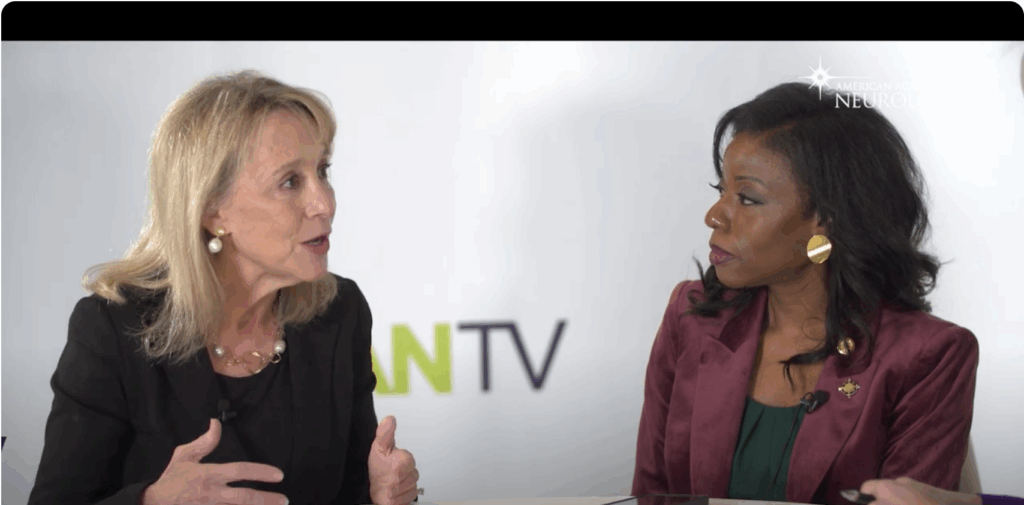
Episode 2: AANTV at the 2023 Annual Meeting – American Academy of Neurology
- October 3, 2025
- 1:54 pm
For 75 years, the American Academy of Neurology has advocated and supported the financial well-being, continuing viability, and innovation of the practice of neurology. This year’s annual meeting is the premiere opportunity to celebrate how far we’ve come and spotlight those making a difference.
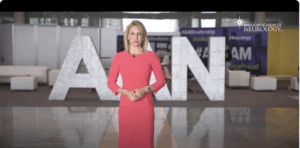
Welcome back to Boston and the annual meeting of the American Academy of Neurology. This is AAN TV. Today we turn the focus to member engagement and highlight how the AAN is ensuring the health of the global neurology community. The American Academy of Neurology is committed to enhancing member satisfaction, well-being, resiliency, and engagement.
Today you will hear from the Chair of the Member Engagement Committee Dr. Maisha Robinson about her efforts to engage and retain the 40,000 members of the AAN. Dr. Hope O'Brien & Dr. Ann Tilton stop by the AANTV studio to describe the year-long planning and execution of this year's annual meeting. We will also sit down with the 2021 Brain Prize recipient, Dr. Peter Goadsby. Finally today, we stop by the BrainPAC booth to learn more about AAN's advocacy efforts happening on Capitol Hill.
We also visit The Washington University Center for Neuroimmunology and Neuroinfectious Diseases.
Summary
AAN TV — Member Engagement, Global Community Health, and Advocacy in Neurology
Celebrating 75 years of the American Academy of Neurology (AAN), this AAN TV edition centers on member engagement, community well-being, and how the Academy strengthens the global neurology workforce. From practical strategies to retain and recruit members, to the science and logistics behind a record-breaking annual meeting, to policy advocacy on Capitol Hill, the episode highlights how the AAN is safeguarding the future of neurologic care—while elevating world-class research and patient outcomes.
Table of Contents
- How to Watch AAN TV
- Why Member Engagement Matters
- From Blueprint to Buzz: Inside the 75th Annual Meeting
- Spotlight: The Center for Neuro-Related Inflammatory and Infectious Diseases
- Grand Rounds: Brain Prize Laureate on Migraines, CGRP, and Mentorship
- Policy in Action: BrainPAC and the Neurology Agenda in Washington
- Conclusion
- Key Takeaways
How to Watch AAN TV
You can catch the latest episodes:
- On TV stations throughout the convention center
- On the AAN website
- Via in-house hotel channels at partner properties
- On AAN YouTube and AAN Twitter channels
Why Member Engagement Matters
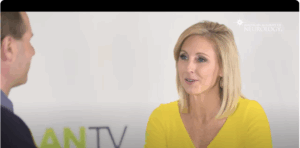
Guest: Chair, AAN Member Engagement Committee
Mandate: The committee partners with AAN staff and volunteer leaders to shape membership policies, recruitment and retention, member well-being and resiliency, and digital communications.
Four priority audiences:
- Current members (retention): The AAN has ~40,000 members; ~92% of U.S. neurologists are members. Keeping this core is crucial.
- Junior pipeline: Trainees and early-career clinicians are essential to workforce sustainability.
- Neurology-led care teams: Expanding to advanced practice providers and business administrators to reflect team-based care.
- Global colleagues: Building international partnerships to support a truly global neurology community.
2024–25 focus:
- Value clarity: Make benefits visible and measurable.
- Meaningful engagement: Define “engagement” by member needs and provide flexible options.
- Roadmap to contribute: Give concrete, accessible pathways for volunteering, leading, teaching, and advocacy.
Personal note from the chair: A decade ago, they nearly let their membership lapse. A leadership program changed that—and now they’re paying it forward by helping others find their place and purpose in the AAN.
From Blueprint to Buzz: Inside the 75th Annual Meeting
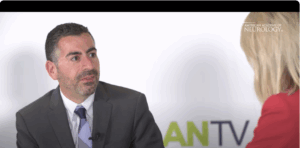
Guests: Meeting Management Co-Chairs, Drs. Ann Tilton & Hope O’Brien
What it takes: Months of planning by a broad team of physician volunteers and AAN staff to curate relevant, practice-changing education that attendees can take home to colleagues and patients.
By the numbers (record-breaking):
- 13,000+ attendees (11,000+ in person; 2,300+ virtual)
- 110+ countries represented
- 2,600+ trainees
- Hybrid format for maximum reach
Goals for attendees:
- Expand knowledge and update clinical skills
- Reignite passion for neurology
- Strengthen networks—reconnecting with old friends and making new collaborators
Curation ethos: Prioritize relevance, quality, and translatability—what you learn here should help patients next week.
Spotlight: The Center for Neuro-Related Inflammatory and Infectious Diseases
A new center (CNND) grew from conversations with 35+ faculty working on neuro-immunology, neuro-infectious, and related disorders.
What’s new:
- Core leadership and a growing faculty cohort
- Expanding beyond viral and autoimmune CNS diseases into enigmatic neuro conditions with unclear causes
- Strong momentum in pathobiology understanding and therapeutic development
Vision: A collaborative, cross-disciplinary hub accelerating discovery to treatment for complex neuroinflammatory and neuroinfectious diseases.
Grand Rounds: Brain Prize Laureate on Migraines, CGRP, and Mentorship
Guest: 2021 Brain Prize recipient (the “Nobel of Neuroscience”) for migraine research
The science: In the late 1980s, researchers identified calcitonin gene–related peptide (CGRP) as pivotal in migraine attacks. They hypothesized that blocking CGRP or its receptor would yield anti-migraine effects—an idea that ultimately led to:
- Monoclonal antibodies (preventive)
- Gepants (small-molecule CGRP receptor antagonists; acute ± preventive)
Now authorized in 80+ countries, these options fill crucial gaps for patients who failed first-line therapies.
On mentorship: “I didn’t win the Brain Prize because I appeared fully formed—I was mentored.” Hallmarks of a great mentor: vision, excitement, and direction when the path isn’t obvious. The AAN’s breadth fosters networking, cross-pollination of ideas, and long-term professional growth.
Policy in Action: BrainPAC and the Neurology Agenda in Washington
What is BrainPAC? The only federal PAC solely representing neurology in Washington, D.C.
Current priorities:
- Access to care: Policies that expand patient access to neurologic services
- Reduce regulatory burden: Streamline documentation and compliance so clinicians can focus on care
- Grow the workforce: Address shortages to meet rising demand for neurologists
Why funding matters: Contributions enable AAN advocates to meet with lawmakers and staff, join leadership events, and amplify neurology’s voice in policy decisions that determine research dollars, payment models, and training pipelines.
Conclusion
Member engagement isn’t an endpoint—it’s an engine. With clear value, diverse pathways to contribute, and real advocacy power, the AAN is future-proofing neurology: curating world-class education, building capacity across teams and borders, advancing patient-centered research, and ensuring neurology has a seat at every table where decisions get made.
Key Takeaways
- Retention + pipeline: Keeping current members while cultivating trainees and international colleagues is central to AAN’s strategy.
- Team-based membership: Extending benefits to APPs and administrators reflects how neurologic care is delivered today.
- Record-setting meeting: 13k+ attendees, 110+ countries, and a hybrid model emphasize accessibility and global reach.
- Centers of excellence: Multidisciplinary hubs like the CNND are accelerating progress in neuroinflammatory and neuroinfectious disease.
- Bench to bedside: CGRP-targeted therapies transformed options for refractory migraine—mentorship and collaboration made it possible.
- Policy leverage: BrainPAC advances neurology’s priorities—access, less red tape, more clinicians—by engaging Congress directly.
- Stay connected: Watch AAN TV via venue screens, the website, hotel channels, YouTube, and Twitter to keep pace with this week’s highlights.
Raw Transcript
[00:00] MUSIC
[00:20] innovation of the practice of neurology. This year's annual meeting is the premier opportunity to celebrate how far we've come and spotlight those making a difference.
[00:40] neurology. I'm your host, Autria Godfrey, and this is AAN TV. Today we turn the focus to member engagement and highlight how the AAN is ensuring the health of the global neurology community. The American Academy of Neurology is committed to enhancing member satisfaction, well-being, resiliency, and well-being.
[01:00] and Engagement.
[01:20] be is in studio. And we will also take you around the nation as we highlight the institutions and organizations at the forefront of groundbreaking new treatments and care in the field of neurology. There is so much to see and we want to make sure you never miss a minute. You can always find the latest AAN TV
[01:40] episode airing on the TV station throughout the convention center. On the AAN website, on the in-house channels at all of our partner hotels, and on the AAN YouTube.
[02:00] YouTube and Twitter channels.
[02:20] Let's start off with exactly what your role is as member engagement committee. So I'm honored to be the chair of the member engagement committee. I partner with academy staff and a group of dedicated volunteers, really thinking about all things membership, from policies, recruitment, retention strategies, the well-being of members, the digital strategy and communication.
[02:40] And I understand that the committee is not only focused on providing members this optimal experience for current members, but also, as you just mentioned, recruitment, retention. What are your plans on trying to tackle those two priorities? Well, thanks for that question. I even see sort of four big groups that we're focused on. The first is ensuring that our current members continue.
[03:00] to renew their membership. So focus really on retention. We have about 40,000 members and about 92% of neurologists in the United States are members. So we want to keep that core base. But the second thing is really thinking about one of the things that is very important to the academy is our pipeline, thinking about the workforce. And so ensuring that we focus on our junior members as an
[03:20] important to. The third would be thinking about the neurology-led care teams. So who else in addition to neurologists can be members? The business administrators, the advanced practice providers are also people that we're seeking to be members of the academy. And the last we have a global strategy thinking about how we can optimize our partnerships with our colleagues who are
[03:40] neurologists internationally.
[04:00] Second is really thinking about meaningful engagement. So what does engagement mean to each member? And how can we ensure? Exactly, and how can we ensure that people's needs are met? And the third thing is a roadmap to engagement. People say, how can I be engaged in the academy? We wanna provide concrete examples for that. And can you tell us?
[04:20] Before we wrap up here, what the most rewarding part of this role has been for you? Well, you probably wouldn't believe it, but a little over 10 years ago, I wasn't sure that I wanted to renew my membership for the Academy. I didn't really know the value of it. I was not engaged at all. And I sought opportunities to learn about the Academy, joined one of the leadership programs in its inaugural year.
[04:40] and really understood how much the academy did for me, but also all of its members. And now I'm on the other side of that, trying to ensure that other people understand the value and the benefit of membership and ensuring that people remain engaged. What a full circle moment. I know, I know. Well, thank goodness you renewed and we're so happy to have you as chair of this committee. Thank you for
[05:00] everything you do and thanks for your time today. Thank you so much. As the meeting management co-chairs for the 75th anniversary meeting, Dr. Ann Tilton and Dr. Hope O'Brien have now moved from the planning phase to more of the welcoming committee and we are so thrilled to have them here in
[05:20] studio with us now. Welcome to you both. Thank you for having us here. Alright, so this has been, I'm sure, a huge undertaking, the planning and execution of the 75th anniversary meeting. What has it been like and what is it like to see everything come to fruition? It's amazing. It's like we are responsible for the scaffolding of all of this and to see it like building a building. It's here.
[05:40] It's absolutely amazing. Obviously the two of us not alone. There was a whole lot of people involved and a lot of staff and everything else, but it just seemed seamless. It's amazing. Absolutely. Give us some of the statistics for this week. Are we looking at a record number of exhibitors? I know there are tons of different scientific sessions.
[06:00] We are so excited, but we are at a record-breaking year. So there's over 13,000 attendees this year, over 11,000 that are attending in person, over 2,300 that are appearing online virtually. So we've got now this combined hybrid program that is amazing. We've got over 20,000.
[06:20] 600 trainees that are here with us. We have over 110 countries represented. So this is really world-breaking, I think, for us. Incredible. So it's an international affair. Yes. Yes, it is. When attendees reflect back on this week, what is it that you hope they will think about this meeting and maybe take home with them? Question for both of you.
[06:40] hope they expand their education, their knowledge base and as we can see as we walk around here, expand their friendships. New people, old friends, that sort of thing and I think one of the most important things as I think about it is expand their passion for the field and the excitement and you can feel it. It's really exciting and so
[07:00] name a thousand other things, but those three come to mind. You know, I would absolutely agree. I think you can, as Anne said, you can feel the energy here. I think it's an opportunity for us who love to take care of patients with neurological disease to come together, to learn the latest and greatest in science, to have great education in neurology, and also to network among our patients.
[07:20] friends and colleagues. Absolutely. You know when it comes to determining what it was what was going to be offered during this week, there is so much I would imagine to choose from. So how is it that you come to whittling down what you want to offer for you know the scientific and educational sessions? I will tell you we don't do this alone but we have a team of physician volunteers that work together to
[07:40] how to bring relevant information. We know that the world is changing. We want to make sure that individuals can come here, learn the content, and then take it back to their colleagues as well as your institutions and then their patients. I know that so much planning goes into the event of this magnitude. Are you guys able to kind of sit back and take a look at everything you've accomplished and enjoyed this week?
[08:00] or are you thinking, okay, what are we gonna start doing for next year? Truly, in about a week, all of a sudden it'll be thought process of, because it's always this goal to make it better, to make it in all of the areas better. But yes, I'm totally enjoying it. So it's wonderful. Well, congratulations to you both. You've done a phenomenal job this year. I hope you can
[08:20] soak it all in and enjoy it for just a little bit. Thank you for your time today. Thank you so much.
[08:40] system inflammatory and infectious diseases.
[09:00] The Neuromenology and Neuromusic Diseases Center was started after conversations with over 35 faculty about their research in neuromusic and or their interest in having access to others who research neuromusic. And so the center was established with a core leadership group of about
[09:20] 10 people. The CNND has a very bright future. It is growing. There are many new faculty members who have joined. It's expanding its reach in terms of not only viral diseases and autoimmune CNS diseases, but other diseases that we don't know the cause of. And great strides are being made in terms of understanding of diseases as well as
[09:40] treatment.
[10:00] He joins us now in studio and we could not be more honored. Thanks for your time today. Thank you. I should point out for people who may not know that the Brain Prize, which you received in 2021, is the equivalent to the Nobel Prize in science. How does it feel to be honored by your peers in such a way for your research on migraine headaches?
[10:20] of disability in under 50 year olds is the commonest thing that turns up to neurologists. The brain prize represents a validation of the science in migraine, which ultimately benefits patients. So to be involved in something that makes it just a little bit better for all people with headache disorders around
[10:40] the world, it makes me feel very good. Incredible, absolutely. So can you talk a little bit more about your groundbreaking research into migraines and then some of the subsequent treatment methods that have come out of that research. Lars Edmondson and I identified in the late 1980s the fact that calcitonin gene-related peptide or CGRP was pivotal in the expression of the migraine attack.
[11:00] And we hypothesized if you would block its effects, you would have an anti-migrain outcome. And indeed that's turned out to be true 30 years later. Monoclonal antibodies that block CGRP or its receptor, small molecule drugs called G-pants, that block the effect of CGRP all work in migraine.
[11:20] now licensed in some form in 82 countries in the world. It's been quite a road. So has this become one of the more common and mainstream ways to treat migraine headaches? Migraine is very common and it's commonly treated by common things. What it's become commonly used for, these medicines, are for people who fail the more routine.
[11:40] seen medicine. So it's giv where we previously did'n You know, you've been very of your career about the having a good mentor and relationship with a good m so important to you? And for in a mentor? You star the brain prize and you c
[12:00] you. I didn't get the brain prize because I'm a rocket scientist who just suddenly appeared. I got mentored. I was mentored well. The key to, and I'm sure most people who achieve anything will say the same thing. Jim Lance picked me up from being a slightly belligerent medical student.
[12:20] who at once wanted to, as you said, be Treasurer of Australia and directed my energies. It's essential, I think, well, it was crucial for me to have good direction and good mentorship. What I looked for was excitement, was the person who seemed to understand where things were headed when it was,
[12:40] wasn't obvious for everyone else. So I guess I was looking for leadership and mentoring, leadership, teaching. These are the great things that we can bring to neurology. And he saw the potential. He saw where you could end up one day. Guess you didn't have many choices at the time. So maybe I was lucky. Take a little bit of the adoration. It's very well deserved.
[13:00] How important has the American Academy of Neurology been for your career and for providing you with some of those mentoring opportunities? The American Academy of Neurology has been very important to me. I've had been at meetings for longer than I care to save, certainly more than 20 years. It's great for networking, it's great for getting ideas.
[13:20] particularly outside your field because it's so broad. So you can go to a lecture by real experts in something and get inspiration and then you can meet your colleagues and you can talk through things. The ability to, as you say, network and develop your ideas at the academy and then meet people. I just met coming over here, one of my previous students who's now
[13:40] a leader in headache in New Zealand. You don't run across people in New Zealand every day of the week, but it's that sort of thing which really makes the academy pretty special. Thank you for your time today. Certainly appreciate it. Thank you. The AAN's political action committee BrainPak
[14:00] is the only federal political action committee in Washington, D.C. that specifically represents the profession of neurology. Let's go visit the BrainPak booths to find out how they give AAN a strong voice on Capitol Hill.
[14:20] us as neurologists and to our patients. We have done a great job of doing advocacy over the past, really, two decades or more to raise awareness of the need for more dollars to come for research, NINH, NINDS, also for supporting neurology care.
[14:40] care. We've made progress. We are not where we need to be yet. Our priorities this year include increasing access to care for our patients, number one, reducing the regulatory burden for our physicians, and number three, increasing the size of our workforce. We don't have enough people going into neurology, quite frankly.
[15:00] to take care of me when I need a neurologist. We are hoping to reach out to our members during the meeting and get $65,000 during this conference. We use that money to basically go and attend events with members of Congress, key congressional staff, and
[15:20] participate in their leadership program so that we are at the table and magnifying the voice of advocacy for neurology. Make sure to stop by the BrainPak booth anytime between now and Thursday. That's a wrap for AAM TV on day two.
[15:40] of the annual meeting, but remember if you missed any part of today's episode, you can always catch up by finding AAN TV airing on the TV stationed throughout the convention center. On the AAN website, on the in-house channels at all
[16:00] our partner hotels and on the AAN YouTube and Twitter channels.
[16:20] in emerging science. See you then.
[16:40] you