Episode 5: AANTV at the 2023 Annual Meeting – American Academy of Neurology
- October 3, 2025
- 2:24 pm
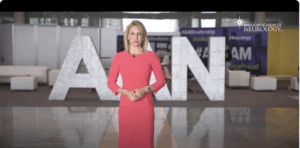
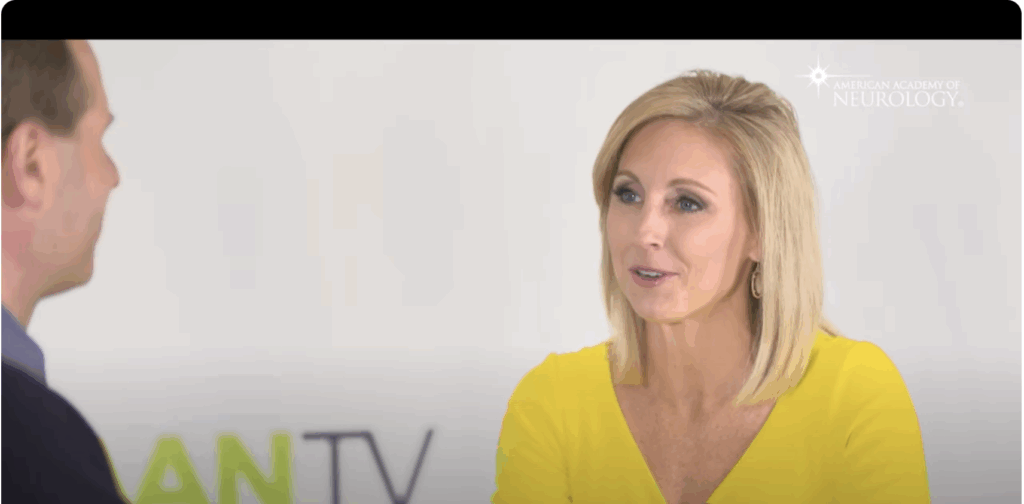
The American Academy of Neurology is celebrating 75 years of accomplishments and advancements at the 2023 Annual Meeting. From Boston, Massachusetts, this is the premier global gathering of those integral to the neurologic research community.
The AAN is committed to providing premier resources created by neurologists for neurologists to meet all your education requirements and today we are focusing on just that: Education!
We can’t wait for you to hear from 100-year-old neurologist Dr. Howard Tucker about his secret to hitting the century mark! We will also talk about the AAN's focus on a new national plan to improve brain health at every stage of life. And speaking of brain health, you will see how one group at the University of Miami is examining how aging brains work.
Today we will visit the University of Miami's Miller School of Medicine, Comprehensive Center for Brain Health.
Summary
AAN TV: Education, Brain Health, and Lifelong Learning — Highlights from the Annual Meeting
From Boston, the American Academy of Neurology’s (AAN) premier gathering spotlighted education-first programming, new editorial directions, brain-health initiatives across the lifespan, and the timeless wisdom of 100-year-old neurologist Dr. Howard Tucker.
Table of Contents
- Introduction
- How to Watch AAN TV
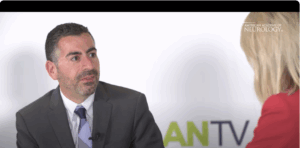
- Celebrating Excellence in Neurologic Education: Dr. Zachary London
- Continuum’s Next Chapter: Vision from the New Editor-in-Chief
- Trusted Public Education: Brain & Life (English & Español)
- Inside Aging Brains: University of Miami’s Comprehensive Center for Brain Health
- AAN Brain Health Initiative: A Lifespan Strategy
- A Century of Curiosity: Dr. Howard Tucker on Longevity and Learning
- Conclusion
- Key Takeaways
Introduction
This episode of AAN TV puts education at the forefront—showcasing award-winning educators, new editorial directions for clinician learning, expanded resources for patients and caregivers, and a sweeping public-engagement push around brain health across the lifespan. It also features a conversation with Dr. Howard Tucker, the 100-year-old neurologist whose “everything in moderation—except smoking—plus never stop learning” mantra encapsulates the meeting’s spirit.
How to Watch AAN TV
Catch the latest episode:
- On TV stations throughout the convention center
- On the AAN website
- On in-house TV at partner hotels
- On AAN’s YouTube and Twitter channels
Celebrating Excellence in Neurologic Education: Dr. Zachary London
Award: AB Baker Award for Lifetime Achievement in Neurologic Education
Why it matters: Dr. London emphasized that great teaching is both content-sound and audience-attuned—and that the emotional impact of teaching shapes learner identity and specialty choices.
Highlights from his talk, “The Five Clinician Educators You Meet in Heaven”:
- The Opener — Grabs attention and sets a tone.
- The Pimper — Publicly quizzes to excess (a cautionary archetype).
- The Actor — Inspires, but must balance style and substance.
- The Game Master — Builds a learning framework, then steps back.
- The Collaborator — Co-creates projects and hands learners the baton.
Equity note: Dr. London pointed out the historic under-recognition of women and people of color in major teaching awards and hopes to see the list diversify.
Advocacy in action: He also highlighted AAN efforts to realign fellowship timelines so residents have more time and options—an explicitly resident-centric reform.
Continuum’s Next Chapter: Vision from the New Editor-in-Chief
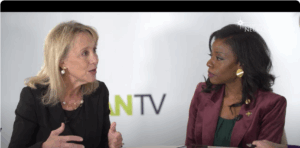
Guest: Dr. Lyle Jones, newly appointed Editor-in-Chief of Continuum
Vision: Keep Continuum the premier continuing education journal for neurologists across the career arc—from learning neurology to maintaining competency—by listening to member needs and expanding formats (including audio).
What’s coming:
- First-ever issue on Autoimmune Neurology
- A renewed Pain Medicine issue
- A new “Selecting Topics in Neurology” section (e.g., social determinants of health, disparities, policy, advocacy)
Community love: At a meeting of 14,000 neurologists, readers repeatedly stopped the team—proof that Continuum is the celebrity.
Trusted Public Education: Brain & Life (English & Español)
Guest: Dr. Orly Avitzur, Editor-in-Chief, Brain & Life
Editorial backbone:
- Neurologist-led editorial boards (English and Español)
- Regularly peer-reviewed, evidence-based content
- Active reader engagement (questions, feedback, podcasts)
Reach & plans:
- 2+ million readers; U.S. magazine is free
- Ongoing focus on exercise, nutrition, wellness, caregiving, finances, safety
- Growth of Brain & Life en Español with unique content
- Weekly Brain & Life podcast—subscriber base growing steadily
Goal: Keep the website a top global destination for patients, caregivers, and anyone interested in brain health.
Inside Aging Brains: University of Miami’s Comprehensive Center for Brain Health
At the Comprehensive Center for Brain Health (CCBH), University of Miami, teams pursue a transdisciplinary approach to aging and cognition—bridging neuroscience, clinical care, and lifestyle to optimize cognitive function and build longer, better lives. Their ethos: treat the whole person, not just a disease, and personalize brain-health strategies.
AAN Brain Health Initiative: A Lifespan Strategy
Guests: Dr. Natalia Rost & David Evans, co-architects of the AAN Brain Health Initiative
What it is: A unifying, outward-facing effort launched by AAN’s Committee on Public Engagement (COPE) to convene partners and accelerate brain-health progress.
Lifespan framework: Brain health is a continuum with tailored action plans for:
- Fetal & child development
- Adolescents
- Young adults
- Mature adults
- The “platinum cohort” (end of life)
Policy and funding: Research is outpacing available dollars and remains siloed. The initiative positions AAN as a convener to amplify opportunities and collaborations across medicine, government, and funding agencies.
National momentum:
- Inaugural AAN Brain Health Summit (Washington, DC)
- National Brain Health Day (Sept. 15)
- Next summit this fall—focused on collaboration and enduring impact
A Century of Curiosity: Dr. Howard Tucker on Longevity and Learning
Who: Dr. Howard Tucker, 100-year-old neurologist, educator, and subject of the forthcoming documentary “What’s Next?” (by his grandsons, Taylor and Austin).
Longevity rules:
- No smoking
- Everything in moderation
- Exercise
- Eat what you enjoy—but watch your weight
- Never stop learning (“Retirement is the enemy of longevity”)
Mindset: “Live daily; you only die once.” Enjoy family, friends, work, and home—every day is a chance to learn and engage.
On technology: MRI moved neurology “from medieval to modern,” but Dr. Tucker urges young physicians to think clinically first—patient before the scan.
The film: In post-production; aiming to premiere at a fall festival. Off-camera, the centenarian is a “natural”—curious, energetic, and game for 10-hour days on set.
Conclusion
This AAN TV edition underscores a simple truth: education empowers better neurology—from resident-centric reforms and fresh editorial visions to trustworthy public resources and transdisciplinary brain-health science. The Brain Health Initiative stitches it all together across the lifespan. And Dr. Howard Tucker reminds us that curiosity, moderation, and purpose keep both body and mind in motion.
Key Takeaways
- Education-first: AAN’s awards, journals, and media are doubling down on learner-centered, emotionally intelligent teaching and new content formats.
- Continuum evolves: Expect autoimmune neurology, pain medicine, and a new section on policy, equity, and social determinants—plus more audio.
- Patients at the center: Brain & Life (English & Español) expands accessible, peer-reviewed content and podcasts for millions.
- Aging research, whole-person care: University of Miami’s CCBH models integrated, personalized approaches to brain aging.
- Lifespan brain health: AAN’s Brain Health Initiative convenes partners and policies from prenatal stages through the “platinum cohort.”
- Live, learn, engage: Dr. Tucker’s longevity formula—no smoking, moderation, movement, and never stop learning—is practical brain health for all.
Raw Transcript
[00:00] MUSIC
[00:20] From Boston, Massachusetts, this is the premier global gathering of those integral to the neurologic research community.
[00:40] premiere resources created by neurologists, for neurologists, to meet all of your education requirements. And today we're focusing on just that, education. We can't wait for you to hear from 100 year old Dr. Howard Tucker about his secret to hitting the century mark. Wait until you see how one group at the University of
[01:00] Miami is examining how aging brains work. There is so much to see and we have plenty of ways for you to watch. You can always find the latest AAN TV episode airing on the TV stationed throughout the convention center. On the AAN website.
[01:20] on the in-house channels at some of our partner hotels, and on the AAN YouTube and Twitter channels.
[01:40] Today our first guest has dedicated his career to neurologic education and he is so deservedly being honored for it this year In studio with us now is this year's AB Baker award recipient for a lifetime achievement in neurologic education Dr. Zachary London pleasure to have you with us today. Thank you so much for having me. This is a real honor Absolutely, you know it is an awesome
[02:00] honor. This is a highly prestigious award. It recognizes significant career-long achievements in neurologic education. What does it feel like for you to be recognized by your peers in this way? I mean it's absolutely incredible. When you look at the names of the people that have won this award in the past, it's like you know peering into the history of neurology. So many of them influenced
[02:20] me and so many other people directly. Some of them are my mentors and really got me to where I am today. And so it truly is an honor to be thought of in the same breath as many of them. I will mention as sort of an aside, I mentioned during my talk a couple of days ago that the other thing you will notice when you look at this list of past winners is that
[02:40] in the last 40 years, all but three of them are white men. So as you kind of walk around and listen to many of the talks today, I want you to sort of pay attention to how many amazing teachers here are women and people of color and I hope to see some of them among the future winners and then I'd be even more proud to be on this list. That's amazing. What a great thing to highlight. You know this award is given to those who have
[03:00] focused on national accomplishments. Are there any of your national accomplishments that you would like to highlight or that stand out to you? I think I've been most proud of my work with the American Academy of Neurology. I've done work through several committees, workgroup subcommittees over the last 10 or 15 years and I really enjoy being on committees that make a tangible
[03:20] product. And so some of the things that our groups have worked on have been like the neurology question of the day app and neurobites, little micro-learning things. And then one of the advocacy efforts that the American Academy of Neurology has been working on in the last few years that I've been a part of has been trying to
[03:40] realign the neurology fellowship timeline so that neurology residents have more time to explore different options during residency before having to decide what they want to do for fellowship and I'm really proud to see that in the last few years more and more of the sub-specialties have come to have later timelines and even have matches which I think is a really resident centric thing that we're very proud of.
[04:00] Very nice. You referenced your talk that you gave a couple of days ago. It was titled The Five Clinician Educators That You Meet in Heaven. For those of us who may not have been in that talk, can you elaborate on that? Sure. So I was focusing not on specific individuals, but sort of archetypes of educators that all had one thing in common. The five educators were the opener.
[04:20] someone who kind of comes out strong with their teaching, what we call the pimper, which is somebody who sort of shames people by asking them too many questions in public. The actor who is somebody who is very inspirational to people but maybe is sometimes more styled and content. There was the Game Master who sets
[04:40] a construct for people to learn and then kind of steps back and lets the learning take place. And then the last one was the collaborator, sort of a mentor collaborator, somebody who creates a project or a bit of research, does 90% of the work and then hands off the baton to the learner so they can take it across the finish line. And what these all have in common, some are sort
[05:00] of positive and negative archetypes, but what they all have in common is they are teachers that affect the way that learners feel. And I think I wanted people to be aware of the fact that the emotional aspects of education impact our learning and impact their decisions about perhaps what we want to do for our life. So when we're working with medical students who are trying to decide if they want to be neurologists or not,
[05:20] Having teaching that is aware of the emotional impact that you're having can really affect people's decisions. Absolutely. It can certainly affect the outcome. Before I let you go, one final quick question. What do you think makes a great educator? I think a great educator is someone who knows their material, but also really knows their audience.
[05:40] I think that's the most important thing. Well congratulations on your award this year. Thank you so much. Very well deserved and we are so thankful to have your time today. I appreciate being here.
[06:00] Editor-in-chief of Continuum, Dr. Lyle Jones, is here in studio with us now to discuss. Thanks for sitting down with us. Thank you, Atria. It's a pleasure to be here. I should point out this is a new position for you. You are the newly appointed editor-in-chief. Congratulations on that. Thank you very much. I've been in the role for about four months now. Well, what is your vision for Continuum now that you're at the helm?
[06:20] continuum is to continue really an excellent educational resource for our members, for our subscribers and understand that the full spectrum of the neurology career really needs an education resource like Continuum. Whether you're maintaining your competency or you're just learning neurology, we want something that works for everyone.
[06:40] plan to continue to maintain that Continuum is the premier continuing education journal for neurology professionals. Great question. One of the best parts of learning this role over the last few months has been learning from our staff and our editorial team how beloved this journal is among our listeners and our readers and building on
[07:00] the success from Elliott man called Aaron Miller and Steve Lewis in the past and really continuing to listen to what neurologists need and responding to that rather than just delivering something that we think they need. And piggybacking off of that, are the members good about giving you that information and letting you know, hey, this is what we really would like to brush up on. I'm at a meeting with
[07:20] 14,000 neurologists and I get stopped all the time by people who love Continuum and they want a photo and it's really been one of the best parts of this meeting for me. Wonderful, so you're a little bit of a celebrity. No, Continuum is a celebrity. So what do members have to look forward to in the coming journal editions? So some new things. We're looking forward to
[07:40] Continuing obviously the really excellent clinical reviews that we have in there, responding to different formats, expanding our audio offerings, and our readers and listeners will see some new topics that we haven't seen in a long time or have never seen before. We're going to have our first issue on autoimmune neurology next year. We're going to have our first issue on pain medicine in a long time.
[08:00] So some really some new interesting things and a new section in the journal called Selecting Topics in Neurology where we include some content that's not just about clinical reviews but it's about social determinants of health or disparities or health policy or advocacy. So a lot of great things on the horizon. Well congratulations on this new role and we look forward to a lot of great things to come from Continuum. Thank you Atria, pleasure to be here.
[08:20] here. Here now is Dr. Orly Avedtzer, the editor-in-chief of Brain and Life magazine. You know, the AAN has an impressive portfolio of resources for patients and caregivers. How do you consistently make sure that the AAN is the most trusted source to educate the public on neurology and brain health? We have wonderful members on our editorial boards for
[08:40] in life. They're all specialists in their field of expertise and they include members on both the brain and life in English version and the brain and life in Espanol and they're very helpful in producing ideas for stories, reviewing articles and providing their feedback. Above all else they make sure
[09:00] that our copy is factual and meaningful to patients. Over the pandemic, we met on Zoom regularly to discuss what everyone was hearing from their patients and to think about what topics we could offer the public to answer important patient questions, and they were extremely
[09:20] helpful. We also listen to our readers, we answer their questions and concerns through articles, books and podcasts and of course all our material is peer reviewed by the neurologists that are trusted members of the American Academy of Neurology. And what are your plans for Brain and Life magazine over the next few years?
[09:40] Our plans are to continue to provide timely information for our readers, our viewers, our listeners. We currently have over 2 million readers and we continue to focus on topics such as exercise and nutrition, wellness, caregiving, finances, and safety for patients.
[10:00] We are proud to offer Brain and Life magazine free to readers in the United States and will continue to focus on making sure that the website continues to be the number one destination for people around the world with neurologic disorders and for those who are interested in brain health. A few years ago, we launched
[10:20] Brain and Life in Espanyol, our quarterly magazine for our Spanish-speaking readers, and the focus over the coming years is to grow our readership by developing unique content for the magazine and the website. It's important that we continue to provide information and platforms that are easily accessible, and the
[10:40] New Brain and Life podcast is a great example of creating ways to educate the public in new platforms. We launched the weekly podcast last year and our subscribers are growing by the week. Dr. Avedser, thanks again for your time today. Pleasure to speak with you. Thank you.
[11:00] We head south now to the University of Miami's Miller School of Medicine. Researchers at their comprehensive center for brain health are working to enable longer, better lives through a better understanding of how aging brains work. Let's take a tour of their transdisciplinary approach.
[11:20] Thank you.
[11:40] Alzheimer's. CCBH is dedicated to advancing our understanding of brain aging and optimizing cognitive function. And I think what is truly noteworthy about CCBH is that it takes this interdisciplinary approach to understanding brain aging.
[12:00] The future of CCBH is bright. We are thinking about how we're going to address this problem on an individual by individual basis. What we're looking is an approach to the person as a whole. What we want to do is build a better brain and build a better you.
[12:20] One in six people is affected by brain disease. That statistic led the AAN to head to Washington to host the AAN's Inaugural Brain Health Summit and designate last September 15th as National Brain Health Day. Dr. Natalia Rost and David Evans are the
[12:40] architects of the AAN's Brain Health Initiative and join us here in studio to discuss what's next. Thanks to you both. Thank you. David, let's start with you. What is the Brain Health Initiative? What does it seek to do? Yeah, so the Academy of Neurology Board of Directors in 2021 initiated the newest committee of the Academy on Committee on Public Engagement.
[13:00] We like to use the acronym COPE, and with that, our initial charge was our brain health initiative. And although the academy has been entrenched in brain health activities over the last three decades, we knew that we needed to unify and work with external stakeholders on a very bold initiative on brain health. And we're dividing up the different stages or the areas of study.
[13:20] to five different stages of life. Can you elaborate on that? That is correct. We look at the brain health as it is a continuum from birth and until the last day of our lives. So brain needs to be taken care of along the lifespan, as we call it, individual lifespan, but also lifespan of the communities and the global alliances as well.
[13:40] So we're looking at the fetal and child development, at adolescents, young adults, mature adults, and also people at the end of life with whom we call our platinum cohort. Because at every stage of life there may be somewhat of a variation on what does the brain health mean for the individual. And we make sure that we
[14:00] align our action plan along those, along those e-pokes, live e-pokes. And so making sure that it's a continuum, we don't separate them into buckets, but we really think about it in a more, you know, comprehensive way. As we mentioned, you had the National Brain Health Summit last September. You spoke with lawmakers, obviously trying to get
[14:20] little bit more federal funding. There's always an additional need for more money. Where does neurology research rank in terms of federal funding? So we really don't have a lot of the data. What we do know is that the discovery and research is outpacing the dollars that are available. Obviously in America but all over the world, research is often siloed.
[14:40] So we're working to act as conveners in this space to amplify research opportunities to advance brain health discovery. So we could always use more? We can always use more. Absolutely. Alright and we know that the next Brain Health Summit is happening this fall. What do you want people to know? How can people who might want to get involved do so? Well, they need to talk to us first of all.
[15:00] comedian public engagement is going to be the main think tank putting together the second Brain Health Summit. The first one, the Inaugural, was an overwhelming success. We were very proud not only to bring a comprehensive program that focused on science, patient care, and also public advocacy in this space, but also
[15:20] plan a collaboration with a great group of what we call external to the academy's stakeholders, but really they are stakeholders in brain health across different medical sub-specialists like psychiatry as well as allied sub-specialists like therapists and neuropsychologists as well as the public government and also research funding agency.
[15:40] So we're very excited to bring more people into our brain health tent and we're also looking forward to invite collaborations with multiple sectors of the disease. So stay tuned for our invites. We're going to be really looking forward for input and we're going to be.
[16:00] making sure that this is an enduring initiative. And you'll both be heading to Washington come September. We will be. We will be there leading a large group of neuroscience experts and public policy advocates and working through our next stage with the Braight Health Summit which is dedicated to collaboration. Wonderful. Well thank you both for all of your work.
[16:20] on this. We all have brains, so we all appreciate it and we certainly wish you the best of luck in the future. Thanks for your time today. Thank you very much.
[16:40] has no plans on slowing down and we are thrilled to have the opportunity to speak with him today on AAN-TV.
[17:00] And you also spent time teaching medical residents and students. Dare I ask the question, what's next? Well, I'm thinking of studying computers since I'm way behind. I just want to learn so I can know that I'm in this century. Very understandable. Now this is the question that I'm sure you get almost.
[17:20] every single day, but I have to ask it, what's your secret? How do we all get to be 100? Because I just say everything in moderation, except no smoking. I exercise, I eat whatever I want, wash my weight, and don't smoke. And you've also been an advocate of keeping the mind sharp. Retirement is not on the table for you.
[17:40] retirement is the enemy of longevity. Well, you have previously said that you live daily but you only die once. So how has that motto helped shape how you live your life? Well, I enjoy every day. I enjoy family. I enjoy friends. I enjoy work. I enjoy home. Enjoy my life and stay happy.
[18:00] Every day a lifetime of happiness. All right, Taylor and Austin, I want to bring you guys in here because you've been working on this new documentary about your grandfather's life titled What's Next? How did this idea come about? And what can you tell us about the film? This man right here, my grandpa, will go on set for 10 hour days.
[18:20] with us. He really is a trooper, so willing to always keep learning. This documentary is also part of that. He's been willing to jump in and take the role as an actor. I think after the neurology career, I think he'd have a great career in Hollywood because he's unnatural. Here's, you have no idea what a natural he is. We'll just
[18:40] We don't even need a second camera to capture another angle because he could just do it over again. It's so funny. You are just unbelievable with your energy. I do want to ask you, Austin, you referenced this a minute ago about all the advances that you've seen in the field of neurology.
[19:00] in the mid-60s and then the MRI, and it took neurology from the middle ages for the medieval times into the 20th century. And that's, I think, the first thing. The drawback is young physicians are depending on that rather than thinking through the problem.
[19:20] student or resident will say, 50 year old man, his MRI shows. And I have to say, let's slow up, let's back up. What's the problem with the patient? And so all they want to know is about the imaging studies. That's an interesting perspective. That's really interesting. Okay, Austin.
[19:40] Final words to you. What would you like for people to know about your grandfather? Not the 100-year-old neurologist or the TikTok star, but as grandfather. He's just so willing to learn and engage and partake in the world around him. He says, you live daily and you only tie one.
[20:00] And he's always, he lives that to a T.M., is always engaging with everything around him. Even if he doesn't know it or he's had no experience with it, he's willing to jump in and give it a shot, which I think is just incredible in today's day and age. That's wonderful. And when can we see the documentary? We're in post-production and we're hoping that we'll have a premiere.
[20:20] at one of the fall festivals. Fantastic. All right, well, Dr. Tucker, you can go off now and enjoy that glass of red wine that you like to do in moderation. You've certainly earned it. Thank you so much for your time today. All three of you. My welcome. It was a pleasure. Thank you. Thanks.
[20:40] No smoking, everything in moderation and never stop learning. Dr. Tucker's Rules to Live By. That's a wrap on day five, but if you missed any part of today's episode or if you would like to re-watch any part, remember, you can always find the latest AAN TV episode airing on the TV.
[21:00] station throughout the convention center, on the TV station throughout the convention center, on the AAN website, on the in-house channels at some of our partner hotels, and on the
[21:20] AAN, YouTube and Twitter channels. We have still got one final full day left here at the AAN annual meeting and we hope that you will meet us right back here tomorrow as we dive into AAN's health and wellness efforts. Thanks for staying with us.
[21:40] us today. Go have a great one.