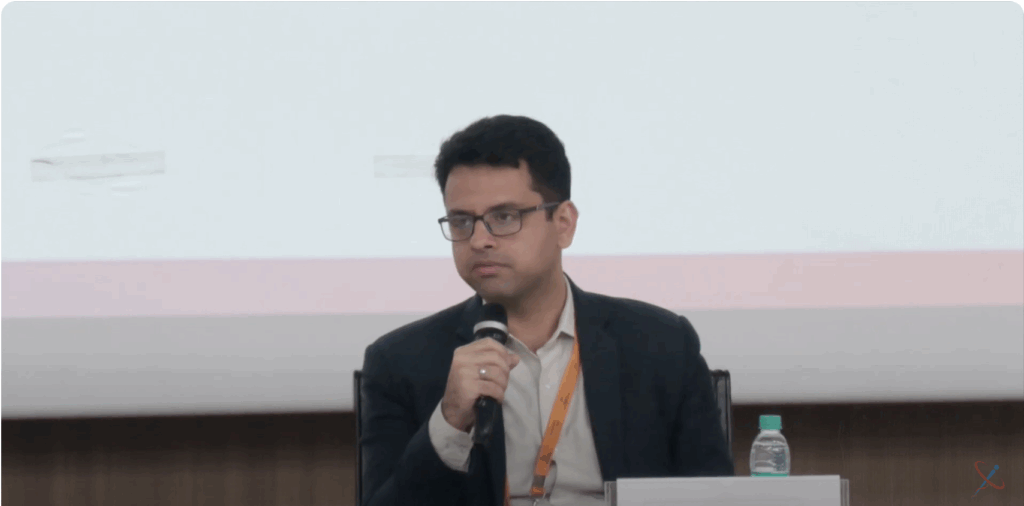
Session 4 – CLIMATE CHANGE: Dealing with the coming unknowns for Indian Health System – 16 November
- October 13, 2025
- 11:15 am
This insightful session, "Climate Change: Dealing with the Coming Unknowns in the Indian Healthcare System," brings together experts, policymakers, and healthcare leaders to discuss the urgent intersection between climate change and public health.
This session highlights the growing impact of climate change on India’s healthcare system, emphasizing the urgent need for adaptive strategies. It explores how rising temperatures and environmental changes contribute to an increase in vector-borne and respiratory diseases. The discussion focuses on the use of AI and big data to predict, track, and mitigate climate-related health risks effectively. It also underscores the importance of policy reforms, public education, and sustainability initiatives in building climate-resilient healthcare systems. Overall, the session aims to inspire a collaborative approach to safeguard public health in the face of environmental challenges.
Summary
Climate Change and the Coming Unknowns: Strengthening India’s Health Systems for the Future
Table of Contents
- Introduction
- Opening Remarks
- Panel Overview
- Setting the Context: Climate Change and Health
- Panel Discussion Highlights
- 1. Understanding the Health–Climate Nexus
- 2. Data, Nutrition, and Mental Health: The Hidden Gaps
- 3. Education and Capacity Building for Climate–Health Professionals
- 4. Environmental Health and Cognitive Impact
- 5. Lessons from COVID-19: Partnerships and Preparedness
- 6. Integrating Science, Policy, and Community Action
- Audience Reflections and Key Questions
- Actionable Steps for Resilient Health Systems
- Conclusion
- Key Takeaways
Introduction
The InnoHealth Conference 2024 brought together healthcare leaders, scientists, and policymakers to explore one of the century’s most urgent challenges — the impact of climate change on India’s health systems.
The session titled “Climate Change: Dealing with the Coming Unknowns of the Indian Health System” highlighted how a warming planet threatens to intensify disease burdens, disrupt food security, and deepen health inequities — while also offering opportunities for innovation, data integration, and cross-sector collaboration.
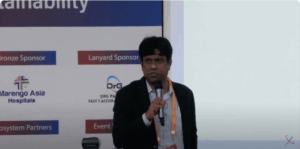
Moderated by Ms. Sarah Heather Iqbal, a science engagement consultant specializing in participatory approaches to public and policy communication, the session reflected the need to address climate change as both a scientific and social issue.
Opening Remarks
Quoting futurist Peter Diamandis — “The best way to predict the future is to invent it” — Ms. Iqbal opened the discussion by urging participants to reimagine healthcare systems for a changing world.
She noted that India’s already burdened healthcare infrastructure must now contend with unpredictable environmental shocks: heatwaves, poor air quality, floods, vector-borne disease, and malnutrition.
She emphasized that this conversation was timely, unfolding as global climate dialogues were being held at COP in Baku, Azerbaijan, amid record-breaking heat and pollution across India.
Panel Overview
Moderator
- Ms. Sarah Heather Iqbal, Science Engagement Consultant
Panelists
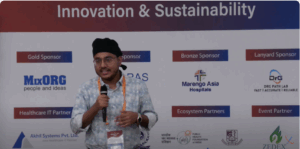
- Dr. Ankur Mottreja, Director, Strategy, Partnerships & Communication, PATH South Asia
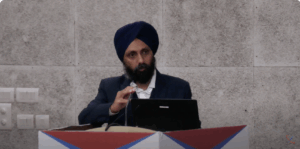
- Dr. Jaspreet Dhanjal, Assistant Professor, IIIT Delhi
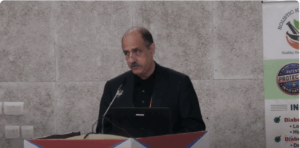
- Dr. Tanu Jindal, Director, Environmental Sciences, Amity University
Together, they examined how India can build climate-resilient health systems through data-driven insights, sustainable practices, and multi-sector collaboration.
Setting the Context: Climate Change and Health
The moderator outlined the many ways climate change intersects with health outcomes:
- Rising temperatures accelerating vector-borne diseases such as dengue and malaria
- Erratic rainfall patterns disrupting agriculture and causing malnutrition
- Air pollution leading to respiratory illnesses and cognitive decline
- Climate migration, which increases health insecurity
- Worsening mental health due to environmental stress
“Our systems are already responding to climate change — even if we don’t always recognize it.”
Panel Discussion Highlights
- Understanding the Health–Climate Nexus
Dr. Ankur Mottreja discussed how global health organizations like PATH observe differences in how nations are adopting climate adaptation strategies.
He pointed to India’s data gaps as a key obstacle to developing effective health responses.
“We trust in God, but for everything else, we need data.”
He cited a striking example of nutritional degradation: to gain the same vitamin content as one orange in the 1960s, a person today would need to eat 21 oranges.
This, he explained, illustrates how climate change undermines food quality and contributes to malnutrition, weakened immunity, and poor vaccine responses.
He emphasized the need for high-quality, interoperable data and interdisciplinary collaboration to bridge evidence and policy.
- Data, Nutrition, and Mental Health: The Hidden Gaps
Dr. Mottreja also highlighted mental health as a neglected consequence of climate change.
Pollution, scarcity of clean water, and rising temperatures increase anxiety and reduce immunity, making populations more vulnerable to disease.
He called for an integrated approach that unites environmental and health data to reveal the true cost of climate stress on communities.
- Education and Capacity Building for Climate–Health Professionals
Dr. Jaspreet Dhanjal introduced IIIT Delhi’s Postgraduate Diploma in Data Science for Health and Climate Change for Social Impact, which trains professionals to bridge environmental and health data systems.
The program emphasizes partnerships with government bodies and research organizations such as ARTPark, enabling students to work with live datasets on disease surveillance and predictive modeling.
“We can no longer afford reactive outbreak management. We need proactive systems that prevent crises before they happen.”
- Environmental Health and Cognitive Impact
Dr. Tanu Jindal discussed how global warming, greenhouse gases, and toxic pollutants affect both physical and mental health.
Her studies have shown that long-term air pollution exposure impairs cognitive function, with measurable differences between high-pollution and low-pollution regions.
She noted that unregulated pesticide use is a major contributor to environmental toxicity — with only one percent of sprayed pesticides reaching crops, and the rest contaminating air, soil, and water.
Her call to action centered on environmental regulation, public awareness, and sustainable agricultural practices to safeguard health at its roots.
- Lessons from COVID-19: Partnerships and Preparedness
Dr. Mottreja reflected on how the pandemic offered a model for rapid collaboration across disciplines.
Vaccine development succeeded because universities, industry, and governments worked together — a template that can guide climate–health action.
“Partnerships, not technology alone, saved lives.”
He described a successful collaboration between PATH and ARTPark, where government meteorological data and AI modeling were combined to predict dengue outbreaks in Karnataka.
The same framework is now being adopted by other states such as Odisha.
- Integrating Science, Policy, and Community Action
The panelists emphasized that no single sector can solve climate–health challenges alone.
Environmental, health, and agricultural ministries must coordinate data sharing, while communities must be educated to adopt sustainable daily practices — from water conservation to reduced chemical use.
Dr. Jindal noted that true resilience depends on mitigation as much as adaptation, urging adoption of renewable energy and circular economy principles.
“We must not only adapt to climate change but also contribute to its mitigation — every citizen has a role.”
Audience Reflections and Key Questions
Audience members raised concerns about:
- Improper biomedical waste disposal in smaller cities
- Unchecked antibiotic and biotech waste contributing to antimicrobial resistance
- The lack of enforcement of existing environmental and public-health laws
Panelists responded by calling for:
- Stronger compliance and monitoring systems in hospitals and laboratories
- Training for medical and nursing staff on waste segregation and disposal
- Public accountability and citizen reporting for violations
They also discussed new innovations such as AI-driven waste monitoring systems that track and predict environmental contamination from healthcare sources.
Actionable Steps for Resilient Health Systems
Each panelist offered a key recommendation:
Dr. Jaspreet Dhanjal
“Establish a common platform for data and dialogue across disciplines. Move from reactive to preventive management.”
Dr. Ankur Mottreja
“Integrate climate awareness into health education and encourage openness to new technology among clinicians.”
Dr. Tanu Jindal
“Adopt sustainable technologies and AI forecasting tools to mitigate emissions and prevent disease.”
Ms. Iqbal concluded the session by emphasizing that breaking silos and sharing responsibility are essential to building climate-resilient health systems.
Conclusion
The discussion affirmed that climate change is not a distant threat — it is a current public-health emergency.
From nutrition and mental health to infectious disease and pollution, its impact is immediate and multifaceted.
However, the session also highlighted pathways forward: data integration, education, sustainable practices, and above all, collaboration.
By drawing lessons from COVID-19 and aligning science with policy, India can create a health system that anticipates rather than reacts — one resilient enough for the uncertainties ahead.
Key Takeaways
- Climate change directly affects health through air quality, water safety, nutrition, and disease spread.
- Data integration across ministries is critical for evidence-based policy and planning.
- Education and capacity building in climate–health science must begin early in medical and technical training.
- Strengthened environmental regulation and sustainable practices can reduce disease risk.
- Partnerships among government, academia, and civil society are essential for effective solutions.
- Predictive analytics and AI tools can guide early warnings for disease outbreaks and environmental hazards.
Raw Transcript
[00:00] Ladies and gentlemen, esteemed speakers, and
[00:20] fellow delegates, I am thrilled to welcome you to the second day of Inno Health conference. A very good morning to all of you. As we embark on this journey, I would like to quote Peter Diamandias, a renowned futurist, the best way to predict the future is to invent it.
[00:40] Today we will be inventing, imagining and shaping the future of healthcare together. As we gather here today, the world outside is grappling with the unpredictable and far-reaching consequences of climate change. The Indian healthcare system already shouldering the weight of a burgeoning
[01:00] population and diverse health challenges is now faced with the daunting task of preparing for the unknowns that climate change brings. I welcome all of you to an eye-opening and an informative panel discussion on climate change dealing with the coming unknowns of the Indian health system.
[01:20] All the same, I welcome Ms. Sarah Heather Iqbal as the moderator of the panel discussion. Please welcome her with a huge round of applause. Ms. Sarah is a science engagement consultant specialising in innovative participatory approaches
[01:40] public and policy engagement with science and research to address health challenges. Please put your hands together.
[02:00] fellow at the National Institute of Advanced Industrial Science and Technology, Tsukuba, Japan. Please welcome Maa with a huge round of applause. I expect energy from you in the morning. Next I welcome Dr. Ankur Mottreja,
[02:20] Dr. Ankar is a director, strategy, partnerships and communication at PATH, South Asia. He is known for his underlying passion for science and innovation for making the world free of pandemics and epidemics. Please put your hands together. We have a four-part session.
[02:40] panelist, she will be joining us very shortly. So, you may start with the session please.
[03:00] We have a question here about the climate change dealing with the coming along for the health system. I think Malia is already text reading well about how climate change is impacting an already burdened health system. And I think this conversation is also very timely, not only because we have seen some
[03:20] of air quality in Delhi and north of India. But also, as we drop notes to your peripheral form that has seen actually massive heat waves. We have also reached the 1.5
[03:40] census barrier, which is again the last decade has been the hottest decade in the recorded history. This year has been the hottest so far in the recorded history. So we're really, you know, if coming to a point where we have no option but to act.
[04:00] We also have seen massive floods, we have seen a lot of views about floods across the world in India, heat waves again across the world, wildfires and we have also just come out of a massive pandemic that showed glaring gaps in our health system. We also know that the climate change
[04:20] infectious disease spread, malnutrition because of you know erratic climate cycles which is you know which affects agricultural cycle and and of course you know poor air quality, environment pollution. All of this is is already
[04:40] working have a system they're not probably able to recognize it or we're not able to acknowledge it fully but our health systems are already dealing with these are not to forget of course the climate migrants these are front-line friends like communities that are that are having to move from
[05:00] their cases because of severe climate conditions and that also adds a huge burden on the health system and also makes them health insecure. So I think this is a very multifaceted, very vast challenge and intersection between climate
[05:20] and health is also something that's being discussed now globally even at the corporate in I which is happening as we speak in Baku and Sir Bajan. So to sort of unpack a lot of these complex ideas and a lot of complex situations we are dealing with, I have a
[05:40] We have a very eclectic panel today. I've got Professor Tano Jindel, who's an environmental science expert, heading five institutes of environmental science at Amity University. She's just entered, so very good to have her. We've got Dr. Akhir Muthrija, who's a global health professional.
[06:00] We are part of the discussion with the Strategic Partnerships and Communications. So it will be nice to have you occur. And last but not the least, we've got just a week called Dhanjal, Assistant Professor at IIT Delhi, our host of this conference, who brings expertise in computational and molecular biology for precision medicine.
[06:20] So together with the panel who bring a really vast wealth of knowledge and expertise, we're going to unpack the intersection of climate and health. And I thought maybe to set the complex, tend to help us understand a bit better where all our panelists are coming from.
[06:40] We invite them to speak a few words about where you are situated and how you see climate and health intersection based on your. And professor you've just come so maybe you can go in the end. I'll probably request Anur to go first.
[07:00] Thank you, Sara, and thanks everyone for being here on a Saturday. I think the topic that we are discussing does need all of us to be present in these kinds of lecture rooms on weekends because it's such an important issue, such a pressing.
[07:20] So as Aras and I work for PARC, which is a development sector NGO. We work end to end across the health sector value chain, but it is in vaccine, R&D, vaccine development, health system strengthening, digital.
[07:40] health integration into the health systems, whether it is immunization and whether it is nutrition and diagnostics and therapeutics. So we work end to end. We've been in the space for almost 45 years and with the presence in about 70 countries, we have seen how the,
[08:00] the climate agenda is shaping up across the world and how differently different countries are let's say adopting the climate agenda. So I think one of the questions I was told I should talk about is what are the knowledge gaps in the climate and health space?
[08:20] in what could be the steps that could be taken to involve healthcare professionals better in India. So I hope it's okay, I talk about that. So I think there are a few things I'd like to, I think you touched on some of the things in your opening remarks. Sarah, I think I'd just like to retrace that.
[08:40] NCV or non-communicable diseases, whether those are respiratory, MSN, whether those are other diseases of liver, etc., etc. So I think everything is in one way or the other.
[09:00] connection to the climate change that we are seeing. But the gap there is that the data proving that is not really available. Even if it is available, it's not available in a format that could really be projected to the government, to the policy.
[09:20] makers so that they can start taking a note and start taking actions to really respond to that. We've also seen that in the infectious disease space, vector-borne ileus are going up. We've had a record year of the number of dengue infections that we have seen this year, which is also
[09:40] also a lot to do with the climate change and also not just in India but we are seeing increase in vector-borne diseases in other parts of the world as well that had never seen at least in essentially they had not seen some of the vector-borne diseases like chikungunya or dengue or similar other things.
[10:00] diseases. So that's on the infection disease front but also on the nutrition front. As Sarah mentioned there has been a lot of impact on how the agricultural produce is getting impacted because of climate change. Just to give you a little bit of factual knowledge on this, if you
[10:20] So if you ate one orange in the 1960s for getting the nutrition that you received at that time from that orange, you would have to eat 21 oranges to 10. So that's the gap we are looking at. So when we talk of five nutrition a day,
[10:40] I think you can't really eat 21 oranges and then also eat four other things which would also probably be 10-fold lower in nutrition. So I think there's a huge nutritional deficiency or deficit which is coming through because of the climate change and nutrition is not just
[11:00] In addition itself it actually leads to so many other factors. Malnourished children, malnourished populations, low income, low resource settings really suffer a lot because of that and when you have malnourished children there is something in their growth that leads to a lot of pressure on them.
[11:20] on the healthcare system, when you have malnourished populations, the vaccine response of those populations to any vaccine that is given to them, whether it is childhood vaccines that are given to their children or adult vaccines even during pandemics or HTV vaccines or other vaccines that are given to adolescents.
[11:40] the response to those vaccines is lower than what it would be from a healthy adult perspective. So it is a very intertwined topic that needs to be addressed as well. So nutrition and then aspects of how nutrition affects the other side of the table.
[12:00] like vaccination, like response to drugs, like how centering of growth would also then lead to further deficit in contributing to the overall economy or economic progress of India. And I think then one thing that I often feel gets missed out from the
[12:20] climate agenda is mental health and I think we are only starting to touch on that agenda a little bit. In fact I was in a Ministry of Health meeting just a couple of weeks ago where mental health was given a separate
[12:40] let's say session in the meeting itself which was a climate meeting. So that was the first time I saw mental health re-endangering traction in the feeling and you can imagine how many people are stressed out because of the pollution that we see because of the lack of clean water that we you know.
[13:00] struggle to get access to and all of that stress also then leads to reduction in immunity and reduction in immunity then makes people more vulnerable to infections and other NCB diseases. So I think the situation here is very very complex and the
[13:20] Steps that need to be taken to really resolve that is interdisciplinary collaboration. I was talking to just we were talking about data very briefly this morning how data can actually be a a horizontal connector to all those fields and I think
[13:40] We need to really stress on how data quality and data points have to be improved across the ecosystem. I think with that I'll just say we use this phrase quite a lot that in God we generally trust, but for everything else we need data.
[14:00] So I think for climate also the same mood in life. Thank you so much, it was a really important voice. And Jaspreet and I were joking earlier that, you know, neurophasic are climate experts. And then I told her that, you know, I think we all are climate experts.
[14:20] because we are dealing with climate changes, climate effects on a daily basis and I think that makes us an expert. So I think it is okay to not have the academic knowledge but lived experience is as important. So I think just be that and invite you to perhaps weigh in on the discussion.
[14:40] actually through Inflammate and Health. I also mentioned a program that IIIT Delhi is running in this opportunity. So thank you, Saram. So yes, I am not a climate expert for sure. I am trained compilation biologist. I work in health informatics. So we look at a lot of beginner from like patients.
[15:00] We are using data and we try to get into the intricacies of diseases to co-personalize medicine. So that's my main background. But being a health professional, to some extent, right? So I'm using data and I'm trying to reduce something relative to health. So as a health professional, I have recently stepped into this where we are looking at how climate change is impacting health.
[15:20] And in the same direction, we have recently, recently it's now a one year old program, we launched a PG Diploma program in data science for health and time exchange for social impact. So for one of the graduates, for the program is sitting right in front of me. So the first batch has recently graduated and they're looking at
[15:40] So, we have the different case studies that were talked about in this program. So, we were advised that yes, as rightly mentioned that Dr. Ramtod, there is a serious deficit of the data that we can lose and we can take it forward to analyze quantitatively that how time changes are affecting the health. So, we have made a difference.
[16:00] with potential partners in this program. We have data about all Pudas, we have JPAM, we have ARTPath. So I'm not sure if you know but ARTPath along with ARTPath, they have probably talked, we can talk about it. They have actually deployed some of the solutions with the Indian government. So I think he will give you better insights into it.
[16:20] So, we invite our path to come and talk to the students who have been involved for this program, give insights using the actual data and what they are doing on field. So, I am representing more of an institution here, educational institution like how we can help in training professionals who are better in understanding.
[16:40] health as well as climate and they can look towards these two as an intersection for social impact. I think this is the responsibility of all of us to take this thing forward, understand the importance and take the necessary measures.
[17:00] I think it is better for our sector and certainly our, yeah, I completely agree with you. And so Professor, may I request to maybe talk a bit about how you see the intersection of climate change and health, especially significant where you are situated, which is climate change.
[17:20] sciences, sustainability, circular economy. So, just a few words. So, as in the hearing worth of you, you are doing a marvelous job in relating this climate change and impact on health and as you said preparedness is much required. Besides that,
[17:40] We are working on environmental health and safety. So for climate change, why it is happening? The climate change is happening because of environmental pollution, global warming, greenhouse gases. And why these greenhouse gases, global warming, carbon dioxide, carbon footprint. And
[18:00] These are the greenhouse gases and they cause the global warming and thus global warming causes climate change. So this climate change is impacting health but it is before affecting our health it is impacting environment. So first we need to talk about environmental health.
[18:20] health and safety so that a permanent solution comes. And then, whatever impact has been made by climate change, we have to address the impact on human health or animal health, right, leading things. So we are basically targeting the first portion, environmental health and safety of that.
[18:40] And we have the primary launching MSc master's program in environmental health sciences, various that and all our students are doing really well and last year we launched looking to the demand and pH team environmental health sciences. So this is very very upcoming and you know the carbon correct.
[19:00] rates, ESG, all this EHS, all this come into it only. So as they said there are many verticals of climate change and environmental health. So vector bond is easy, that is because of the heat.
[19:20] stress, you know, because of the reactor migration and there is a case of locusts such as the rare delay which is coming, breeding places from China and it is, you know, there was locusts outbursts. So this is one of the example of, you know, heat, then there are many people dying out of heat stress and there is a case of pressure, pressure, pressure, pressure,
[19:40] waterborne diseases. There are many you know waterborne pathogens which bleed and grow and thus waterborne diseases are there and because of which test then forest virus are also there because of that is also happening. So there are many vortices and lastly is
[20:00] about mental health. So we are working for the past five years on impact of air pollution on cognitive behavior. And we have seen in two different regions from control population we have taken it in Gorakpur where the pollution is less.
[20:20] North, North, North, North, North, North, North, North, North, North, North, North, North, North, North, North, North, North, North, North, North, North, North, North, North, North, North, North, North, North, North, North, North, North, North, North, North, North, North, North, North, North, North, North, North, North, North, North, North, North, North, North, North, North, North, North, North, North, North, North, North, North, North, North, North, North, North, North, North, North, North, North, North, North, North, North, North, North, North, North, North, North, North, North, North, North, North, North, North, North, North, North, North, North, North, North, North, North, North, North, North, North, North, North, North, North, North, North, North, North, North, North, North, North, North, North, North, North, North, North, North, North, North, North, North, North, North, North, North, North, North, North, North, North, North, North, North, North, North, North, North, North, North, North, North, North, North, North, North, North, North, North, North, North, North, North, North, North, North, North, North, North, North, North, North, North, North, North, North, North, North, North, North, North, North, North, North, North, North, North, North, North, North, North, North, North, North, North, North, North, North, North, North, North, North, North, North, North, North, North, North, North, North, North, North, North, North, North, North, North, North, North, North, North, North, North, North, North, North, North, North, North, North,
[20:40] more incognitive behaviour, though the normal people also have an impact on air pollution or air pollution. But you know we are just in the I would say bullock heart stage of this study because we are just focusing particulate matter, dust, but what are the main culprits? The main culprits are the toxic reactions.
[21:00] We are not selling the characterization of these dust particles, EM 2.5 particles which are there on the these particular matter which are the main culprit for toxicology in the atmosphere. And you know we are we spoke about agriculture also.
[21:20] that it limited an impact on health and many people use many kinds of pesticides to kill the pest. And in India there are no regulatory authorities which are regulating I would say that for the spree of these pesticides in the field and I am not sure if you know only 1% of the pesticides.
[21:40] pesticide spray goes on the target and rest goes into the atmosphere. We eat air, soil or water. So you can imagine the kind of you know toxic environment we are having and all these you know because of the climate change, more pesticide resurgence, more pesticide spray
[22:00] more toxicology, this is a complete cancer frame which comes from hortinga, carrying the farmers because all these, you know, things are carcinogenic, all pesticides are carcinogenic. Organic farming is imprimoted but sometimes because of the climate change and global warming, you know, organic farming fails because of the pests.
[22:20] infestation, it is so high and nobody wants their crop to be paid. So it's a very complicated thing but as you know, climate change phenomena is becoming very prominent, we are now trying to understand it. You know how more precipitation, less precipitation.
[22:40] drugs, you know, how they are impacting our health. And this preparedness and data, she spoke about data, can help us like in case of poverty, you know, we could fight from it because we have data available, you know, easily and out of that data from where different
[23:00] places how this COVID has researched and also how it has been controlled and I am not sure if you have read the paper, air pollution through the air also COVID gets read. So all this data you actually keep a very thick you know resilience on this how.
[23:20] With the COVID will spread in seven regions and forewarning was given to the people. So this is high time that we see the study the impacts of climate change on health and we prepare to mutilate it. Thank you so much. Thank you professor.
[23:40] We just announced and I think it's important to recognize that there are immediate effects of climate change that we can see. They're visible and there are some that are invisible and are going to also impact the health system and our health in the long run. And so actually I, you've judged the point for wind and I do.
[24:00] I'm curious to understand for you also if you, whether you think there were some lessons for the health systems. How prepared first of all did you think the health system was when COVID hit us? And then since then what learnings have we tried to use to strengthen the health systems?
[24:20] particularly now in the context of climate change. So any thoughts on that would also be given to Tomokuro. Thank you, thank you. I think COVID has been a great learning experience for all of us, although I think we have moved on from the start.
[24:40] from the impact of COVID rather quickly. And I think the world seems to have forgotten what we lived through for those years. And as it works, the memory is generally very short and there are the priorities taking over. So a lot of learnings that we should have.
[25:00] sort of sat with and discussed in rooms with ministries, policy makers and stakeholders. We've sort of sidelined them and moved on with our lives, which is a little bit of a shame, but nevertheless I think there have been enough learning. So I'll give you a quick snapshot of how
[25:20] sort of over and out. So in late 2019 when there were cases of pneumonia reported in China, those then made their way to via, you know, communication systems to the WHO and WHO then declared
[25:40] COVID as a public health emergency of international concern on the 30th of January in 2020. Right, so before that happened, vaccines used to take 10 to 15 years to come to the market and during COVID and
[26:00] And the moment it became absolutely clear that it will have to be addressed very very quickly, otherwise there would be millions and millions of deaths. Just by April itself, there were over a million deaths. And then by September, there were almost 115 million deaths that had taken place because of COVID.
[26:20] But imagine the way the world came together during COVID, all the partnerships that worked is exactly the kind of thing that we need in the climate health space as well. What is happening currently, as you mentioned, I think you rightly touched on the environment side, but what happens is environment tends to work.
[26:40] work in a very siloed manner. If you actually talk to environmental ministry, they work in their own siloed manner. If you talk to health ministry, they talk, they work in a very siloed manner. If you talk to the animal as bendry, they talk, they work in a very siloed manner. So, I think all of that integration,
[27:00] has to happen and then someone as smart as just we who can really connect all those three departments and divisions to data as as a code connecting bead is exactly what is needed and if you actually think about what worked during COVID there was no rocket science that was done
[27:20] during COVID. Everything that worked during COVID existed previously and it was only partnerships that worked during COVID. If you look at the two vaccines that you took here in India, one was a Proviseal vaccine because obstacle
[27:40] University in AstraZeneca partnership maximum it was Oxford University technology transferred to AstraZeneca for scaling up and then that was then transferred to Serum Institute of India and then it was manufactured in millions and billions of doses. So what worked really was the partnership the technology already existed. Oxford was already
[28:00] using that technology to produce vaccines for middle east respiratory syndrome virus. Similarly, on the other hand, the CO vaccine some of you might have taken which was the Modern Biotech vaccine only worked because the original candidate from National Institute of Biology.
[28:20] was transferred to parabbiotic and parabbiotic produced it at scale and it made it to your arms and gave you protection. So there also there was a clear partnership model that worked. Now what used to lead to a lot of delaying vaccine approval was the regulatory utils from the environmental regulatory missing and pesticide.
[28:40] regulatory missing, it is still missing. Even on the human side, it's not really missing, but it is something that used to take a very, very long time to approve anything. COVID showed that regulatory authorities can also be pushed to their man.
[29:00] and things can be assessed in parallel as opposed to things being assessed in a linear manner one after the other. And at that time we saw vaccines getting approved. India did a phenomenal job in getting two of its own indigenous vaccines approved. So India has a system that even if you bring a foreign vaccine into India it has to go through.
[29:20] through the whole regulatory approval cycle through the Indian regulatory system again so it can't just be licensed in India based on the approval even if it was from FDA in the US or MHR in the UK or the MITMA in Europe or TGA in Australia or whatever so it has to be approved.
[29:40] by the Indian regulatory authority, which is different from how many of the other countries operate. So I think I would argue that the lesson, the major lesson that I have seen or learned from COVID is the partnership lesson. And partnership in various different shapes.
[30:00] and forms and partnership in multiple disciplines and between multiple stakeholders whether it is policymakers, whether it is academics, whether it is NGO development sectors like us, whether it is funders and funders could be governments, funders could be ICMR, DBT, DST, ECI.
[30:20] ESLA, etc., Environmental Ministry, all of those stakeholders have to come together and sit in a room, discuss an agenda in an interoperable manner so that whatever comes out through that exercise is then equal.
[30:40] equally accepted and equally owned and disseminated through equal force to multiple channels. That's a really good point and I think climate change particularly leads that multisectoral partnership. So, did you just follow up on that? I mean do you see that partnerships
[31:00] like what we saw during COVID are seen more now and what is catalyzing them, what is sustaining them and what is important to these partnerships? I think surely we have learned a lesson, it could be done better. I think especially governments in particular that have so much on their side.
[31:20] that as soon as the crisis is over, they have to really respond to the big background of crisis, which it's not to say that those crises disappeared when COVID happened. Those existed, they just took a backstage. So now those have come back to the forefront and ministries and governments are.
[31:40] again responding to those. Partnerships we are seeing increasingly taking a center stage in responding to pretty much everything whether it is climate agenda, nutrition agenda, immunization agenda, even on digital health. We talked about Heart Park for example. I'll use this time you know to answer your question to actually
[32:00] use the example of Art Park, how park has worked with Art Park. Art Park is a startup based in Indian Institute of Science and they use data which is government data, a meteorological department data on rain and then the data from ministries.
[32:20] how the correlation between rain and vectors and then vector-borne diseases is interconnected and their model uses that data and trains itself to an AI format and starts to predict in what area if there is this much rainfall and if there was
[32:40] was this kind of environment available and if the water logging was there for this much time then this kind of vector is likely to breathe successfully and therefore this kind of disease is likely to happen. So I think in that exercise path help, heart path
[33:00] in launching their model and integrating that into the Karnataka government systems. To start with, in Karnataka government is currently using that model to successfully predict where the academia outbreaks might happen. And seeing that success in Karnataka, Odisha government has now become very interested in many other states.
[33:20] governments have started approaching us because we being part and we having state presence and understanding of the government systems and the local communities we know how exactly block level data can be integrated all the way up to making it into a comprehensive or accumulated state level data that would
[33:40] improve even the model because AI models are based on data and the quality of data really matters. The more the data the more the high quality data the better the model gets and so it is an iterative process it keeps improving itself. So, we have you know as an example.
[34:00] of partnerships helping Art Park and many other partners, you know, whether it is in surveillance space, whether it is in predictive disease prediction space, whether it is in where best you can do the immunization when the supply of vaccine is limited, etc.
[34:20] So we work with a lot of partners. Without that it won't really be possible. Thank you, thank you for sharing that. I think from similar lines, I think it just people, if you could also touch upon how do you integrate the environmental science, data, in health systems.
[34:40] Similarly, for you, the kind of more human computational biology, disease modeling, surveillance, how do you integrate these tools into health systems so that it becomes more comprehensive, and of course, sub-counselor touch to all of you things. So any thought for the growth of this?
[35:00] So like an environmental point of view, risk assessment, it's the most important part that risk assessment to be done for any kind of climate impact. And once that risk assessment has been done, policymakers,
[35:20] need to decide about and thank you first of all thank you so much for you know sampling such good talent and I again reach for it the need of you know bringing all people together instead of working in silos environmentalist and ministry, agricultural ministry because this has happened with me if I take up or take up a project to see the
[35:40] that to testicides on health to Minister of Health they say no this is environmental ministries disclosure. So that is when you know I taste this and this is the high time that all ministries come together and we stick together and know the risk of the climate change and
[36:00] about extra wellness, but besides preparedness, awareness to the people is also the most important thing. You know, one see like you know age old, oral brains, allergies were there with the people. So people used to be aware about it right. Similarly as he's talking about the vector outbreak or other
[36:20] So if people are aware about it, they will keep their environment clean. There are many radio messages that have been issued to you know, so that water does not get collect in your premises, so there's no them, no mosquito treatment. Similarly, awareness about the spray of chemicals. The moment we get up, if we are aware,
[36:40] In the morning we use key brush, right, the toothpaste that is also a chemical, we use a soap, that is a chemical, you know, everything, still until evening you can tell so many things that we are using chemical. So, that awareness needs to be brought to co-sustainable, right. And once we are sustainable.
[37:00] I think there will be less greenhouse effect and there will be less climate change. See, we need to work not only on the health aspect because of the climate change, but we also have to contribute to the climate change mitigation. Co-continent is happening in Bapu nowadays.
[37:20] So, the temperature rise below 2 degree, that is the agenda of us and how we can do that only by less emissions. How we will do less emissions by being sustainable, not using fossil fuel, renewable energy.
[37:40] energy resources that is required. So, for that you know I was just going to a farmhouse and that was totally sustainable. It is designated as because electricity is not applied in that area, just be in the middle. It is an area which comes under
[38:00] So, electricity is not supplied. So, people have made it so susceptible. Water is there, then solar energy panel is there, the
[38:20] practices to mitigate the climate change and less conditions. Then we also need to, it was into 3 hours, reduce, reuse and recycle. So that is also very much required. So we have to go into old times, you know, daga, krive, bota, vata.
[38:40] And don't go by the fancy of bi-to-tech form, by only that much is required. So, and that plastic, we need to go into our new books and all. And he spoke about consuming 21 oranges rather than 1. So, our initial practices of, according to the...
[39:00] We used to take amla, now amla. We used to take food according to the seasons. And promote local. If you promote local, there will be less carbon footprint and transport.
[39:20] reduce the carbon footprint as much as possible in every manner. We eat energy, we eat food, we eat water, we eat our living style. I remember, we never used plastic in my time when I was in my childhood.
[39:40] water, you know, the paper bags only. And in bird days used to have steel plates, you know, and everybody used to enjoy that. So these are small, small steps by following your aggregate pudgy of, you know, increasing the humidity. See, if you increase humidity,
[40:00] will be more need of medicines. Since my childhood I suffered from severe bronchitis. So I has to think why I am getting this bronchitis, why others are not suffering. Because they were immune, they increased their immunity. So then I started practicing yoga, diyans, pranayam and you know and then also took homeopetic medicines and I
[40:20] therapeutic medicines. So I would emphasize more on, you know, prevention and I know that all of these medicines are last stage because of COVID, everybody had to administer the run of the cigarette, you know, because and that only protected. But I think prevention is better than prevention.
[40:40] Yes, that is a really good message. Thank you, Professor. Just be careful what you would like to add. Yes. So, just to add to it as a biologist, right. So, I would say first of all the major thing is that we need to shift the approach from a reactive outbreak management to a proactive management. So, I should not wait for something to happen so that I can.
[41:00] I can take the action and as a biologist I can say that hopefully we have seen like there are infections are coming one virus after that as soon as the immune goes down there is another viral infection that is coming up right and this is all because of the climate changes. I would say the pathogens which were only you know conserved through an area say glaciers.
[41:20] So, everything is flowing down now. So, in the upcoming times we will see more and more immune infections and we cannot anticipate what will be the impact of that infection on the population. So, we really have to be prepared for that and this is what we have.
[41:40] have seen during COVID also. We had initially some tough time for managing the COVID outbreak, but then we learned using a lot of, you know, there were a lot of profanous models available which helped us prioritize okay, how many resources should be allocated to this particular region because there is more vulnerable population available there.
[42:00] So, I think if we talk about a collective report, as Dr. Ampur and Dr. Tamsu rightly mentioned, it is not one department's job. So, one seed is snacking is a common platform. So, as a biologist, if you ask me to go and attend the conference or a forum which is happening on climate change, probably I think as the person, as a person who is not a scientist,
[42:20] might not be that much in terms of that. Also, I might not be welcome with that much in that community. So we really need to change that perspective. We need to enforce such platforms and forums where all these different stakeholders are invited under the card. So as the healthcare professional, if I'm collecting some data,
[42:40] data from the patients. Dr. Tannu mentioned about a study where they are looking at cognitive, changes in cognitive behavior from the patients, right. So on a day to day basis, hospital collects so much data. If I know that mental health is directly relevant to climate and I need to have this data so that I can have, you know, better studies on
[43:00] of data to come out with some influences that can dictate my policy making. In that case, I should know what kind of data I will collect. And for that, I should know how time it is changing it, what the people who are working on these predictive models need from me and then only I can collect their data. It is not that that today I have a problem.
[43:20] I will frame my experiment, I will collect the data over the next 5 years and then I will take an action. The problem might go in those 5 years. New problems will come up. So I have to be prepared beforehand. We need to start collecting as much data as possible and there should be in consultation with the other people who are involved in such problems.
[43:40] So, Dr. Ankur mentioned about the work they are doing with ARPA, right. The models that have been deployed and Odisha Gomu is now taking an initiative for the same. So, that does not only require finite data, right. So, if I am talking about an outbreak, it will also depend upon the socioeconomic background of that particular person.
[44:00] If the area, the climatic conditions might be exactly same into local areas, but one area has a community which is very much, you know, like, in what inclamorness of that area. Definitely the outbreak will not be that severe in that area, right. So it's not only health, not only climate, it's not
[44:20] only social economic background, it's also, we help infrastructure available there. How much resources are there? So we can see there are multiple components to the same problem. We need to bring all of them to a common platform and then see how we all can work together. So I think that is one of the major areas which I think is still missing though we have started working towards it.
[44:40] But it still requires a lot of effort from each one of us. It's a really excellent point. I think breaking the silos that exists at the time is a major barrier in creating resilient health systems. I thought maybe it would be nice to get some questions from the audience. I'm guessing that most of you are interested in the research.
[45:00] Is that right? Can I see your hands how many of you are in healthcare management? Quite a few. And doctors? I was telling you to be doctors. Right. And what about this group that has not been able to be there?
[45:20] So, I mean I think anyone has a question? Is there mic on the audience question?
[45:40] Good morning, I am Dr. Anithya, I am an entrepreneur myself and I do public space.
[46:00] to ensure a bubbling point on bio-American waste disposal. This is completely, I mean as far as I am concerned and I am exploring Tia-2, Tia-3 cities. Tia-1 has, metros has a very stringent regulation.
[46:20] by the hospital bodies. But these other cities where at least 60% of our health care hospitals are situated, both clinic and GP practice and medicine. And biomedical waste discourse is causing a horrible environmental issue because of the disease.
[46:40] We never know, I mean the ICU OT byproducts, I can say it has just been put in the common drain and that's actually essentially the same. So, you know this is because we see you know multi-pracadisys patients, those reported
[47:00] But what about the areas this is? So, I think whenever there is a public policy to advise with that in mind and the most important thing on the regulations to start up these hospitals over here. This is going to be, this is causing because I have few cases where
[47:20] Some biomedical waste, the people who get into statuaging these are being infected and they come to the hospital, then apart from prosopomoeals, they spread themselves. So this is an amping side where as a clinician I would ensure that whenever there is a policy.
[47:40] advisory this can be put in over there because I brought this is very strict. Second you post important is biotech companies mostly into R&D you know I don't know I've seen I have evidences though I do not want to display the you know the environment is
[48:00] Their byproduct of disposing the biotic research waste, I don't know where it goes. If it goes to the water table downstairs, I mean, we leave and it's actually everywhere or just put it in the lake or the river or the ocean.
[48:20] Sir, there should be a stringent pollution board, regulatory empire that now, disposing these are important factors of community.
[48:40] point around drug resistant infections and I think time chain has a lot to do with the spread of these infections. So, maybe I am going to give you touch briefly upon this question. Well, thank you first of all for raising that point.
[49:00] I think very, very important. I think healthcare professionals like yourselves need to be encouraged to be part of the policy making. And I must also say that you know, you will be sort of wrong to say that policy doesn't exist, policy exists.
[49:20] It's not implemented well. And the implementers of this policy would be from the healthcare sector. So of course, enforcement has to come from the policy makers of the government enforcement directory, but the implementation, the actual hands-on work will have to be again done by you. So I think that's it.
[49:40] If you are already awake about this, I'm really hoping that at least in your system you're taking appropriate actions. And I think it's also most of the time a question of not where the waste is going. The question is how the waste is going. Is the waste
[50:00] being properly treated before it exits the hospital system or for that matter it exits the biotech industry or R&D facility etcetera. Is so, the stringent regulations do exist for that are they being followed is the question who would follow that would be you and the you know we just heard there is a
[50:20] nursing staff, you know, nursing education trainings here as well, who also have to take ownership because often what clinicians would do or what physicians, cardiologists, etc., would do is my role is to treat my heart patient and that's like I don't care where the hell other things go. So that's where your job ends.
[50:40] And then a lot of people provide care to the same person around you, around your direction. So I think you have to really be part of that advocacy, that communication, be that voice that will bring change. So really appreciate that you bring this point. Then, Sara, since you bring the point of energy,
[51:00] I think it's important to discuss that because a lot of antibiotics do get released into the environment. You mentioned pesticides. Similarly, a lot of antibiotics are sprayed, which are not killing pests, but those are killing microbes. So antibiotics are also being
[51:20] released into the system and therefore a lot of food that is coming to us is already loaded with antibiotics. So when we talk about antibiotic resistance by irrational prescription of drugs by doctors, we blame the doctors quite a lot who are already overstretched in the
[51:40] number of patients that they see, they don't really also have enough room to not give the patient antibiotic without diagnosis because diagnostic systems are also missing. So I think it's a very multi-cacified issue and needs to be addressed with people like yourself being in the same
[52:00] when the policy is discussed and when the implementation plans of those policy are discussed.
[52:20] All very hospital should be, you know, with public health administration and hospital administration so that can take care of hazardous waste, biomedical waste and it has to be properly incinerated, you know, before disposing. So there are norms, there are policies but he said everybody has to take older care.
[52:40] of that, you know. While coming for this conference, I tell you, there is a construction going on in front of my house and I don't know, is not able to do anything and they are not following any norms. People, if there are 10, 10 occupancies by the neighbour, they are washing, they are
[53:00] they are aiding their intersection. So while coming you know I just clicked a video and sent you UPCCD. So please own everyone all the way. It is just a click of photo. We kept training to our student to write to authorities. When thousands of negative authorities will go while they will not wake up.
[53:20] Why enforcement will not be there? So my point is that please educate yourself. Know the list of officers responsible for a particular task. It does not mean that you take a broom and start lading. No, you have to be aware about your rights.
[53:40] about the rules and regulations and I think any senior citizens can also help in this. Many senior citizens can write the letter to the authorities and we really need to give workshop to the people, to the students, to everyone how they can be aware about their rights.
[54:00] about the rules and regulations and if they are not getting implemented how to get them implemented. So, occupational health and safety is the most important thing like with us the other day the pollution was very high in our temples after the tiwadi and the health
[54:20] came and they said what we want to see, we have a pernicious air pollution monitoring station. So they wanted to see and we have other monitors also and then we started spraying water around the campus so that students are not affected, the area is not affected. So I think awareness
[54:40] plus the zeal and passion to help others and also to help nation. We should know how this response is as well. It's not that we keep talking about that this is not happening, enforcement is not happening.
[55:00] is not happening, in illumination, why it is not happening? Because we are not aware, once again they give me a quote and we select a person, sick quite no. We have to be aware about the things. One, secondly I have to say that he spoke about preparedness. You know, India is doing very well in antibiotic preparation and we are the epicest in the world.
[55:20] in the world is fed by the vaccine prepared in India. So India is doing very well after the COVID and there are many Indian companies which have scored international determination and legislation approved for making vaccines at half the cost which world is paying.
[55:40] So I think India is doing very good but I completely agree with you about the base management. I think I am told that the antibiotic disposal is an issue, not production. Production we write on. India is a, all the pharmacies are full. But I think the base is full.
[56:00] disposal he brought up and what he also brought up. Endocaine disruptors are getting into the water system which is causing you know puberty early into the children. So lot has to be done but I think we all have to party to explore.
[56:20] So, measures are taken and I would just like to code one of the works that is being done with the telephonetic stomchotic amputation therapy. So, it is essentially working in the stomach and they have actually the system that can help extract this resistance, this one from the hospital.
[56:40] After this monitoring system, whether the, like I mentioned, whether it is because of the waste practice going out of the hospital.
[57:00] So I think it can be the process, but we first need to track where it is going from and then we can give you information about it. So yes, it is in the process. And just to complete the circle, I mean again I think that innovation that we talked about that around the M.I.C.
[57:20] to triple ITBs also where half and triple ITB are collaborating to make that happen. So partnerships again just to connect on the dots.
[57:40] They know they have the medicine, but they don't know how to take it. So I can tell you medicine can also help them to take the right kind of medicine.
[58:00] taking and the Western food culture also enter in our country. We are taking so many different type of the foods and previously the diseases related to the dentals are different. Nowadays it is different. So is the government any working on that and the strategy is tobacco and agricultural.
[58:20] It's a big problem for our country. Is there any strong status we can take in by the government? Because we know if we go to any state, any whisper, we're going to find a way to go back to what we would like, very common, this type, plastic and the thing which we are taking. Sir, even a slave man and normal person,
[58:40] will be taking this and some do we two or three-handed for it is some of the situation for upcoming situations.
[59:00] because I'm going to now invite them for some funny comments. But thank you for that, for using those concerns. I think they're very, very important, very valid in this larger landscape of health. So I guess my last question to all of you, I guess, is, if there's one actionable step that you...
[59:20] actionable that the healthier professionals in this room prepare today to strengthen climate resilience or resilience of health systems to climate change. What would that be? Just very quick, 30 second panel remarks. We suggest the first thing is again, enforce common
[59:40] So, if you have a problem, some of the problems and then only a collective solution can be taken care of and then introducing the time at health into the post-time care system. Not only for our health care professionals even for actual you know students, so that they are aware of what they are doing right. Even use of technology is causing a lot of.
[01:00:00] So how responsibly they should be using the technology is also one of the question, right. So technology can improve and it can also deteriorate what we are thinking of, right. So balance between the two is needed and that is what we have to teach everyone in the society. Thank you.
[01:00:20] I use that a couple of points that I was also, I think education and the curriculum injection of climate into the curriculum is an important point. I think also healthcare professionals have to really take ownership of the agenda and spread the awareness because a lot of healthcare
[01:00:40] professionals are actually not really open to accepting the innovation. So they're not really tolerant to the out of the box ideas that are coming out. And when institutions like Triple ITB or other institutions go to real healthcare professionals.
[01:01:00] to say here is a tool that we have developed. The uptake of that tool is not as exciting as it should be, and that's where I think health care professionals should sort of be a bit more open to the changing world. And of course they have a lot of patient load and other responsibilities to manage. But at the same time,
[01:01:20] As Tanu said, that the ownership of making the nation a better nation and actually participate right from spreading the awareness to becoming part of the education, to becoming part of the policy-making framework of the government so that the whole cycle is listening to your voice.
[01:01:40] because you are, healthcare professionals are the real sort of on ground reality facing workforce. So as you know that the tracks is that circular economy, green technologies and sustainability. These three things will you know, combat climate change.
[01:02:00] because there will be less emissions. As he said, people should be aware about the new technologies. Like we have some new technologies been made at MIT and like an AI platform to accelerate vaccine development. Then, lower synergistic formulations for inhibition of tumor growth and method of preparation thereof.
[01:02:20] hydrogel nanotubes with icelics as exotic nanostructures for diabetic and good healing. Herbal radiometric things. So likewise, you know, deep learning-based platform for radiological, digital pathology and dermatological applications. So you know, there are many interventions, new technologies are coming, which are sustainable.
[01:02:40] which are preventive and which are also very fast active. So use of AI, people are saying that AI is not good but I would say it is only a tool, AI is only a tool and you have to use it for our benefit. And with the use of AI we are now getting to know about the weather, about the forecast,
[01:03:00] forecasting, forewarning, early forewarning system, tsunamis, disease outbreak. I think we are in the right place of technology and also people are aware about it. Only thing is that everything has to come together for saving this planet as well as existence of human life.
[01:03:20] Thank you so much. Thank you to all the panelists. Please let's hear your questions. I have to request the organizers that it is impossible to cover climate and health in an hour, especially all aspects of it. But I think our panelists have really helped us do that. So big thanks to all of you.
[01:03:40] something that came up again and again in the conversation was that we need to break the silos, we need to work together across sectors, across disciplines and I think health systems have to become more proactive in dealing with climate-related health risks and we have to acknowledge that climate change
[01:04:00] changes and health risks are here to stay. So how do we cope with them is what we need to work towards in every one, every person in the head system needs to work towards that. So I think with that and on that note, I would like to thank the organisers for hosting this discussion and all the finalists once again and the audience for.
[01:04:20] So this thing has also been contributing. So thank you everyone.
[01:04:40] So, your thoughtful contributions from each of the speakers, they have not only shed light on the complexities of this issue, but have also provided us with a deeper understanding of the challenges and opportunities that lie ahead. We will be quickly moving on with the felicitation. So, I request Ms. Sarah Hyder Iqbal to please.
[01:05:00] Please come forward and felicitate Dr. Jaspreet Dhanjal.
[01:05:20] indeed a very informative session.
[01:05:40] Next, Dr. Tanu Jindal.
[01:06:00] And at last, I request Dr. Tanu Jindal to felicitate Ms. Sarah Heather. Please put your hands together once again.
[01:06:20] And I request the speakers to please come for the photo and then you may take
[01:06:40] Take a seat.
[01:07:00] Bye.