Session 5 – BRIDGING THE GAP: Innovative Approaches to Healthcare Access and Prevention- 16 November
- October 13, 2025
- 10:44 am
This session, "Bridging the Gap: Innovative Approaches to Healthcare Access & Prevention," brings together healthcare leaders, technologists, and innovators to discuss groundbreaking solutions that are making healthcare more inclusive, accessible, and efficient.
This session highlights how technology and innovation are transforming healthcare accessibility by bridging gaps in service delivery and reaching underserved populations. It explores the powerful role of AI, telemedicine, and IoT in enabling remote diagnostics, monitoring, and treatment, making quality healthcare available anytime and anywhere. The discussion emphasizes the growing importance of preventive healthcare in shaping public health policies and reducing the burden of diseases. It also examines how data-driven insights and digital tools are enhancing early detection and community health management. Furthermore, the session showcases how startups and cross-sector collaborations are pioneering scalable, affordable, and sustainable healthcare models. Together, these innovations are redefining the future of inclusive and equitable healthcare systems.
Summary
Bridging the Gap: Innovative Approaches to Healthcare Access and Prevention
Table of Contents
- Introduction
- Session Overview
- Meet the Panel
- Opening Address: A Tribute to Vision and Service
- The Healthcare Challenge: Accessibility, Affordability, and Quality
- Panel Discussion Highlights
- Ethics, Governance, and the Human Touch in Technology
- Closing Reflections
- Conclusion
- Key Takeaways
Introduction
As healthcare evolves at an unprecedented pace, the challenge is no longer just about technological advancement—but ensuring that innovation translates into affordable, equitable, and accessible care.
At the InnoHealth Conference 2024, the session “Bridging the Gap: Innovative Approaches to Healthcare Access and Prevention” gathered clinicians, technologists, and researchers to explore how India can close the healthcare divide using innovation, data, and collaboration.
Session Overview
The session opened with a reminder that millions across India—from remote mountain villages to underserved urban zones—still face barriers to timely, effective care. The discussion centered on how technology-driven models and preventive frameworks can build an inclusive healthcare ecosystem.
Meet the Panel
Session Chair & Moderator:
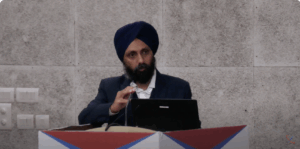
Dr. Ravi Gaur, Founder and Director, DRG Path Labs, Delhi; Chairman, Medical Advisory Board, Unipath Speciality Laboratory, Ahmedabad.
Panelists:
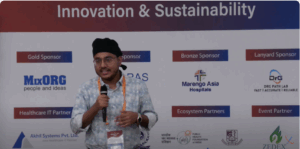
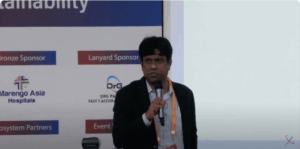
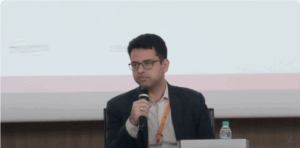
- Ms. Noor Fatma, Chief Technology Officer, Asiophilic Solutions (EZF) – expert in AI, embedded systems, and augmented reality.
- Prof. Sohrab Gupta, Assistant Professor of Biomedical Engineering, NIT Raipur – researcher in optical tomography and diagnostic innovation.
- Dr. Amit Raj, Managing Director, Lexus Medicare – cardiologist leading digital healthcare transformation through remote cardiac care and telemedicine.
Together, they represented medicine, technology, and research, united by one goal: making healthcare more inclusive.
Opening Address: A Tribute to Vision and Service
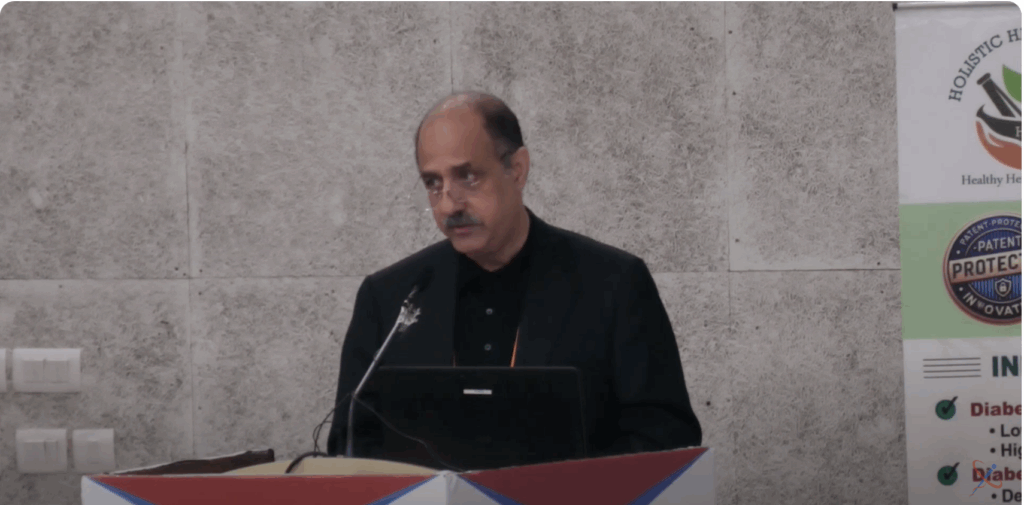
Dr. Ravi Gaur began the session with a heartfelt tribute to Surgeon Vice Admiral V.K. Singh, founder of InnoCuris and a mentor who inspired him during his service in the Indian Army.
He recalled being lost during a snowstorm on the Siachen Glacier in 1984 and being rescued after hearing Singh’s powerful call through the valley — a moment he credits with saving his life.
“His vision of innovation as a tool to serve the remotest soldier continues to guide us. He believed in technology not for prestige, but for purpose.”
Dr. Gaur connected that legacy to the mission of InnoCuris — to deliver diagnostics and healthcare access to the last mile, ensuring quality care is not a privilege but a right.
The Healthcare Challenge: Accessibility, Affordability, and Quality
Despite India’s advances in healthcare infrastructure, basic diagnostics remain out of reach for nearly one-third of the population.
Dr. Gaur highlighted the three-fold challenge:
- Accessibility – Distance and poor infrastructure still isolate large communities.
- Affordability – Many live near hospitals but cannot afford treatment.
- Quality – Even when accessible, care standards remain inconsistent.
“Healthcare cannot have two qualities—good and bad. It must be standard, safe, and equal for all.”
He praised India’s Ayushman Bharat initiative, which converted illness-oriented health centers into Wellness Centers, focusing on prevention, education, and empowerment.
Panel Discussion Highlights
- Technology and the Last-Mile Revolution in Cardiac Care
Dr. Amit Raj shared his journey from a conference insight to launching a rural health MVP using IoT-enabled diagnostic devices in Bihar’s Supaul district—an area with virtually no local cardiology access.
Through AI alerts and telemedicine, his team successfully managed critical arrhythmia and heart-attack cases remotely.
“A single device in a village can now save a life miles away. That is the power of connected care.”
He has since built a digital hospital ecosystem—linking rural clinics with specialists, startups, and point-of-care diagnostics through cloud-based platforms.
His vision: a “Digital Dome” covering each district, ensuring 24/7 access to essential cardiac care.
- Academic Innovation: From Imaging to Personalized Medicine
Prof. Sohrab Gupta emphasized the importance of academic research in medical device innovation. His work in optical imaging aims to create affordable, non-invasive diagnostics for rural healthcare.
He also highlighted the promise of personalized medicine, where treatments are tailored to genetic and environmental factors rather than one-size-fits-all prescriptions.
“Innovation must begin at the molecular level and reach the village clinic.”
His projects in telemedicine systems for Chhattisgarh and sickle-cell diagnostics demonstrate how academic innovation can bridge clinical and community needs.
- Artificial Intelligence and the Democratization of Diagnostics
Ms. Noor Fatma, a technologist, entered healthcare after losing a mentor during COVID-19 due to delayed diagnosis. That experience became the catalyst for her AI-based medical imaging venture.
Her company now develops AI systems capable of detecting anomalies in CT and X-ray scans—a breakthrough for regions with no radiologists.
“There are districts in India where no radiologist exists. AI can be the silent assistant that fills this gap.”
Her platform aligns with national initiatives like ABDM and 5G Health Pilots, focusing on interoperable systems built on international standards such as DICOM, HL7, and FHIR to integrate smoothly with hospital workflows.
- Collaboration, Validation, and Policy Alignment
Panelists stressed that technology must fit into clinical reality, not disrupt it.
Ms. Fatma noted that successful adoption required working with clinicians to ensure AI tools didn’t slow workflows.
Dr. Gaur added that validation and peer review remain crucial before any innovation reaches patients.
Collaborations between academia, startups, and policymakers—including PATH, IITs, and health departments—were cited as key to scaling and regulation.
- The Future: Digital Domes and Metaverse Healthcare
Dr. Amit Raj described how metaverse simulations and virtual assistants are transforming patient education and pre-treatment counseling.
“We use virtual clinics to meet patients before they even step into the hospital. They feel seen, informed, and confident.”
His goal is to build district-wide digital hospitals that combine AI, IoT, and telemedicine for continuous care—from screening to treatment to post-care monitoring.
Ethics, Governance, and the Human Touch in Technology
Dr. Gaur raised an important concern: as AI becomes embedded in healthcare, clinical governance and continuous learning are vital.
He advocated periodic re-certification and skill refreshers for medical professionals, similar to pilots maintaining flight competency.
“Machines can assist—but never replace—the judgment of a trained human.”
He framed AI as Augmented Intelligence rather than Artificial Intelligence, insisting that technology must enhance empathy, not erase it.
Closing Reflections
Each panelist offered a forward-looking message:
- Dr. Gaur: “Innovation without compassion is incomplete. Healthcare is a right, not a luxury.”
- Dr. Amit Raj: “Believe in change before you demand it. Digital transformation starts with conviction.”
- Ms. Noor Fatma: “Technologists must step into healthcare. This is where innovation meets humanity.”
- Prof. Sohrab Gupta: “Collaboration between research, policy, and industry will define the next era of Indian healthcare.”
The session concluded with a call to break silos, invest in preventive health, and make innovation people-centric.
Conclusion
The Bridging the Gap session reaffirmed that the true test of innovation lies not in sophistication but in reach and relevance.
From AI diagnostics to digital domes, the ideas shared highlighted one collective goal: to make quality healthcare accessible to every person, regardless of geography or income.
As Dr. Gaur summarized,
“Health is not just a need—it is a right, a shared duty, and a collective promise.”
Key Takeaways
- Innovation must extend healthcare access beyond urban centers to rural and underserved regions.
- IoT, AI, and telemedicine are transforming last-mile diagnostics and emergency response.
- Academic–industry partnerships are crucial for affordable, validated medical technology.
- Interoperability and compliance (FHIR, HL7, DICOM) enable scalable, integrated systems.
- AI in healthcare should be assistive, ethical, and transparent, with robust governance.
- Preventive care and patient education remain the foundation of equitable health systems.
- Collaboration across disciplines—clinicians, technologists, and policymakers—is the key to sustainable impact.
Raw Transcript
[00:00] Welcome back everyone.
[00:20] to our session on Bridging the Gap, Innovation, Approaches to Health Care Access and Prevention. As health care continues to evolve, so does the challenges of ensuring that quality is accessible to all.
[00:40] communities to undeserved urban areas, millions still face barriers in receiving timely, effective medical support. This discussion brings together thought leaders and innovators tackling these challenges head-on.
[01:00] with fresh technology-driven solutions and community-focused strategies. Our panelists will share insights into what's working, what's next, and how innovation can make healthcare not just more advanced but more inclusive and equitable.
[01:20] for everyone. Let's dive into this transformative power of innovation in closing healthcare gap and building a healthier future for all. I would now invite our first panelist, Dr. Ravi Kaur, DRG Lab. He is also our session chair today.
[01:40] Dr. Ravi Kaur is a leading innovator in diagnostic healthcare, serving as the founder and director of DRG Path Labs in Delhi and chairman of the medical advisory board at Unipath Speciality Laboratory Limited in Ahmedabad. He also acts as principal advisor to spite
[02:00] health and has previously served as director and chair of the medical advisory committee at Onquist labs. Please put your hands together for Dr. Ravi Kaur. Our second panelist is Miss Noor Fatma, CTO EZF. With a rich background,
[02:20] spanning more than 20 years, Ms. Nohr brings extensive expertise across diverse domains, including embedded technologies, product development, artificial intelligence, computer graphics, and augmented reality. As CTO at Asiophilic Solutions, she has been instrumental in the product development.
[02:40] roadmap of the company as well as various IPs that the company holds. Please put your hands together for Ms. Noor Fadma. Welcome ma'am. Next we have Professor Sohrab Gupta. He is Assistant Professor of Biomedical Engineering at NIT, Riper.
[03:00] He is a graduate in biomedical engineering with a PhD in the area of optical tomography from Indian Institute of Science, Bangalore. Please put your hands together for Grazia S
[03:20] Lexus Medicare. He is an accomplished cardiologist with over a decade of experience currently serving as the managing director at Lexus Medicare. He strives to deliver cutting-edge cardiac care to patients regardless of their locations. His work exemplifies a forward-thinking approach to ensuring every
[03:40] heart receives the attention it deserves. We welcome all our panellists with a huge round of applause. I'm sure this session is going to be a very engaging one. Keep the energy flowing. Please, you may continue, sir. Thank you.
[04:00] Well, good morning everyone.
[04:20] Good morning, everyone. It's my pleasure to be here at the Inu Health conference 2024. Before I start today, I think we have an interesting panel discussion.
[04:40] But I'd like to pay my attributes to the founder of InnoQRid, which is actually the – they started this platform, Inno Health Conference, early, which purely devoted to innovation.
[05:00] Today we are here because of our visionary leader, surgeon, he was my mentor, he was my senior Indian Army and we have in the remotest area of the country when I was posted in the Syachin Glacier that when the first posting as a left
[05:20] I have gone there way back in 1984. He was the one probably who saved my life because I have lost amongst the satan clashets in the night and I was not able to find a way. But I don't know if any of you have met Virgil V. K. Singh, he had a very loud voice. And as a search
[05:40] party was all across going on and even sunsets there earlier and the snow started falling and I was literally all alone by myself and probably I have the troops which were leading me via volunteer operation bail. But he was the one who actually shouted the valley my name Ravi and that E code all
[06:00] And that gave me a hope and probably that gave me a direction. From which direction it was coming, I started to walk into that and finally I think I couldn't reach him. I think my probably deepest regards and I think that's something what saved my life. I'm here today probably all because of him. Thank you sir, wherever you are we actually have lot of hope.
[06:20] respect and regards for you. This is my personal thing that we start with the, you know, Surgeon Biddleweek ising Sir, the founder of Inocuris, believed in the boundless power of innovation and that's what we are here for Inocuris. He has built a platform that not only redefined the X
[06:40] excellence, but also inspires us to think beyond the boundaries. In fact, I have, whenever I'm in healthcare, I'm an oncopathologist by profession and we talk about, you know, how to give the best of diagnostics to the last men out on the post. Because we can have best of facilities, probably the bigger city, you may be tired too, city. But when you go to a remote area,
[07:00] They are. What happens? You will find it still 34 cent of the population do not have an assist to basic tests, blood tests even. What we talk about the care. So I think the unless we are able to deliver the last men out post, I think our purpose, our mission is not heard out and that is the reason innovations
[07:20] technology is going to help us all out and that's where the platform was formed. Get the best of the global practices in India, put them together, make sure they are utilized in India, make it healthcare affordable, accessible and global technology quality driven health systems.
[07:40] With us his vision mission values remain ished in our heart his guidance was not just about creating solutions It was about building a legacy impact resilience and a forward thinking Sir we promise to carry your dreams forward Ensuring that your principal guide us in every step. You may have left this world
[08:00] your split and teachings will continue to light our path, driving us to achieve what you so passionately envisioned. Sir, we promise to take your legacy as we live through and thank you for being a mentor and being there and guiding us and being a guiding force. With that, I start my, you know, today's, you know,
[08:20] context we have a very important, very distinguished panel in which most of them are entrepreneurs, they are working to various field. I know a couple of them, Dr. Amitraj for the last so many years, he is in a great work. I am sure we all are learning, Professor waiting here to hear from him what is done. We have Professor Sohrab Gupta working again, I know.
[08:40] Nur Fathness is very nice to see because healthcare was always driven by doctors. We have so many innovators, technology providers getting it together. So I think this is what is required. It is not only the doctors which can work. We always felt doctors can provide healthcare.
[09:00] I think there are many, many, many of you, many, many of these people. Now we're collaborating together, making sure that healthcare is being delivered the way it should have been because it's been almost like 75 years in India independence. Why something may have gone wrong because we have not been able to provide the care to the people out there in the remote areas. So where have we gone?
[09:20] It's not gone wrong. Efforts have been done. Everything has been put up, but solutions are not there. Probably technology, innovation, disruptive innovation are the need of the R today. So it's my honor to stand here today, joining hands in the mission that goes beyond innovation, beyond advancement, and even better.
[09:40] beyond technology. We are here because healthcare is a fundamental human right and still remains out of reach for so many. Innovation and this session that is not heading is bridging the gap. Innovative approaches to healthcare process and prevention. In an age defined by medical marvels, scientific breakthroughs and digital transformation,
[10:00] It might seem surprising that a word continues to grapple with the barriers to healthcare assistance. There are still, I think, you know, I was just reading an article a couple of days by, this is still about 40 percent, not only in India, but globally, people don't have the right quality of healthcare, assist to healthcare. Assist and affordable. You may be having a hospital next door.
[10:20] But you cannot afford it. That is something because what do you do about it? Something so affordable. And then if at all it is there, probably the quality is not there. What do you do about it? Because ultimately you are playing the light. You cannot be quality, good quality or bad quality. Health care has to be a standard quality for all and everyone.
[10:40] For every person who benefits with the cutting-edge treatment, there are countless others who are left on margins. Disconnected, underserved and often unheard, we are all here to change that and that should be our own mission. Coming down to preventive care. Preventive care isn't just a service, it's a promise, yet for many this promise remains unmet.
[11:00] I am sure all of you must have heard, you know, Aishma and Bharat, Government of India has launched, Prime Minister, Hon. Prime Minister, Smodhi has launched that. The preventive health care centres which were there for many years, now focus was not on the prevention, they are all illness-oriented. Now they have been converted and they have a facility called Wellness Centre.
[11:20] And that name has been given to Ayushma and Mandir probably. You can walk around and we prevent and be feeling of well-being and happiness and health taken care of. The focus has now started last five years and I am sure we all have to take that forward. The preventing care is, I just sense it is not a service, it is a promise. Yet for many, this promise remains unmet.
[11:40] education, engagement, empowerment must be woven into the fabric of a healthcare system. Patients need to understand their health to feel involved in the care. Today it's era of patient-centric healthcare. It's not like I give up a scripture to a patient and they say, please go. No, they have to have a choice. They should be well aware of what they're doing.
[12:00] Involve them, I think probably, for better outcome and better trust and better help for community. Preventive health must begin long before the hospital, to be very frank. Long before a diagnosis, it begins with education and community. So we have the session now. I think I'll go back to my seat and start the session.
[12:20] question and answers because we have very elitist and distinguished panelists. We will look forward to hear from you guys. The topic is bridging the gap, innovation approaches to healthier assets and prevention. I will go back. Now I think start from there.
[12:40] about immunoglobulinar care and he's done, he's an immunoglobulinar by himself, he works in the house, he's in management, he's a leading cardiologist, he works in the space of providing remote cardiologic care, all kind of things which were elected. A question of, I don't know if you have any questions.
[13:00] discussion in which we can meet and make paths into an opioid journey, what is going on and what is the better, and probably the right of innovation in the medical field. Thank you. Sir, pretty interesting topic of today, bridging the gap.
[13:20] It all started with a very market journey. I mean about five, six years back where I was in a conference, FP4 in Mumbai. I think most of you know about it. Just as I was listening to the speakers and few of my friends in the room,
[13:40] who are there from Bangalore and abroad, they are speaking, they take Israel. So they have innovative, beautiful products in India and abroad. So suddenly I get an invite for a Q&A session and I was at the state asking them the questions.
[14:00] The gap issue was still pending and few startup innovators had the concept of bridging the gap. How does digital adaptation just include there? So we came out of the party within 10 minutes recently and it was where you followed.
[14:20] I led an MVP programme on digital health using IONI devices and reaching out to the last mile. That's how the story used to be. He thought right now that. And with, maybe she was five religions.
[14:40] We started these clinics in Bihar. The rural, you know, Bihar, I mean someplace from the geography, Supal district, close to the Nepal border. There is no healthcare and accessing healthcare is about five, six hours to a medical school.
[15:00] So there these solutions we have put in and I am being seated in Gujarat and Bangalore. So monitoring these patients has to riddle how many Indian if or water flows through that. I mean I am amazing. This is also one patient a day I mean I could diagnose an A-fib.
[15:20] fibrillation on a IOT and the AI really gave me alerts to my command centre. For that patient I had advised on a telemedicine platform, please take this medicine present nearest cardiologist or employee pathologist in the night. That is how the impact we
[15:40] I mean, the next morning I get a call from that centre. The doctor patient is phenomenally safe and no intervention was needed. He was treated by a young medicine. At medical college, doctors asked the patient who gave you these medicines. So technology really gave me that.
[16:00] gave that, you know, I mean, technical earthquake, I mean, another movie called Kick. So that kick really came in that mouth. A simple patient so far away with an AFM diagnosis. Simple, cute, the ambulance could must this. So there, then we avoid, we divert more and more.
[16:20] I have a data update of use cases of many patients. Not only the HVIP's MIs where there are heart attacks, where there are a lot of pain problems that were getting solved. And then, slowly the generation began, the collaboration began and the gaps too really, really, would really be taken up to the next level of more villages and more centers.
[16:40] You pray to hear your problem and I think you just repeat I am sure that in the first case, your first patient is get crashed at the D.C. And you want to see the patient. That is one of the innovation. To the far away it is in the form and probably have an ironing device which can actually give you a diagnosis of the patient.
[17:00] patients. I'm sure we won't be here for look at it. I'm sure there's one patient that will now be here for look at it. But sort of, I do have some back to you. Just for a brief, just talking about the...
[17:20] Basically, it's a medical report, you know, a different back right book. Everything out there. So, you know, that, obviously, it's an immediate review. It is a dominant kind of thing. So, I think, what? Each year you are building in how you think this is going to happen.
[17:40] So, my motivation was like when I was a kid, we used to, we have a particular brand, some of them are in our house. And as I go and wait like still today that particular brand is in the market. So, that helped me to understand here somewhere innovation is likely.
[18:00] much medical devices are there in India and as my generally progressed through my basic environmental engineering and through like master that was my PhD I realized the same thing that there are a lot of gaps which has to be covered and the need finding is not at a
[18:20] very like the antimaterial level and still we are using the same antimaterial level as this and a lot of things have get to be done. So, so in this only yeah earlier as we have studied about of MRICD and then during my research I came across optical imaging.
[18:40] a new part of imaging technique that has some future potential and is giving some challenge to regular medical imaging techniques. So that was one gap that I found in imaging. And then slowly and slowly I started working with like villages, the Atlantic, other health techniques of the rural India.
[19:00] And here again like I have identified again like the same things are not too much have been done. So here we started to develop some you know some telemedicine systems popular with Chhattisgarh and then like right now we are working on the secret cell the diagnostic.
[19:20] to customize the dose because as of now the dose doctors are recommending is very like general dose to every single cell to every person. So, but which has its own product ones. So, these are two things that we are working on.
[19:40] more about the sickle cell and then they move forward. So that is something we satiate with the national programme along and I think the sickle cell is one of the challenges talking about it was which probably was objective and great risk unediting this many years and so I mean the travel areas and best with the hydroxide is having familiar with the happy move-over.
[20:00] I don't know part margin that I like to welcome you. You have, you know, confusing eyes to try something to cultivate. I want to understand what motive we need, where you how we decide to move that speed and what part when you have the morning career.
[20:20] in the field you mean this year. Yeah, hi. So, doctor, I am not a doctor. I am just a hectic and I am a technologist. In any case, anybody who is feeling healthy is a doctor, right? Whether it is a doctor or not, you need to be back. Okay. So, I am a technologist.
[20:40] I am a VTEC and I have been working in the technology sector with cutting edge companies who have been very advanced, both Indian and multinational about it, plants about various cases and for me coming into healthcare was a little personal. He had started a company, we were working on computer vision.
[21:00] Then what happened, COVID came. We lost a very special person who was a mentor to us because this CT scan was not diagnosed at a particular time. We were not able to get a diagnosis. We were not able to admit him at the life time and that led to that and that and many other factors.
[21:20] So that is when we were coping up with that loss, we thought when we are such great technologies, we have built such great products for outside India, for India, why not work to bring up products which can help healthcare because that is where the gap still is.
[21:40] We were in Noida, we were not even in rural Asia. So I cannot imagine what had happened to people in rural India. So that was the point when we decided that we would use computer vision, the AI etc., what we were working on. We were trained it for disease, for diagnosing medical images because that was very...
[22:00] very near to the technologies we were working on and that is how we came into this. We started working on medical images, we started diagnosing diseases, we brought it up to a score of which the normal radiologist does and then we started going to the lunar areas to
[22:20] In the last few years, we have seen that in the two places in North East India, we were associated with neath the IOs where we were working with rural areas to see how the excess is there. And what we found was that, if I give you numbers, so there are around 50,000 radiologists currently in India, 1,000,000 stands being done daily. There are districts in India where there is no access to the drugs.
[22:40] not a single radiologist present to diagnose on those images. Those images are just for the extent they are just handed out to the patient and then they take it to the healthcare workers who are still not very adept in reading those images. So, in case a person has a stroke, so it depends if he is at what case in India for
[23:00] him to survive that or to regain his mobility back. And that should not be the case for a country like India where technology will hand power and this is in abundance. And that is what has motivated us to build a platform to deploy it in clinical settings and to help patients all over India.
[23:20] Great idea is that we have geology in the house, immunodirology with an establishment platform and we do a platform of AI. I'm sure as we move forward, we understand more about people.
[23:40] I go back to now, Dr. You know, I want to share about your physiology journey, how we started. And I think we share a little more because how is it helping to work into the under-subter area, especially the whole of the country.
[24:00] And even what we talk about, what we mention here about these things, that working noida for the presentation but not here, again, and the kilo-meter, within a city probably the phycosyphae, he may not be, I mean, just kind of like a salamatara.
[24:20] And when you see each other and how you want to scale it up, what needs more to be done? And what is that? What is the difference? I'm sure there are a lot of anxiety here. You are looking for what needs to be done. Can you share some visions, conditions?
[24:40] Well, mission, mission, well it is, earlier we started with, you know, multiple states. We had suggested we had about two key clinics in the area. We were supposed to put a comment on the, on all fronts.
[25:00] But again there was still a gap, what next? What next was in cardiology? Until and unless the patient is getting fully treated by the intervention, if the patient needs an intervention. So that was one of the gaps which we felt by just counseling the patient on a daily basis.
[25:20] platform giving the medicine doesn't solve the entire loop of I mean the patient is having an acute heart attack. We need to intervene further. What next? So again in my Howard journey was in this process I had about seven, eight hospitals and again how about was it cardiac? So in Howard I was presenting a paper as a
[25:40] them about my expansion plans. In fact, if you just set up, you will fade down. This is the moment of waiting, scale it up to that level in which I have taken it. And I was like, them Fox, what's happening? So, Jolliboo, he gave me
[26:00] Insights, please go visit few startups who have created a digital ecosystem in one district. So, you know, I stayed back, went to, you know, a few states in the US, met up with startups, learned from their ecosystem and then came back to the boardroom, yes, now, rather than we expand to all the...
[26:20] Different scales for me because I am being in Gujarat and Bangalore. I cannot travel in the Biai about Arunachal or even, you know, I have not. So then with the help of the government, we could really focus into only Gujarat. So just on the mission part, this is a moment where we can see the difference.
[26:40] completely caught shame. So let us make a digital dome like how an Israeli dome is on their design and defense system. A digital dome in healthcare is now my mission, is to cover all the villages of one district. So at this moment we have close to about 56 districts will cover
[27:00] covered under one district. So we are beyond the BHC and the community health centers. So you know you said, and the insights are pretty you know amazing. With one heart clinic, I'm getting collaborations from point of care diagnostic startups.
[27:20] Now, heart Farinam, what about other diseases? What about diagnostics? What about, you know, diagnosing certain, you know, early stage infection? So, these startups came up to me, now why do not we collaborate? I said, wow, this is the power of disruptive collaboration.
[27:40] can attract many people. So in the course of time, I enforc that these small villages will be under private government partnerships where we create a 24-hour system and we will tell you all an amazing world of admission.
[28:00] digital hospital. A physical hospital is over there and there is a physical hospital. So, you know, basically through a blind hospital on a cloud platform and this is giving me amazing results, how these are profitable. Patients are getting very limited. The impact of the digital approach is very high.
[28:20] approach to the accessible measure is getting resolved and startups are going there. It's all a collaborative method. You know, few startups coming along together in my ecosystem. I mean, we are creating this and now we, you know, what about post-ovid, the trust image is lost between
[28:40] doctor and a patient, which earlier someone did mention yesterday as well, how do we bridge the class? Patient centricity, how we educate the patient? Me as a doctor I cannot be educating about myself, my degrees, my qualification, they are wrong, no. So use digital tool to help or become, you know, we have to be very careful.
[29:00] friendly doctor. So there at the end, the evolution of a virtual assistant came in. Then we created this metaverse solution where we each treat the patient before the patient comes to the hospital. They are like, have you made it with so many questions around? They are scared. So we leave them out there and give them the value what we would all like.
[29:20] give them what exactly we are and about the disease themselves after they have been diagnosed. So that is the evolution of digital X. Now a meta-verse solution provider is coming up to me. So we have created, the first meta-verse experience cycle with Bijra. And now with these number of patients getting, you know, coming in into the next phase.
[29:40] these villages how AI is going to solve the problem of you know addressing the volumes. I cannot be consulting a normal patient, I need to have my junior assistant attend. So how do we filter these so that AI solutions are getting built up from the system. So as we progress this visible adoption.
[30:00] collaboration is the key. So from a leadership, educating myself on digital care companies and putting that to real ground in these centers, the results are by default speaking by itself. The company is going.
[30:20] So, the accessibility issue and for 2025 I have a bullish mission on digital approach, I will explain to you later. But this is evolved. When we met at the economic level in 3 years by 2000, such an
[30:40] would know about it, when a singer, media singer just came up to me and said, you have a chakra right here. I'd love your work. You say, have I? He came to Murali, he saw one of my centers over there in Boha. So that's, I said, God is called, I gave it out. Joseph called, she and I, I'm not around. I said, in conferencing, in ending,
[31:00] cannot be monotone. On to his make, another good start-up can come up with the innovation. Yes, we join him to something. You know, you know, once the Z is there, his baby called a bi-product. So that's how the journey is going on.
[31:20] about it and you know I had to just put it the right way because before I met Abhijit Maud when we started talking about his work here, what I had only heard of the initiative was doing some kind of project and I never understood what was his way. Earlier I had only about okay.
[31:40] We can take care of our nuclear power. You would say, by the way, we would say, American talk, you would say, American talk and you would say, American talk and you would say, American talk and you would say, American talk and you would say, American talk and you would say, American talk and you would say, American talk and you would say, American talk and you would say, American talk and you would say, American talk and you would say, American talk and you would say, American talk and you would say, American talk and you would say, American talk and you would say, American talk and you would say, American talk and you would say, American talk and you would say, American talk and you would say, American talk and you would say, American talk and you would say, American talk and you would say, American talk and you would say, American talk and you would say, American talk and you would say, American talk and you would say, American talk and you would say, American talk and you would say, American talk and you would say, American talk and you would say, American talk and you would say, American talk and you would say, American talk and you would say, American talk and you would say, American talk and you would say, American talk and you would say, American talk and you would say, American talk and you would say, American talk and you would say, American talk and you would say, American talk and you would say, American talk and you would say, American talk and you would say, American talk and you would say, American talk and you would say, American talk and you would say, American talk and you would say, American talk and you would say, American talk and you would say, American talk and you would say, American talk and you would say, American talk and you would say, American talk and you would say, American talk and you would say, American talk and you would say, American talk and you would say, American talk and you would say, American talk and you would say, American talk and you would say, American talk and you would say, American talk and you would
[32:00] Probably your heart beach can be seen right here on a mobile phone. And probably AI can tell, okay, now you need medicine number 1, medicine number 2 and probably in the directive or somewhere. Ambulance protected will not serve health. You just get up and suddenly knock your door. Because why? Because if you're being aware of it, which is given a summary of the beat, and ambulance say now your heart is there.
[32:20] perfectly fine. I put hard at night. But no, you are not fine. Those solutions are nothing happening. And your, that's where the potential is also happening. You can probably sit there out to your own etc, whereas more divide, you can actually take an etc deal with you, which is now, you know, instead of late etc, you can actually take an etc deal with you, which is now, you know, instead of late etc, you can actually take an etc, you can actually take an etc, you can actually take an etc, you can actually take an etc, you can actually take an etc, you can actually take an etc, you can actually take an etc, you can actually take an etc, you can actually take an etc, you can actually take an etc, you can actually take an etc, you can actually take an etc, you can actually take an etc, you can actually take an etc, you can actually take an etc, you can actually take an etc, you can actually take an etc, you can actually take an etc, you can actually take an etc, you can actually take an etc, you can actually take an etc, you can actually take an etc, you can actually take an etc, you can actually take an etc, you can actually take an etc, you can actually take an etc, you can actually take an etc, you can actually take an etc, you can actually take an etc, you can actually take an etc, you can actually take an etc, you can actually take an etc, you can actually take an etc, you can actually take an etc, you can actually take an etc, you can actually take an etc, you can actually take an etc, you can actually take an etc, you can actually take an etc, you can actually take an etc, you can actually take an etc, you can actually take an etc, you can actually take an etc, you can actually take an etc, you can actually take an etc, you can actually take an etc, you can actually take an etc, you can actually take an etc, you can actually take an etc, you
[32:40] your mobile application and things you got as a provider. They give you a rare insight, no worries, don't come to the rate, five to six months, you are fine, come out at six months. If you're seven years here, probably made it easier than at home and that technology will make solutions for that. Now I talked about SORRA, but we do talk about systems.
[33:00] health analytics is more decided different with the need of personalised medicine, talk about you know personalised medicine, position medicine, personalised diagnostic medicine. With a growing focus on personalised medicine, that was the key of the set and specifically you're talking about also, how do health analytics and decisions approach this with which they are between diet and health.
[33:20] diagnosis and pain is effective. People can diagnose fine but that these treatments are not been affected. For example, we have seen 60% of people, the people who die from each state may form anti-diabetic drugs. 60% respond and 40% don't respond. But this is something you want to problem.
[33:40] more person like. So a more right house diagnosis and treatment is more person like analytical and product is experiencing complication. So yesterday we had a lot of conversation about allowance and gender inclusion. So I think that is the right election that is going on and that is a mainly contribution.
[34:00] have to customize medicine as well. So just two days back I came across one use case for chat activity where a woman has put the pictures of her skin and asked about the skin routine and she has really got a very good night's skin routine about her and it also had even some good
[34:20] as a personalized care we can say. So yeah, definitely technology is moving and the future is about more and more customized medicine and I think that is one of the reasons that the kiosk has not been very much successful because again like when it comes to the telemedicine kind of
[34:40] through kiosks. So like there again we were moving towards the developing the hardware and putting the kiosk at particular places and which was not very much helpful when it comes to the personalized medicine. Mobile health, e-health it is contributing more towards the personalized medicine and
[35:00] more like the development of AI, things could change and as you very well said right now that we just got a wrong beat and the ambulance bill is on our game.
[35:20] we talk about treatment part is called the target treatment. I am sure many of you possibly want to see what happens. This all starts with the use of oncology and cancer. But the way we go and when the advent of molecular biology and economics of cancer.
[35:40] at one point of time, was at the lung cancer to the lung cancer. What is, he's been called, the drug is your entire lung cancer. If simulation finished on the force, what is not like that? We have with height, we have diagnostics with
[36:00] cancer is nothing but a mutation of genes at all. Neutronics and NGAIS is actually similar, we can probably have a tumor provider. We can get noted which gene has mutated it. Many millions of genes have mutated it. Which one is at the end of the day?
[36:20] This is some people who have talked about it. We, the steel is located at top of its own type of resolution here. I am not sure. So, strategy becomes more targeted. That is why you don't change over the time. The key must have been to come on most at the table with lots of competition. People are resulting.
[36:40] survival level is going higher because your act can look at itself not in normal ones. And that is the fault that is going to happen in the oncology space, this fault act is already happening in the oncology space, something like immunology, you know, when we are talking about, you know, a blood thyroid, blood is going to act only on the oncology.
[37:00] from everything similar to us, they were different environment, different infrastructure, different lifestyle. It's all now part of personalization, which is helping the treatment and the right diagnosis. Secondly, the preventative. It's like if you look at the ten people having a
[37:20] You must have seen that. 10 people have similar exposure. Everybody is normal. All is normal. All is normal. Find all of them to my order that you go back home. Come back after one year. But 10. Within six months, you don't have enough.
[37:40] condition. One has a cardiac arrest and one has a emergency. Why? The legal point. That's the reason today we have a lot of application happening today. We are not really talking about the biochemism markers, let's say you put the diode, but the environment is a lifestyle or the usually biometric conditions.
[38:00] put together and finalize it. And the energy gives no risk. Ten people can have a phenolusyparale, some of the days, some of the titanium, some of the non-vitanium or a seperation will happen and it will not arise. We need to figure out all the factors in the pyrometal if I may take a right at this point.
[38:20] So even when people have the same value of karstow or anything for that little function or the new problem or anything, but this is not this good way. And at this point it finds the further action of the material. And this is where the technology is in the graph and this is where the output is in the graph.
[38:40] There are applications now, but they offer health care for the problem. Health care needs validation. You cannot launch something to ultimately ease the life. Whatever you are doing, partner with, understand your co-bacteries here, talk to the person who is working on the natural expression, mix them together and probably arrive at a point.
[39:00] And once it is validated, more habits better it to come back to. Actually, nothing come back to a new partner in a hospital called your doctor's doctor. I mean, let me hear from you. I want to hear from you. You have a Tampcord solutions machine for immediate improvement.
[39:20] limit X-ray ions, which is how was it adopted, what kind of a challenge it could face in the world and then the source, the cost and the ease is acceptable now and the doctors really accept it very time is probably going to cost it.
[39:40] Are the veterans now out and working on it and what about policy? Are we okay with that?
[40:00] adoption in earwound, city or the mettors. One was the need because there the patient volumes are so high, the access to good health care, good doctors is so low that there is a need for them which the AI is solving. It is helping doctors to establish
[40:20] So, the platform is helping them scan those exosopronormal and abnormal and provide medicines for that and adhesives for that. So, now if I talk about the policy makers, so initially itself when we started building the platform.
[40:40] We are associated with the Department of Electron, we are associated with MIPI, we are associated with various policy makers, the Department of Health etc., who also want to work in that and who want to see how the adoption is going, how it would help. And through their pilot skills, they have 5G Health, pilot-in-
[41:00] schemes at various aspiration districts, various collectors they were ready to adopt those solutions to help their people. So, using that platform we were able to go there and see if our solution is making sense to them. And another thing was if I talk about adoption, so technology if we
[41:20] can sit and make in a lab, it is very good. But when we go to the field and we have to adopt it into clinical settings, that is a very big challenge. Because if I talk, I know about imaging, so I talk about imaging a lot. So there the machines are very legacy. The scans are not of optimal quality.
[41:40] Their patient, the patient volume is so high that taking out time to do something else what they were doing in the workflow that is very difficult. So for us as a technologist as well their use our technology what we have to do is we have to make a technology fit in their workflows so that it does not matter.
[42:00] If an AI is being used or not for them, a diagnosis has been provided. AI is used or not? Actually not hinder their workflow efficiency. That is also very important. So we are able to do that and right now our system works six on their workflow without making any changes.
[42:20] through what they were used to doing that and that made a lot of difference in adoption for us and radiology talk about. So, a lot of technology radiology platforms are there who are adopting, our AI is to provide better diagnosis, faster diagnosis to people. So, that why is we have been lucky that adoption for us has been good.
[42:40] The second thing is if I talk about class and validation what Dr. Gaurav said. So validation is very very important thing. For that as a starter we have collaborated with various researchers with ACE, leading doctors there who are, who are knowledge of technology. You know that it could help a lot.
[43:00] We have partnered with them. We are using, we have an evaluation study. We are publishing the papers so that it becomes so evidence-based and it fits into the system. I think the more we partner with people, the better you put your...that's what they have to do. So it's not like from the atoms it's just for some use.
[43:20] You know, various in the future, and how do you want to, you say, scale it up? And do you think this is going to be normal across? And what, you see, what kind of investment?
[43:40] There is a lot of intra-operative entities at the present time. So before we proceed to sort of a fundamental career, most of you how to put it into a future vision, we want to take it forward, or at the present, intra-operative challenges of the human body.
[44:00] So, developing in radiology there are system there are standards. So, there is a DICOM standard which is followed everywhere. Across all versions there is a DICOM standard which has which is being followed and so, adopting standards in radiology it is easier. Our system is interoperable because we are following the standards. Starting where we are in radiology, we are in radiology. So, we are in radiology because we are following the standards. So, developing in radiology there are systems there are standards. So, there is a DICOM standard which is followed everywhere. Across all versions there is a DICOM standard which has which is being followed and so, adopting standards in radiology it is easier. Our system is interoperable because we are following the standards.
[44:20] When we started building the platform, there were certain standards which we took care of. That was HL7, FHIR, HL7, the second was Dantra. So when you are building a technology, it is very important that you go and see the standards which are there. In healthcare, there are standards to ensure an interoperability. In India, not many people are calling it, but yes, there are standards now. FHIR.
[44:40] We have seen that the TIR has been with ABDN etc. The TIR, HS7 is being pushed by the government so that the sisters can talk to each other. They are not built with silos. And same is the case for DICOM imaging as well. We follow the standards and that is why we are able to work across any machine, any make or model. We are able to run the IELTS model.
[45:00] So, right now in radiology basically the AI is being used for sprelins and diagnosis. The third part is treatment planning. When you have an image available for example, a CT scan or an MRI. So, it is very easy.
[45:20] It is very, it becomes very personalized. For example, Dr. Gautam talked about oncology. So, our algorithms are being used in variation oncology as well. When you target a tumor, it is very necessary that you protect the obvious septus, the organs which are nearby, and our algorithms are making that easier and faster.
[45:40] because it is an air quality, it does very precision called new rate of the scans and so the radiation on qualities can target specially the tumors and not the organs at risk. So, that is where the future is where. There is another project in research case which we are working on that is virtual health, a virtual health pain of a person. So, it is coming up.
[46:00] So there is an anatomy of the liver which comes from the CT scan or the MRI, then there is a pathology of the liver which is being modeled and when you get the parameters like LFP etc. So you know how an actual liver is behaving. So before giving a person the medicine
[46:20] You can try it on the virtual river and see how the river would, how the river would respond. So that is what the vision is and we are working with various researchers from outside India, from within India to make that and come that as a reality. So in future it would be a digital hair-
[46:40] of you and so we are going there order by order.
[47:00] So, to my understanding there are two vertices like one is continuum research and for other is the implementation of that research through engineering at the root level. So, as of now yeah like when we are talking about AI it is working and also like yesterday as we have discussed about the importance of engineering.
[47:20] learned about this un-opent crisis which are like into a Google deep mind and all that other popular stuff. So these kind of researches are needed to be done in India as I think recently El Shulam has made their model an open source. So now yeah we can move towards the cutting edge.
[47:40] those areas and then as we talked about the personalized medicine before and like working on those engineering concepts at the grassroot level we can bring those those solutions to the at the bottom of the healthcare solutions.
[48:00] gaining to probably keep solutions and macered by which have the remote area under the surface area where with the lack of skill a lot of people are not there. Now I need my last question to proclamaty. I think I'll go half-minute lots by some of you. Because you have a power of experience. You work as an innovator, you have a cardiologist, you have a doctor.
[48:20] management, you run your own setup and your entrepreneur and your very specific setup and still like the fire of innovation is in your mind and you are getting more more. You know we do feel that because when we talk about industry and we have some of the institutions, we have tried it, industry, academic, relationship.
[48:40] relationship and it was still that way. What do we expect from the, in the academy's future? Like this is what we're setting here for. What do we expect, what kind of collaboration we're looking for, what future we look for, what should be done? So that's probably more such innovation probably after the public space and in July. And speaking of healthcare,
[49:00] day by day, we have to spend money from the property. Everybody wants good quality and property, we have to spend money from the property. Any views on that? There are two questions it should ask. One probably will answer it. Carimia, the owner of
[49:20] coming across journey of life. There is one part we keep missing is to keep the thread life is on the governance path. So, Moby talks about the clinical governance. I mean, I would have studied my medical school for a long time.
[49:40] medicine about 10 years back. So you know so the cadmium comes in, yes we need to ensure that the clinical governance there is a proper the AI solutions, ileanids are there to govern this so that people's skin mapping of a of a paramedic, of a medic, of a doctor needs to be constantly governed.
[50:00] Like for pilots there are, you know, certain number of hours they need to again go back, learn, pass an exam against her. So we need, so that, you know, it's patient who wants to know whether doc, are you skilled enough? We are human beings, doctors.
[50:20] have some problems, certain cognitive, sometimes decision making can be delayed for certain reasons. So here we come in, we are playing with life. So patient centricity, governance is important and with AI, co-anospere, which we do not know, so.
[50:40] covering the AI because AI can be investigating giving you positives. I mean an ECG machine now escapes with the in-perpreter. That is a form of an LLM. I mean it gives you a diagnosis. Patient is having abnormal ECG, suspected acute ischemia.
[51:00] theory or my but clinical presentation is different once we do an answer it does turn out to be completely different so you should not be misled by the you know the machine which gives you certain directions but end of the day machine assists you so you know doctor needs to be you know brain and
[51:20] have mostly used is in nanoscale to at least diagnose a problem and then probably look at the solution. So two things, governance of the AI, governance of the theoretical skill-pamping, an academy should always be there to even positively
[51:40] three paramedics on their skill and improve the latest technology, inter-cate them on their skill, because once a graduate technologist like a catheterist, technician, geneticist is degree. Where is his education? Where is his recent advances in the machine, whose they will teach him about? So this is important.
[52:00] that we completely learn, anybody should push for this constant learning and we have the word.
[52:20] We need to have a free call of duty for the competent or stand-up. Otherwise, what are the rules of innovation, economic and business? Not we, instead that in the books, probably may not be able to implement that ground outside there.
[52:40] You mentioned about AI, I think it works for people about AI and AI is what? It is nothing but artificial intelligence or somebody called it the augmented intelligence. It is augmenting our own intelligence. But I think this AI will be there, yes, no doubt, you will be there for us. We cannot get away with that.
[53:00] probably will adopt and fulfill together and AI, whether they are artificial intelligence or augmented intelligence, probably is a qualitative. Another AI, awesome imperative and that's what we will probably, you know, be ultimately agent we can apply to ground. So I think we have a procedure from this particular article.
[53:20] time is almost over, the problem is just having to be more and more than that. And lastly, you can say to be a student of that. Anything you want to say. If you have a mission, if you have created your thoughts in your motivation or you want to do something,
[53:40] I mean I got offered digital only because I felt this is going to change. And change is believing, I mean first believe and then before you can expect the change. I mean you might feel resisted. But who have prayed? And as an entrepreneur I would love to hear from people who wants to share their stories.
[54:00] showcase their product, showcase their innovation and always there to support them.
[54:20] Phillips or GE are easily fine, so that is something. Make an example of being in India and making an example of the world. That's important. Also we are sticking with the ITD and what I want to say is that
[54:40] As technologists it's our responsibility to contribute to the world of society and yes you can work in technology but healthcare is a very good field where you can contribute. So if there is any interest you know you can reach out to us. We provide internships, we take each other in to help us and it would be a great pleasure.
[55:00] inside and we I look forward to a very good future for health in India where we make every technology accessible to everyone in India.
[55:20] may be a bolder, a parathic, and all these things are difficult. You know, like, for my thing is, like, if you look at the word innovation, innovation by itself has got everything inside. Instead, they say like, I, I stand for idea, it's the transport here, there is a thing. And a new technology for better out.
[55:40] Then we have another end that's the next generation solution of the issue is balance. Or optimize system for efficiency. That's every way what we do is we in the value, whatever is going in, it has to be very good level because you may do something in your value for the point of working on it.
[56:00] Advanced diagnostic position, that is the most important. Adnostic, active, essential. Advanced diagnostic position that is the procedure, monitoring, all of that. Technology improves, embalring, improves. We need to have everywhere technology should take over and empower us.
[56:20] utilize it with knowledge that we have. I again, innovation, now that's important work that I'm going to talk about. Innovation is amortically critical, digital. I think we need to know, you know, the touch buttons can help, but physical touch means that's important part. And that is the part we need to be able to talk about.
[56:40] sitting across in front of each other and there we go. Virtually is also fine, but it is equally important. So according to that, we need that with mind. Over opportunities, lower opportunities, including the gaps, even at the lot of gaps out there and we have a lot of questions. And I didn't only answer about that.
[57:00] collaboration. Networking solution for global tech. You have to collaborate with each other. That's what innovation is. And this is where innovation is in which the cap and take you up on that system. So I sum up with a few two more lines before I say thank you for that. And so, HTL probably knew what to do.
[57:20] We have seen on our class, we have acknowledged we have all feel people working in the field of health care. It is not only in person to adopt a medical appointment. Health care today becomes not just one of the things of the policy decisions or the doctor. It is a shared implementation.
[57:40] amongst all of us. Preventive care is also no longer a choice but a necessity. Without it are very humidity effectors. There is a little bit of infrastructure but if you can prevent, if you can prevent the onset of diabetes, you can take care of your home for problem related onto the scene. Not in the infrastructure that you need to apply it.
[58:00] otherwise just for an easy diagnosis that we will go to hospital opening double 9 is a lot of fun. We will take care of health. Let's remember that health is not just a need. It's a right, a pressure shift that we must merely protect on. So, let us go forth with the products, not just to reach the gap.
[58:20] but to all the people in those camps. Look after those people who are there. That is a great system that is beyond seasons, beyond jobs, beyond barriers to care for people in their full humanity and respect their health and well-being. Thank you so much and together let's work for a future very soon.
[58:40] It has to not go for the reality for every person, every family and every community. Thank you everyone.
[59:00] accessibility, affordability as Dr. Ravi initially said that hospitals and healthcare are accessible but not always affordable. So we have to come up with solutions that can inculcate all of those things. So thank you so much. As we move forward, let's carry the insights and inspirations that have been shared today. I would now request Dr. Ravi
[59:20] to present a token of appreciation to our esteemed panelists. We'll start with Miss Noo Fatma. I request the stage team to please bring out a token of appreciation from the Inno Health team. Please put your hands together for Miss Noo Fatma.
[59:40] Please put your hands together, this has been a very engaging and insightful session.
[01:00:00] Please put your hands together for all our panelists.
[01:00:20] to please come up on the stage and facilitate Dr. Ravi Gaur. Please put your hands together, please.
[01:00:40] Thank you.