The 17th Annual Personalized Medicine Conference – Part III
- September 30, 2025
- 12:03 pm
With confirmed speakers from every sector of the health care system and media participation from representatives of outlets including The Washington Post, Fortune magazine, and Endpoints News, the 17th Annual Personalized Medicine Conference provided business executives, researchers, and patients with an opportunity to demonstrate how far personalized medicine has come — and how far it still has to go — two decades after the first sequencing of a human genome in 2003.
Summary
Breaking Barriers: Reimbursement, Diagnostics, and the Future of Personalized Medicine
Table of Contents
- Introduction
- Innovating as a Payer: Dr. Michael Sherman’s Perspective
- Understanding Payer Psyche
- The Role of Real-World Evidence
- Building a Value-Based Innovation Team
- Examples of Value-Based Agreements
- Implementation Challenges
- Panel Insights: The Future of Diagnostics and Pharma
- Conclusion
- Key Takeaways
Introduction
Personalized medicine has advanced rapidly, offering diagnostics and therapies tailored to individual patients. Yet, reimbursement and implementation remain critical bottlenecks.
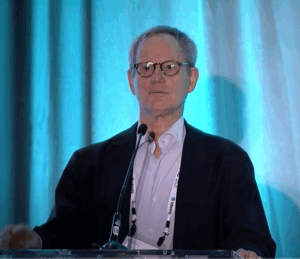
At the Personalized Medicine Coalition’s annual meeting, Dr. Michael Sherman (former CMO of Harvard Pilgrim/Point32Health) shared how payers can transition from skeptics to innovation enablers through value-based agreements and real-world pilots.
A subsequent panel — featuring leaders from diagnostics and biopharma — tackled regulation, reimbursement, and the evolving role of biomarkers, AI, and patient access. Together, these discussions reveal both the promise and the roadblocks of bringing precision medicine into everyday care.
Innovating as a Payer: Dr. Michael Sherman’s Perspective
Sherman emphasized that payers don’t need to be gatekeepers; they can be partners in innovation:
- Align incentives through value-based contracts.
- Use real-world pilots to generate proof of clinical utility and cost-effectiveness.
- Ask a simple guiding question: “Would you want this for your family?”
Understanding Payer Psyche
Sherman identified three recurring patterns in payer decision-making:
- Risk aversion – “Follow the crowd” behavior.
- Language gaps – Payers want evidence of utility and cost savings, not scientific novelty.
- Skepticism – Clinical trial success often fails to translate into real-world practice.
The Role of Real-World Evidence
Payers demand proof beyond trials:
- Evidence of improved quality, reduced costs, or better outcomes in practice.
- Early pilots with pharma and diagnostics companies showed how real-world data builds credibility.
- These pilots often paved the way for coverage decisions.
Building a Value-Based Innovation Team
Sherman built a dedicated innovation department inside the payer organization:
- Specialists in pharmacy, genetics, and digital health.
- ~$4M budget for pilots, insulated from reimbursement battles.
- In-house analytics team for independent assessments.
This structure created a safe space to test innovation before scaling.
Examples of Value-Based Agreements
PCSK9 Inhibitors and Population Models
- Amgen deals tied cost to cholesterol reduction and later cardiovascular outcomes.
- Novartis’ Inclisiran almost had a “Netflix model” — guaranteed revenue for broad patient access.
Gene Therapy Risk-Sharing
- Spark Therapeutics’ Luxturna offered multi-year warranties.
- Other gene therapy agreements shared risk between payer and manufacturer.
Diagnostics Partnerships
- Illumina NIPT: Universal coverage in exchange for cost guarantees.
- Whole Genome Sequencing: Cut rare-disease diagnostic odysseys.
- GRAIL MCED pilots: Tested performance in employer and exchange populations.
- Foundation Medicine: Coverage tied to trial enrollment and targeted therapy adoption.
Implementation Challenges
- Internal payer resistance (e.g., attempts to block costly drugs).
- Board-level skepticism (“Theranos effect” for liquid biopsy).
- Physician adoption hurdles despite coverage.
Panel Insights: The Future of Diagnostics and Pharma
Barriers to Value Recognition
- Diagnostics remain undervalued despite influencing >70% of clinical decisions.
- Reimbursement still lags behind scientific innovation.
The Push for a Single Regulatory Framework
- Patchwork regulations create confusion for payers.
- Industry leaders advocate for a unified, risk-based framework for lab-developed tests.
- FDA’s proposed guidelines could raise standards and credibility.
Implementation Science and Clinical Integration
- Diagnostics alone aren’t enough — success requires embedding into care pathways.
- Genetic counseling, pharmacist support, and digital tools must accompany testing.
- Aligning with integrated systems and value-based networks accelerates uptake.
Policy and Advocacy
- State biomarker mandates ensure private coverage aligns with Medicare.
- Calls for unified advocacy — diagnostics companies must pool resources like pharma to influence policy.
Expanding Beyond Oncology
- Precision medicine is moving into immunology, neuroscience, cardiovascular disease, and rare diseases.
- Rare diseases especially stand to benefit as sequencing costs plummet.
AI, Data, and the Next Frontier
- AI already useful in digital imaging and biomarker analysis.
- Long-term promise: drug response prediction from multimodal datasets.
- Challenge: Data volume — trials provide thousands of patients, AI models demand millions.
Conclusion
Reimbursement is the weakest link in the precision medicine chain. While diagnostics, biomarkers, and therapies advance rapidly, payer hesitancy, fragmented regulation, and undervaluation of diagnostics slow adoption.
Dr. Sherman’s experience shows that pilots, value-based contracts, and real-world data can change payer behavior. The panel highlighted that policy harmonization, implementation science, and cross-industry collaboration are essential to bring precision medicine into mainstream care.
The science is moving fast — now reimbursement, regulation, and adoption must catch up.
Key Takeaways
- Payers can be innovators if given budgets, autonomy, and pilot programs.
- Value-based agreements de-risk access across drugs, diagnostics, and gene therapies.
- Real-world evidence is critical — trial data alone won’t sway payers.
- Diagnostics remain undervalued despite their centrality to clinical decisions.
- Unified regulatory frameworks would strengthen payer and provider confidence.
- Implementation science matters — embedding diagnostics in workflows drives adoption.
- Policy levers like Medicare coverage and state biomarker laws could accelerate access.
- AI and multi-omics will fuel the next era of precision medicine, but require new business models and data standards.
Raw Transcript
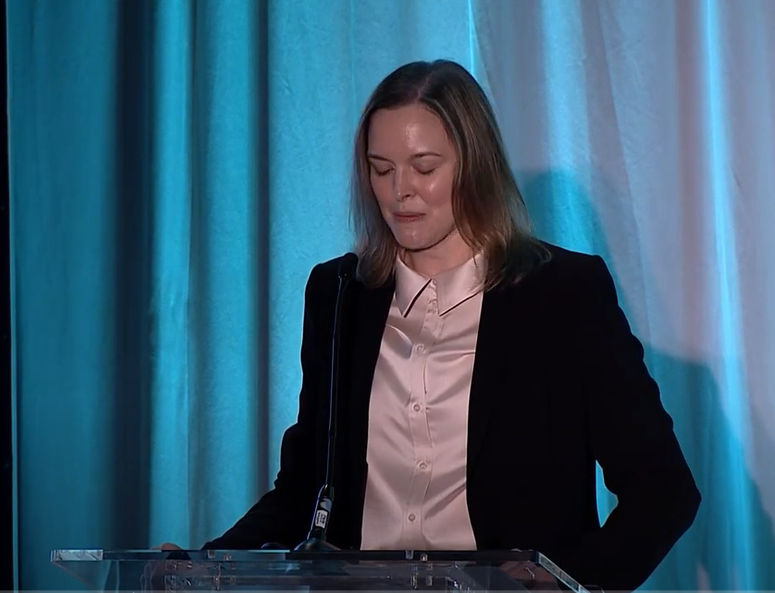
[00:00] Okay, we're gonna get started on time. Good afternoon everyone. Ed, once you sit down everyone else will sit down. Good afternoon and welcome back from lunch. Next up we have a really exciting talk on what it takes to move the needle on reimbursement for personalized medicine. For those of you who I have another
[00:20] pleasure meeting yet. I'm Cynthia Benz and I serve as the senior vice president of public policy at the Personalized Medicine Coalition and I have the pleasure of introducing Dr. Michael Sherman. Dr. Sherman served for 12 years as chief medical officer of Point 32 Health, which was created in 2021 by the merger of Harvard
[00:40] Pilgrim Health Care and Tufts Health Plan. He's now a venture partner at RA Capital Management. To share a bit of my own personal experience with Dr. Sherman, before joining the PMC, I spent most of my career at a patient advocacy organization. And to most patients, and some of you are in the room, and patient advocacy organizations, for the most part, payers aren't your allies.
[01:00] And I can say pretty confidently that many patients often face the fears that the payers are the people who are going to serve as the greatest roadblock to diagnostics and treatments. So when I joined the PMC and Ed went through the composition of the board, he mentioned that there was a payer representative on it.
[01:20] And I'll admit, I was pretty skeptical that this individual is going to be constructive to conversations that have to do with how you can accelerate the pace of adoption of diagnostics and treatments. And I figured that person was really there for a reality check and also when necessary to pump the brakes on PMC getting too far ahead of itself on issues related to.
[01:40] reimbursement coverage. And then I met Dr. Sherman and I quickly realized that he's different and he represents a different type of payer. And right away I understood why he is widely recognized as a leader in developing and implementing strategies that facilitate access to innovative technologies and a proponent of generating real-world evidence.
[02:00] to demonstrate the value that these technologies carry. And that mantle has been taken up and was carried on behind the scenes by Don Cardero at Point 32 Health, who now sits on PMC's board and we're very lucky to have her. But during Michael's time as a payer, first with Harvard Pilgrim and then with Point 32 Health.
[02:20] He was responsible for driving some novel reimbursement agreements with both diagnostic and drug developers. And some of them that happened pretty soon after I joined the PMC were work that he did to expand the availability of non-invasive prenatal testing for inherited genetic conditions, whole genome sequencing for children with suspected rare disease.
[02:40] diseases to shorten the diagnostic odyssey many families face, comprehensive genomic profiling that informs effective use of cancer treatments, and coverage for gene therapies that were among the first to address rare and pediatric disorders. These are just a few examples of what he's done and what he was able to do with his team, and I'm sure he has a lot more to share on that.
[03:00] It's no secret from the panelists this morning that innovators and personalized medicine are struggling. One struggle is to convince health insurers that paying for more diagnostics and treatments today will decrease health spending in the future by keeping patients healthier longer. We all need some clarity on where to go next and how we can speak the same language.
[03:20] which is something that Don brought up in a meeting that we had yesterday. My hope is that Dr. Sherman is not the only payer with enough vision to recognize that the Diagnostics and Treatments underpinning personalized medicine will not only have a positive impact on the people's lives that they cover today, but that also by providing access.
[03:40] data that they're really working to create and sustain a more equitable access to care in the future. And to do this, payers need to do more of what Dr. Sherman always had the courage to say. Cutting-edge diagnostics and treatments may be expensive, but they're life-changing for the people who need them. And it's not about saying no because
[04:00] as the price tag. It's about finding ways to say yes without bankrupting the system and then they need to act like he always did. So with that I'll turn it over to Dr. Sherman for his reflections on what it takes to move the needle now in reimbursement. So please join me in welcoming him.
[04:20] Well, thank you for that warm welcome, and so my goals for the talk today are simple. I hope to convince you within 40 minutes or so that innovative payer is not necessarily an oxymoron. I'll talk about some successes, but also some challenges we faced.
[04:40] It's tough being an innovator on the payer side. And so much of what we've achieved has been based on relationships, but what you may not appreciate is that the hard part wasn't negotiating with industry, it was negotiating internally in many cases, and I'll talk about that a little bit. I don't know what's more surprising looking back, either that we actually
[05:00] accomplished some of these things or I never did manage to get myself fired. I was at, I worked all over the healthcare ecosystem trying really hard not to work for a payer which happened when I went up at United, long story and then you man it, but I've managed to do the job the way I've wanted to which is really not about saying no
[05:20] things not about utilization. What a terrible job, but understanding we need to control costs and do it in a value-based framework. How do you give everyone the right incentives? We talked about incentives in an earlier panel, physicians and a pharma and diagnostics, etc., and I think that's a much better way to let those who are in a position to make decisions.
[05:40] and squeeze out the savings and the inefficiencies versus a payer saying no. So I will say that 12 years and there are some data points here, that's three half-lifes for a chief medical officer. So I feel that I frankly had it coming when I got a call from
[06:00] Peter Koczynski at RA Capital, who said, are you interested in doing something different? And RA is an amazing organization, some of the smartest people I've ever worked with, and dedicated doing the right things and not letting some of the payment issues stand in the way, which is just how I feel just from a different lens. So I jumped at the opportunity and I've been with them
[06:20] early April. So, but it has been an interesting trip so to speak and as I reflect back I think back to when I started at the PMC and the truth is first meeting or two they didn't like me at all and again I was a little surprised because usually that takes like weeks sometimes months
[06:40] They didn't like me from the get go. That's true. And I realize that it wasn't necessarily personal. They just didn't like payers. And if you think about some of the anecdotes we've heard, yes, we'll cover your test if it's in NCCN. Okay, great, we understand the rules. Oh, no, no.
[07:00] We don't agree anymore. I can kind of understand that. I don't even like payers and I work for a payer and I worked for a payer. No, it's true and I will say I got to do the job the way that I wanted to. The player playbook is, you know, cost savings targets, hit them or else. You see some stories of bad
[07:20] had behavior in the press recently involving nav health and medical directors and care managers being forced to use the AI interpretation versus what they're actually seeing from the charts or recently some things about not paying fully for surveillance colonoscopies, not for those with symptoms but for those at higher risk.
[07:40] So that doesn't seem a great way to build a business. So I was much more, and I always have been, about how do you differentiate? How do you make a payer not the card in your wallet, but something you see as an advantage? And I believe that if payers do that correctly, they can actually help on the revenue side, which is a much better way to grow companies in any history, not just
[08:00] on, we're saving more money. But again, I do understand and I've been part of payers, you know, initiatives where you have very, you know, very rigorous cost savings targets and they're not always reasonable. And you have to have the conviction to push back in those situations and I'm going to give some.
[08:20] some examples of that also. So as Cynthia kind of alluded to, and you've heard this theme from Mike Plaine and others, we have this incredible technology. We know how to edit genes. We know how to cure types of cancer. That's amazing. It just disturbs me so much.
[08:40] that the reason many patients aren't getting the care they should is because of not the science. It's a reimbursement system, it's how we engage physicians, it's how we transmit information, it's the incentives. And that's kind of crazy and frustrating. So I, you know, I decided a number of years back if I'm not smart
[09:00] enough to know how to sequence a gene, it shouldn't be that hard to change the payment system, which doesn't require the same... Yes, I was naive, but it shouldn't be that hard. And the fact is that, have the excuse budget impact payment system not designed for it, that's a lousy excuse to give to someone.
[09:20] someone who isn't getting the care that they need and deserve. And my litmus test has always been what would you want for a member of your family. So and that guides some of the things I've done and focused on. Let me share a little bit about what payers are looking for, about the payer's psyche, and then I'm going to talk about value-based agreements and how they can help overcome barriers. And you know, I heard this internally.
[09:40] in RE Capital, you're the black box. Help us understand, and I can understand why they're viewed that way. But a couple of kind of basic principles. One, pairs are risk-averse. I used to get into debates with some of the other executives. You want to do what? Here's why. What is Anthem doing?
[10:00] what is others? I mean, think about that. Executives here are supposed to be our own company. The knee-jerk reaction, what are the competitors doing? The inference is you want to spend money on something and we're not sure it's a good idea and if it's such a good idea, how come others are in spending money on it, which gets into that chicken or the egg and vicious cycle for those of you who are trying to introduce new technologies.
[10:20] So, you know, that's an issue. We worked on ways to risk it and put together a framework that helped us get things across the finish line, but it is kind of the psyche you're dealing with. The second point I'll make is there's different dialects of language being spoken. Payers speak clinical utility and a lot of
[10:40] What do we do?
[11:00] cancer, whatever, when you put that into the mix with physicians who may have incentives to do things differently and payment systems and a lot of confusion, does it actually move the needle? Can you show that something has changed in terms of quality, cost, or value? And that's so important. And again, some of the things we did was to try to create these real-world trials. And then the third point I
[11:20] want to make about payers is around real world evidence. Again, that's a hot topic if you would. And let me just address that briefly. When you come to a payer with clinical trial data, that is like the car commercial saying the mileage per gallon was blah, blah, blah, and your mileage may vary.
[11:40] And it usually varies and not for the better. And it's because in clinical trials, and this is true for drugs, it's even more true for diagnostics, I would argue. You have physicians who are really focused on something and they're getting paid usually for conducting the trial. Patients are followed by clinical research.
[12:00] associates or other staff, everyone kind of does what they're supposed to and fall into the playbook. You put this out in the wild and it doesn't always play out that way. I was speaking to a urologist recently asking about a test that can prognosticate prostate cancer. Which ones are likely to be aggressive versus versus not
[12:20] not so as a follow on to high PSAs. And he said, that's a black box, I don't believe it, whatever. So if you were to go to that physician even if it's covered, he would likely dissuade the patient from doing anything with that information. Whether that's because they get paid more for doing biopsies, I don't know. It's always a question, it's not always.
[12:40] cancer, but it's something you have to look at. So there are many cases where what happens in these trials doesn't actually get replicated in the real world, and not because of the science, because of all those other implementation issues in our complicated system. And I refer to what we did to put the right infrastructure in place.
[13:00] And so going back kind of, you know, almost 10 years, we were doing a lot with value-based care for services. And I think everyone would agree, fee-for-service is not a formula for high value. And so we got very engaged. We were doing an early adopter bundle payments for procedures and other things.
[13:20] And we were having a lot of success with that. By the way, as an aside, I remember, one case we need more value-based care is oncology, and I still remember I met with the leadership of Dana Farber. Can I name names? And they were the chief quality and chief meta. They were super nice, and I said, let's try to do some bundles together.
[13:40] some great opportunities here. And they listened. They listened. We had applied conversation. And at the end of it, they said, well, we're good. Thank you. And the system, I guess, is working for them. But we were out there. I was out at conferences challenging. Challenging.
[14:00] pharmacists, pharmacists, pharmacists, pharmacists, pharmacists, pharmacists, pharmacists, pharmacists, pharmacists, pharmacists, pharmacists, pharmacists, pharmacists, pharmacists, pharmacists, pharmacists, pharmacists, pharmacists, pharmacists, pharmacists, pharmacists, pharmacists, pharmacists, pharmacists, pharmacists, pharmacists, pharmacists, pharmacists, pharmacists, pharmacists, pharmacists, pharmacists, pharmacists, pharmacists, pharmacists, pharmacists, pharmacists, pharmacists, pharmacists, pharmacists, pharmacists, pharmacists, pharmacists, pharmacists, pharmacists, pharmacists, pharmacists, pharmacists, pharmacists, pharmacists, pharmacists, pharmacists, pharmacists, pharmacists, pharmacists, pharmacists, pharmacists, pharmacists, pharmacists, pharmacists, pharmacists, pharmacists, pharmacists, pharmacists, pharmacists, pharmacists, pharmacists, pharmacists, pharmacists, pharmacists, pharmacists, pharmacists, pharmacists, pharmacists, pharmacists, pharmacists, pharmacists, pharmacists, pharmacists, pharmacists, pharmacists, pharmacists, pharmacists, pharmacists, pharmacists, pharmacists, pharmacists, pharmacists, pharmacists, pharmacists, pharmacists, pharmacists, pharmacists, pharmacists, pharmacists, pharmacists, pharmacists, pharmacists, pharmacists, pharmacists, pharmacists, pharmacists, pharmacists, pharmacists, pharmacists, pharmacists, pharmacists, pharmacists, pharmacists, pharmacists, pharmacists, pharmacists, pharmacists, pharmacists, pharmacists, pharmacists, pharmacists, pharmacists, pharmacists, pharmacists, pharmacists, pharmacists, pharmacists, pharmacists, pharmacists, pharmacists, pharmacists, pharmacists, pharmacists, pharmacists, pharmacists, pharmacists, pharmacists, pharmacists, pharmacists, pharmacists, pharmacists, pharmacists, pharmacists, pharmacists,
[14:20] So I went to the team doing the services value-based care and I said, well, this is yours now. Anyone have a problem with that? And they didn't, oddly enough. But the best part for me, one of the wins here with this merger that we did was that I got to tinker with the structure and I created an entirely new
[14:40] department for this. And you're not supposed to have favorites as a manager or as a parent, but this team was my favorite. And again, part of it is I created it from scratch. So there was no one like legacy took the best, one of the best managers, made her the VP. Her name is Kate Wallace.
[15:00] took the best pharmacist off the pharmacy team, put her there to be over the pharmacy vertical, hired a superb person who knows more about genetic counseling and personalized medicine than I've forgotten as the saying goes. We hired someone else for digital and others.
[15:20] best project, we put all the best people here. And then I even budgeted for their own analysts, because working in a pair, I know that one of the bottlenecks is trying to get your informatics people to do analysis, and usually that they'll prioritize the one trying to show where the cost savings opportunities are. So I made them self-sufficient. And then
[15:40] through a variety of tactics put together with their own budget. So now you've got this self-contained unit, and the beauty of this was not just that they were just a superb team, but think about that budget question, which is now $4 million a year, not for their salaries for doing pilots. So that means that
[16:00] when there's an opportunity that doesn't fit into a category, let's say digital therapeutic, offering the reveal for migraines for example, or GREL, multi-cancer early detection, we'll talk more about that. There's not the question in the debate, how do we pay for this? There's no need, for generally for the majority.
[16:20] of these which are new and we're not really sure, we're not charging the patient anything. We don't need to figure out how to adjudicate the claims, we're just paying for it out of that budget. And then the head of that commercial line of business can't come to us and say, you're spending my money on something that may not work. So it turned out that was actually part of the secret sauce and now we have this entity that
[16:40] that companies can go to and experiment with. And I see these as, again, real world pilots, working with companies in therapeutics and diagnostics and other areas to try things in limited settings. These are not, yes, we're covering it permanently. This is let's try something. Real world, see how
[17:00] works and then either say yeah it's working let's make it permanent it didn't work sorry or let's course correct and you know I view that as a huge opportunity not just to disproportionately bring access to our patients but if you think about it from the perspective of that risk element on payers I was also de-risking it because in most of these cases
[17:20] cases, if not all, the vast majority, they're going at risk for the cost of the test or some aspect tied to results. And we're off, and we're conducting it in the real world with multiple providers and markets, etc. So that really is real world data. So one of the other, you know, side effects of benefit here is we're actually spinning off
[17:40] real world data that others can look at and copy. So we're impacting the environment not just for our membership, but throughout the country. So that was, again, that's why we were getting up in the morning. So all that is a great model. As I did say, it's
[18:00] not easy working in a payer and sometimes it seemed harder to negotiate internally. So I'm not going to spend 45 minutes talking about how tough it is, but you should understand when you see payers do some stupid things and you wonder what are they thinking, it means someone set a financial target.
[18:20] someone's job or bonus is tied to it and no one has a conviction to stand up. And I'll share something, I'll share probably one of my worst examples of something that Harvard Pilgrim almost did. So we, you know, the head of the commercial market felt that we had two sicker populations.
[18:40] in New Hampshire, and we did compete with different entities in different states. And she felt that our formulary was too generous. And so we actually kind of compromise and we'll come up with a different New Hampshire formulary that takes into account the competitive forces. This colleague who worked in a pair, she had this strong
[19:00] health idea, we should not cover cystic fibrosis drugs. I'm not making this up. This is Harvard Pilgrim and Ethodie, which for 10 years ranked the number one health plan in the country of equality before they retired the ranking. And she meant it. We had a number of tough discussions. And I tried to explain to her, this is a terrible idea.
[19:20] For a whole variety of reasons, most of which are patient centric, but I tried, you know, I realized that tactic wasn't working. So I did say, you know, patients are going to be talking about this online and with the centric. This is not good. And she said, good, I want that. And I said, you know this is going to be over.
[19:40] returned on appeal whenever it goes out, then we're going to pay for it anyway, only everyone's going to hate us. And she said, yes, but next to new patients and families with CF family members looking for insurance, they'll choose someone else. And that's a true story. It took, you know, it's like the angriest I've ever seen.
[20:00] ever been and my pharmacist who were really the heart and soul, they were even more ticked off and it went to the CO level and he backed me and I was chair of the TNT committee and controlled that but they would have had to fire me to do that. At that point I was so angry I didn't care but I'm pretty sure it's like firing your auditor.
[20:20] because they won't sign up on your financial statements, it's not something that they can really do. So you have to really have conviction in this at some point, and it is easier for most CMOs and medical directors just go with the flow and do your best and kind of wait for it to blow up and don't take it personally.
[20:40] Another example is post merger, a few months before I joined RA, we were sitting in an executive team meeting discussing the fact that the pharmacy spend was $35 million higher than projected. I don't want to say I'm the smartest guy in the room, but I was the only person in this room of executives with
[21:00] any kind of clinical background. So I was probably the only one who understood the drugs and what actually was causing it. And I did what I would have done before. I told them the truth and I said the reason that our spend is higher, it isn't because we're not doing our jobs, we're not saying yes to some drug, we shouldn't be saying yes to we're doing things
[21:20] appropriate, there were no surprises. The actuaries who have a very tough job of predicting the future, they guessed wrong. So we're off against the actuarial assumptions and there's nothing to be done here. And I remember this was kind of one of the insights that, boy, this newly merged company is different because in the past that would have been the end.
[21:40] end of it. The chief operating officer stood up and said, okay, I'll take this on. I'm going to find the 35 million. And I remember looking on in disbelief thinking, and this is not a clinical person, you know, yes, we deliver targets, he's off message. So, you know, again, it's a tough thing in a care environment. Despite that, you know, we did a lot
[22:00] of good and did move the needle. One of the first value-based agreements that we did was with Amgen for Rapaetha. So we've been out there challenging. We had a couple of small ones. We had the benefit that Rapaetha and Praluent, if you recall, came out at the same time. And I view that as more or less
[22:20] interchangeable, highly effective drugs. So we met with Amgen and they agreed that they would go at risk for cholesterol lowering to an extent related to the price of the drug. We quickly figured out that was like the stupidest deal ever because these drugs work highly effectively. So that did not move in. However, that that more
[22:40] into something, I'm proud to say, where they actually went at risk for something a lot more interesting, which is if someone on the drug for six months or more had a cardiovascular event, they would refund the entire cost of the drug, which I, you know, again, and I will say the rate was very low. So, you know, that's really putting conviction. It's hard to say no to that in terms of—
[23:00] of your coverage policies. But let me share an example, and this is worth thinking about for companies or investors, where a value-based deal could have made a difference. And it's also about this class of drugs, PCSK nines. So when the drugs came out, they were 12,000 a year, 13,000 a year.
[23:20] Then they fell with traditional rebates and they're now in the $4,000 to $5,000 range. So more than statins, but these are incredibly effective drugs. So they also need to be administered self-injected every two to four weeks. So it's a little bit of a pain, but they're highly effective.
[23:40] Now, it comes to my attention that there's a company called the Medicines Company, and they have something called Inclisorin, which is an RNIA version that only needs to be given twice a year. And that's pretty interesting. And it also appears to be highly effective. And again, what would I want for a member of my family? I'd want them to get the $20.
[24:00] moisture injection. And so the head of the medicine company, some of you know, as a person who I share a lot of attributes with, want to do things differently. His name is Clive Meanwell. And we ended up meeting. And we had the idea of doing what some call the Netflix model, the population-based model. So that would be, we will pay you
[24:20] You X million a year, whatever that is, and whatever of your emclisorin is needed for the population gets provided. It changes the dynamic for a payer, not let's keep people from it, let's make sure everyone who needs it gets it, and let's keep people off all the other drugs. And then for the pharma company, it provides certain
[24:40] guaranteed revenue stream and some certainty as to earnings, which are obviously good for investors and others. So I thought that was great. The only problem was the drug hadn't been approved yet and I had to keep telling Clive, you know, I really can't agree to this until the drug is FDA approved even though we knew it was coming.
[25:00] acquired by Novartis for 9.7 billion dollars based on that drug. And I don't know what happened. I've done some really interesting deals with Novartis for Antresto and Zolcanzema but this thing got dropped completely. We couldn't figure out how to engage them. And you know so it didn't happen. So I wanted to fast forward.
[25:20] Again, they paid 9.7 billion for the company. Rapatha sales, I didn't turn it around, but Rapatha alone, one of the two major ones, was over a billion dollars last year. In clisisin sales, for the first half of 23, US, they're not sharing worldwide numbers, was 78 million dollars.
[25:40] That's probably not a good thing if you're a Novartis. And they could have gotten around that by doing this value-based deal. Because it's hard to do a deal, it's population-based, that say you have to take a drug. You've got to take this diabetes drug. People would be, this rheumatology drug, people would be saying you're an evil payer, you're trying to kill me, all the usual stuff they say about payers.
[26:00] But nobody would complain about a drug that only needed to be injected twice a year versus every two to four weeks. But that didn't happen and that could have changed the dynamic. So that's an example where a value-based agreement could have actually changed things. Again, we did a lot of other interesting deals. I also want to talk about what we did with NG in therapy.
[26:20] these because I think that's the biggest use case here. In that case, even if they're worth it, and many of these are worth it, so we can have a discussion about GCAA and there's a chart out there about generalized cost-effective analysis and how you should think about value. But again, this is something you would want for a member of your family. But it's hard
[26:40] to argue it's worth that if it doesn't work. So there was the idea of, well, really, a value-based agreement should be part of it. And the first one we did was with Spark. And it just so happened it came about because I was in a meeting just like the assistance that Duke Margolis sent to, that Mark McClellan was managing. We're talking about high-cost drugs. Jeff Morazzo, the head of the
[27:00] spark was across the table and I challenged him, I kind of made those points and that led to an agreement. They actually went at risk over multiple years for portion of the price of the drug for Luxeterna for RP65 blindness and they didn't have to do that. This is one of those things that you are not going to not cover. It's rare blindness kids
[27:20] this is not a good thing not to cover and everyone did cover it. So you know that that kind of set the stage for gene therapy of this should really be part of the discussion and we were at the forefront of doing that with Zilchansman and some bluebird drugs and others. A lot of these are money-backed. There's other models that I think are out there and I think about this now with the same question.
[27:40] from an investor hat. How do you sell solutions? So in these situations where you have these drugs, maybe accelerated approval, which Scott talked about earlier, and you're not really sure you think it's a cure, you think it's 10 years of value, whatever, you can guarantee that through example, not even just by cash back, which can be complicated, but by arguing that you'll provide whatever.
[28:00] other treatments are needed if necessary. And we did a version of that with Al Nailim and Patissaran where they said, for example, if someone needed a liver transplant, they would pay part of it. And that was myself and their executives brainstorming in a room. It's interesting. This is all about trust in relationships. And I know
[28:20] There's examples on all sides of people not behaving well. But I found so much in my career that you sit down, particularly with the smaller companies, diagnostics, therapeutics, and others, they are true believers. We saw that video about multiple scroller systems. That's a passion. And they want to do the right thing.
[28:40] They want to engage in, they want to go at risk, they want to, they want access. And so, you know, and you sit down and focus on the patient. You know, something, you work through the details. Once you, that's your center, you figure out the economics and the model and it just all works. And I found that time and time again. So the interesting post-script on Lexturna, by the way, so we did that.
[29:00] We were the first to do that, so we were mentioned in the press release. And similar with Ziljan's actually. Because I always believed we should call out the pharma companies in a good way for doing the right thing and for being good corporate citizen standing behind their product. And this might amuse you. So Lux Terna comes out, there's a press release. Now we had an
[29:20] Apology is, I like actuaries or fine people, but we had a former chief actuary who was no longer with the company, but somehow had a consulting agreement. He sees a press release. He sends a note to the CFO who sends to me with a question mark. The note basically said, your idiot CMO, Sherman just killed him.
[29:40] your company because everyone who needs a drug is going to join Harvard-Pilcarim, which is an adverse election issue that people worry about. So I composed a response. I then waited five minutes and I took out all the expletive, deleted, and stuff, and, you know, you expletive more. I took that out and I said very calmly,
[30:00] Everyone is going to cover this. We don't have an adverse selection. Let's focus on differentiation and showing that we care about our members. And of course, everyone did cover it. But that was a knee-jerk response before anyone even understood what we had done. It says something about the psyche. So, you know, I've been talking about pharmaceuticals. Diagnostics, you know, we saw that as being...
[30:20] the next opportunity and probably more in need of ways to bridge differences and demonstrate real-world data, frankly, than drugs. One of the challenges, and again, it's a theme here, is it's hard for payers not to cover a drug for a condition if it's FDA-approved or if it's the only drug out there. But there's no such pressure for
[30:40] diagnostics. So the first agreement we did and Cynthia referred to this, it was with alumina. And essentially, at that point, we, like many payers, and again this has changed in large part and I'm proud that we were part of generating the data, for the most part the NIPT molecular testing for trisomyosin and
[31:00] including Downs and others, was limited to women over 35 because the risk is higher. On the other hand, at least when I last looked at the data at that time, maybe five years ago, 80% of the cases of Downs were born to women under 35 because of the number of pregnancies. The limit basically made the argument, you're paying for these less precise tests.
[31:20] They're leading to unnecessary amnios which have quality issues and costs, etc. And they actually did something that gave me the freedom to open up the policy. And we said, we'll make the policy for any woman who, regardless of age. And they basically made the, they warranted that we would not see any increase in total cost.
[31:40] would displace other, less precise tests and we'd have fewer false positives or negatives, and basically that the world would be better. And sure enough, that happened. The truth is we saw a slight increase. I think the total cost went up $70,000 to be accurate, which was minimal. They wrote us a check for that.
[32:00] company and we left the policy light that a lot of others paid attention. And it said, gee, we can do this with diagnostics. That's kind of cool. And I remember I going to my colleagues, I said, let's do, you know, it's like getting a taste of the drug. He said, let's do something even cooler. How about whole genome sequencing? And again, you're seeing more of it now, but it wasn't.
[32:20] widely covered. And an interesting lesson here. So we met with our genetic benefit manager who thought it was a bad idea. They're in the business saving us money. And I looked at it and said, look what it's costing us for that seven year. Again, these are for kids on that diagnostic odyssey. And sometimes you'll find a diagnosis. But at least it
[32:40] even if you don't, you'll stop all the other point testing. So we launched that, and until very recently, there was no uptake. And this gets back to those other implementation issues. And I kept asking what's going on, and we finally figured out that the main children's hospital that we deal with was so sure that nobody was paying for it.
[33:00] that they had put edits in their online ordering system so that their docs can't order it. And even once we identified that, it took a lot of work to fix. And I've checked in recently and that actually has been addressed. Let me also talk about GRAIL. I want to talk about two other diagnostics, what I think are successes.
[33:20] I'll do cancer early detection. Again, we've talked about that quite a bit today. I think we need to figure out exactly where it belongs, how it fits in, but there's a lot of excitement, and it seems to me that's something people are going to want. And so again, given how I look at the world, I said we can either suck our head in the sand or let it out.
[33:40] Let's figure out, let's get some experience with this in this innovation area in a way that's safe financially, and let's see what this looks like. So we're really seeing, detecting cancers earlier and helping people. Is it worth it? What's the right population? So I saw it as a real world pilot. We actually called up the head of Grail, someone who's named Josh Offman, who I did.
[34:00] Again, I had a relationship with him. He was on the other side of our agreement with Amgen for a path. Again, strong relationship. So it was actually very easy to get to an agreement. They went at risk for part of the cost of the test, and we decided we were going to offer it initially to our employees. So yes, I took it. And then in the interest of a time, I was very happy with the work that was going on. And again, I had a relationship with him. He was on the other side of our agreement with Amgen for a path. Again, strong relationship. So it was actually very easy to get to an agreement. They went at risk for part of the cost of the test. And we decided we were going to offer it initially to our employees. So yes, I took it. And then in the interest of a time, I was very happy with the work that was going to be done.
[34:20] In the interest of trying pilots in different populations, the second group was the main exchange. We had a population. The exchange population is like poorer, more Medicaid-like, more diverse. So we thought that was a good group. And then the third group recently rolled out to was actually in conjunction with Mass General Cancer Center. So I'm proud of that. Again, there's
[34:40] lot to learn about these and the whole variety of tests out there, but I think it's good to get experience. Now that's all, let me tell you the downsides here, because again as I said you really need to have conviction. So the CEO was really excited about this and you know and suggested that we
[35:00] presented to our board of directors. And what happened next I didn't anticipate at all. And again this is a different board that was in some new people a combination of the toughest in our Harvard Pilgrim boards and the you know Harvard Pilgrim was which I certainly typified asked for forgiveness if anyone bothers
[35:20] and tufts was asked for permission and those tufts genes had been dominant I guess in the board. So we present this and I got in my head, it's like my worst board meeting ever, they're like with comments were literally, this sounds too good to be true, is this another thyranos? And I'm like no no no there's
[35:40] methylation, there's science here. This sounds like another thyranoist. Who's keeping an eye on him? Somebody googles one of the board members and says, the FTC is trying to block their acquisition by aluminum. I'm like, you don't understand. This is because they think it's going to work and they'll have too big markets here. So it went on like that.
[36:00] My head handed to me. And again, the whole thing is bizarre. And where we left it, we lost three months. And it was, okay, I have to, I guess, get back to the board and convince them it's okay. And we spent the next three months on the team showing them the due diligence, convincing them it was okay.
[36:20] launched it. And even after they said, we had said, you know, your board members kind of like, you can get the test. Actually after, you know, after a while they said, yes, we want the test. So that we won them over, but it was just a reminder how much the company had changed and I was very surprised by that. And again, this is, I won't speak negatively of the...
[36:40] board, but it's a board of a healthcare company, yes, an insurance, but a healthcare company. One would think that they would have a better understanding of some things involving healthcare and where things are going. The other interesting fact that was also a reminder how much
[37:00] company had changed. So after two months, the COO, whose office is next to mine, sees me and said, so he asked about the Growl pilot. And she said, how's it going? How much money have we saved so far? And I'm like, so first of all, it's a long-term study. Second, could you have asked
[37:20] asked how many cases of cancer have we found early that would have otherwise not been found, not how much. But it's, you know, so yes, if you hate payers, I get it. You know, I won't try to convince you. But again, even innovative companies have challenges. And so I'm going to take questions, but I want to share one other thing that was
[37:40] launch recently before I left that I'm super proud of and super proud of our team. And that was with Foundation Medicine. We talked a lot about comprehensive genomic profiling, all the challenges, the fact that people should get it, you'd want it if you had lung cancer, or many other types. And for many reasons, it's not being provided broadly to the majority of the population.
[38:00] population. So one of the challenges is, and again, Scott kind of alluded to this, we had a broad policy for Medicare, but it was more restrictive for commercial because some people were not clear on the value. So we struck a deal with Foundation. They actually essentially went at risk and guaranteed that certain patients would have a
[38:20] more targeted therapy, a certain percentage, which would save money as well as be better care. And this part was unusual and I'm super proud of, that a certain percentage would end up in clinical trials and they were providing information to the doc about the clinical trials. Now the reason that's important is not just if the clinical trial is right for them,
[38:40] And that's best care they should get it. But that allowed me to go back and kind of smooth things over at the insurance company saying, you guys do know that if they're in a clinical trial, we don't pay for the drug. And that's underway. And I think that's a great way, again, to de-risk the financial.
[39:00] decision to pay for something on the part of the payer. And again, if I were the company, and I say this company as we work with, you know, that data is so important. It's as important, if not more so than the initial revenue because that lets you answer all the questions about clinical utility, real world, etc. So, you know, I'm since I moved on to other
[39:20] pastures and love every day and I do not miss a lot of the need to be competitive with my colleagues to do the right thing but there is a team in place which is still there and super capable and doing some great work in terms of future innovative pilots so we have a few minutes left I'll open it up
[39:40] questions.
[40:00] do you collect the data, who analyzes the data, and then you know what I really appreciated was that you did publish for example the NIPT project that you did with Illumina and as a researcher I found that very informative. So can you talk about all of those sorts of issues? Thanks. Yeah it's a complicated question. I'm going to be
[40:20] brief by necessity. So for most of the times we think about the outcome measures as being things that are easy to measure generally or claims-based. I didn't talk about our Entresto pilot with Novartis for the hard failure drug but they warranted certain reductions in re-admission, broad failure, which you can get from claims easily.
[40:40] Now, what's down though is when you're talking about things like, again, Lechterna or even Zilchansmen, you're talking about things that are hard to measure. You may need some human attention to capturing that information. And, but the positive there is these are super small populations. If you're talking about large populations and
[41:00] hard to get measures, no one has truly solved for that. That's why even for some of the things around hemophilia, they're looking at whether people need transfusions, etc., as a shortcut to getting that information. So we purposely tried to be smart about measures. And sometimes there is a balance between getting it done and getting it done best. So an example.
[41:20] One of the few agreements we did was with the data for lung rig, out-positive, non-small-cell lung cancer. And we could debate here what the right measures are. Is it progression, free survival, overalls? You know what the measure was? They filled the prescription more than twice.
[41:40] they're not, the belief is, which is fair, either the side effects are really, really bad or it's not working for them. So again, you could argue that's not the best measure in the world, but it's elegant and it's implicit that it's easy to measure. And by the way, I really, you know, thanked Takeda for that because they figured out after we started talking
[42:00] that because of regulations that can, that whereby health plans can nudge in a different direction but can't say no in most states anything FDA approved that we actually could not make that the preferred in the class but they still went ahead with it. I'd love to see more on the oncology side I think this is one because of the messiness and the regs I think you
[42:20] really need a strong value-based agreement with providers who are then making the decisions and almost think of the three way deals. I think there's a lot that can be done there and it's the next horizon, but progress has been slow for a variety of reasons. And the other thing is, and it was unique to us, we had our institute, the Department of Population Medicine at Harvard Medical School.
[42:40] So when we do some of these studies, the whole genome and others, we can tap into those academics who are really good at clinical trial support and real-world evidence generation. I do think, by the way, I do think it's an unmet need and there are companies we've looked at that are trying to be the aggregator. So I kind of didn't care about this honestly as being the early adopter and the first to do it. That's between us.
[43:00] will exchange information with the company. If you're talking about, and keep in mind, there's a couple of large payers, but there's hundreds in the US. If you're looking at that broadly, you probably need infrastructure. So I view that as being, let's, you know, my problem was not a lack of infrastructure, it was a lack of deals, right? So, but that is a need for sure. Other questions?
[43:20] I've worn everyone out or bored people or something. Anyway. Please join me in thanking the panelists very much. Thank you. Thank you very much. Thank you. Thank you. Thank you. Thank you. Thank you. Thank you very much. Thank you. Thank you very much. Thank you. Thank you. Thank you. Thank you. Thank you. Thank you. Thank you. Thank you. Thank you very much. Thank you.
[43:40] Now, my pleasure to welcome Kim Popovitz, who in turn will introduce a panel on developing diagnostics for personalized medicine. A brief word about Kim, who serves on the PMC's board. Kim is associated
[44:00] with the two iconic products of personalized medicine. And I like to believe it's her leadership that made them possible. The first one is Herceptin at Genentech. They're still the poster child of personalized medicine therapy. And secondly, as you all probably know.
[44:20] oncetide DX which she brought to the market in her capacity as president CEO of Genomic Health. So Kim please come to the stage and share with us your views about diagnostics with your distinguished panel.
[44:40] Okay, I brought an all-star team with me.
[45:00] And we're hoping for a lively discussion and we will take questions too so I'll try to be mindful of anybody walking up to a microphone.
[45:20] good work together. Ed reminded me in an email just a couple of weeks ago, he said, hey, I was doing some reading and I came across this quote of yours from 2005 when you did a case study for Stanford, the Stanford Business School on Oncotype DX. We had just launched it. So I read the quote and I have to say, I kind of chuckled.
[45:40] And I'm going to paraphrase it here for you now. I said my quote was the health care system must recognize diagnostics with the same value proposition as therapeutics. Our business model depends on changing that paradigm. If we accepted that diagnostics don't deserve the same level of recognition for the value they bring, we would jeopardize our business.
[46:00] model, not just for Genomic Health's first product, but for all that would follow. And I sit here now what almost two decades later, right, and we start to talk about some of the barriers that we'll be talking about in this panel. And I don't want to sound negative about this because we have indeed made a lot of progress. I mean, just look at this room filled with not just incredible
[46:20] people and visionaries, but a lot of work that has changed, you know, millions and millions of lives around the world. You know, some of the conversation is still the same. You know, if you look though today at the number of companion diagnostics and tests that are approved with targets, it's dramatically improved. I think it's around 35% today versus only.
[46:40] almost nothing back 20 years ago. And the other thing it reminded me of is that a very wise entrepreneur at the time, when we were talking about how disruptive, you know, what we were doing was to both, whether it was the payer community or even the medical community. And I remember he said, you know, true disruption generally can take, you know, 10 to 20 years.
[47:00] years to actually get into mainstream. And I remember thinking at that time, this just can't happen. We have a test that can tell women whether or not they benefit from chemotherapy, how could that take 10 to 20 years to become standard of care? And what we learned along the way is it does, because in being disruptive, you're bringing problems right into a system.
[47:20] that is not ready to accommodate it. And so we had to figure out how to be a part of a solution for all of that. So if I'm doing my math correctly, without 2005 today, that's 18 years, so 10 to 20 years. We've got two years to get across that finish line, and I think we're gonna do it. But we will talk today.
[47:40] the panel about the areas we wanted to cover are A, the barriers that still remain today to the lack of recognition of diagnostics and value creation. The second is just what do we view the future of the development of diagnostics to look like. And then if we have a little bit of time, we talked earlier, the panel was around,
[48:00] investing, and that was predominantly, I think, in therapeutics. But maybe talk a little bit about some of the work that especially Jay is now doing is, you know, what does the investment look like in diagnostics in the future? Because we probably wouldn't look at the track record today over the last 10 years as something that would look attractive, but I don't think that will be the case over the long haul. And I think, Mike.
[48:20] mentioned earlier on the panel. We feel very optimistic about the future of the field, the importance of the field, and the importance of the field in developing new therapeutics for all. So I'm not gonna read bios because you have them in the materials, but I did want each panelist to just briefly say who they are.
[48:40] I always ask people to just give one fun fact that nobody would know about you Googling, so go for it. Helmi, you want to go start? Yeah, sure. Thank you for having me on this panel. It's a pleasure to be here. I'm a co-founder, co-CEO of Garden Health. Before that, I was at Illumina, and before that, I was at the Genome Center. So I've been working around the periphery.
[49:00] of personalized medicine and precision medicine for about two decades. And at Garden, we're very excited to hopefully have FDA approval for a screening liquid biopsy next year so that we can really make a dent in terms of deaths from colorectal cancer. That's a dangerous question in terms of the fun fact. Let me see.
[49:20] One thing that I'm really excited about is sort of not just the near term, but the long term. And so I recently joined the board of SETI, which is a search for extraterrestrial intelligence, and it's very exciting. We just got a $200 million grant from one of the Qualcomm founders.
[49:40] So, yeah, we may be able to answer some age-old questions very soon if we exist or, you know, if you see me at the bar, maybe I'll tell you if we found aliens in there. Hi, my name is Chad Robbins. I'm the CEO and co-founder of Adaptive Biotechnologies.
[50:00] Proactive is an interesting company in that we're a company that's in personalized medicine both on the diagnostic side and in the drug discovery therapeutic side. We have a commercial test in cancer diagnostics in the field of minimal residual disease, which we'll talk more about called Clonosik.
[50:20] And on the drug discovery side, which is also kind of somewhat partnered with our diagnostic bent in terms of a biomarker, we've been mapping T-cell receptors to antigen with scale, at scale with our partner Microsoft to essentially be able to stratify
[50:40] patients and find novel targets. Our first efforts in therapeutic is a partnership with Genentech and personalized cell therapy, but now we're developing our own pipeline in the autoimmune space, which we're, again, we're using the information from our immune-related assays to really
[51:00] hone in on kind of what to target. And then from a personal standpoint, fun fact, I guess, I spent a hundred days in the wilderness in my college years and I think that shaped a lot of kind of who I am and also how I think about leadership.
[51:20] Thank you. My name is Mia Levy. I'm the chief medical officer at Foundation Medicine. Thank you again for having me on this panel. I am a breast medical oncologist, still same patients. Thank you for oncotype. It's been a hugely transformative part of our practice. And I've been at Foundation Medicine for about two and a half years.
[51:40] years and I'm excited to continue to bring forth our innovation in therapeutics, targeted therapeutics and companion diagnostics to help drive patients' decision making for their care. But I'm really excited about this future of moving beyond the which treatment
[52:00] give that question of, doc, did you get it all? The minimal residual disease question? Or is my treatment working? The monitoring of response to therapy? And finally, the screening for cancers that are difficult to screen for, for which we don't have any tests. So this is an incredibly exciting time and precision.
[52:20] oncology and just excited to see these new paradigms of care emerge and help develop them. As a fun fact, we were talking about this over lunch, and Jay was making fun of me because I couldn't read the paper that he just handed me. And I've gone to that age where my arms are getting a little shorter. But I see that Jay has me covered.
[52:40] So do you, Chad, for my readers, should I need them on the panel tonight? So thank you so much. Here. Thank you. Thank you. Perfect. Well, I'm Jay Wogumith. I do use readers, and I know I need them. Just a background. I was a co-founder of CareDX, and I would say
[53:00] Kim's making me feel old because that took 10 to 15 years actually to come to fruition and that's where I got into the diagnostics field. I've been at Genentech Roche working on drug development and biomarkers. I didn't like working on drug programs that you're working on something 10 years in the future and I landed at Quest Diagnostics off and on for
[53:20] 14 years as the chief medical and scientific officer. I would say my perspective today is going to be all about implementation science and this question of, you know, we're really good at delivering the scientific goods these days in our field, but, you know, there's this, there's just so much which is not implemented at scale. And so I'm going to
[53:40] talk a lot about that today. My fun fact links with yours actually. I am doing the Pacific Crest trail in segments and I'll go to like 30 or 40 miles at a time and the good news is I've done 300 miles but the bad news is it's 2,600 miles.
[54:00] So maybe in a few, you know, another decade, I'll get it done.
[54:20] ago, we were talking about if we had to list today what we think the barriers to recognition and value creation are. The four things that I think we all really aligned on were physician training, patient awareness, regulation, and reimbursement. And in that discussion, you know, Jay, you brought up this, you know, concept of implementation science, which kind of encompasses all of those. So maybe we can
[54:40] can start with you elaborating on that a bit more. Yeah. Yeah, I mean, I'll give the perspective of the barrier is the US health care system. No, it is. It is our barrier. Because the system is incredibly fragmented, difficult to navigate, not value-based, and completely misaligned.
[55:00] find in many places. So if you're developing a standalone diagnostic into that environment, the implementation is extremely difficult, extremely difficult. So that leads me to say two things. As we go forward, you have to either have a holistic solution that is not just a
[55:20] It's a test, but it's a solution that might include virtual care or virtual genetic counseling or reimbursement services. You have to have that full solution and or a very direct linkage of your implementation to a therapeutic intervention. And I think if we think about the old model, Kim, of a standalone
[55:40] clio lab with molecular diagnostic, please don't do that. You got to either have the full ability to implement. And let me just give the quick example. Pharmacogenetics. How many years have we known about the relationship between drugs and very meaningful pharmacogenetic interactions? So my first
[56:00] assignment at Quest Diagnostics in 2009 was to implement pharmacogenetics. So I went down to Dr. Topol, we put it in his cath lab, and it was a freaking disaster, failure. Okay? And yeah, there were a lot of reasons for that, but it was just a test, right? So to go forward 15 years, 20 years, now we have implementation of pharmacogenetics.
[56:20] genetics at scale and the reason is it's been done in self-insured health plans and also it's been done with complete services including digital, pharmacist, assisting the patient, assisting the doctor and that gives you just a good example of the difference between a lab test and a holistic solution.
[56:40] And then the last part, I'll go back to what Michael's talking about, is we have to do this implementation in what I would call aligned environments. And there aren't a lot of aligned environments in healthcare, unfortunately, in our country in particular. But there are places like integrated health systems that have health plans.
[57:00] That's an aligned environment. A self-insured employer who is caring for 50,000 members, my incentives are very clear and very pure. So there are, and increasingly value-based care environments that Michael was talking about. So I think if you try to implement these things in a misaligned environment,
[57:20] It's going to be really challenging.
[57:40] for the health care for my population. And 110 million Americans in the US get their health insurance that way, and I may be working with UHC, I may be working with EDNA, but they're not on the hook. I'm on the hook and I'm running the plan. So I think somehow we got to figure out how to harness that.
[58:00] where incentives are aligned and employers are managing their populations for 8 to 10 years on average. Yeah and I personally think that is going to be the best angle in to do what you're suggesting, to create that system, to create the implementation science that can really move all this.
[58:20] into mainstream. Helme, you mentioned, which I also thought was interesting, that is high reimbursement and quality a low regulatory environment, is that compatible? Yeah, I think sometimes it's an unforced or kind of a self-goal that we have.
[58:40] have in the diagnostics industry in some ways where we want the bar to be essentially very low to be able to get these tests out there. But that does us a disservice in the long run because at the end of the day, you have to establish the right level of quality, clinical validity, clinical utility, and the right
[59:00] studies and you have a lot of experience in the therapeutic side and we all know that once you have an FDA approval that you've really established that clinical utility and that's why the system essentially I think rewards that high bar with protected classes and guaranteed reimbursement for certain.
[59:20] therapeutics. And here we are on the diagnostic side, and I think it is a sort of facet of you get what you pay for. We don't pay a lot to get into the market, which is good from an innovation point of view, but I think it's hard from a physician point of view, a payer point of view, how do they judge which test
[59:40] tests are actually at the right level of evidence, the right standards to be able to be used on their patients. And so that's where I think there is a balance. I think the bar does have to be increased slightly because you're going to pay one way or another. Here we are. We launched our test, our liquid biopsy, in 2014.
[01:00:00] It's taken something like 400 publications, nine years to finally get to 300 million covered lives. And so you're going to pay one way or another. I think it's better for the industry if we stand together, we stand shoulder to shoulder, we protect the structural integrity in terms of.
[01:00:20] gross margins, reimbursement, and sort of pay it forward rather than expect it on the back end. So as an away to do that, you mentioned on our call that state biomarker mandates. Can you talk a little bit about that? Yeah, so one of the exciting things is really playing a larger role in terms of
[01:00:40] the sort of government affairs piece and really thinking about how do you link the fact that Medicare tends to be the first to cover these diagnostic tests. They tend to be a lot more forward-looking. Yet private pairs are often off the hook in terms of actually standing with Medicare in terms of the same coverage.
[01:01:00] coverage criteria. And so this is really where working with American Cancer Society, we've had a lot of success in terms of establishing essentially this idea that certain population of certain states are required to have coverage if certain cancer
[01:01:20] They're covered by Medicare. And so now there are about 13 states where these mandates have been passed. If you think about that in terms of how we've now changed the structural landscape for cancer testing, those 13 states I think cover around 200 million lives or close to 200 million lives. And so if you think about it, once you have Medicare now, which
[01:01:40] typically covers in the cancer population about 40% to 50% of the population. You get another 200 million lives where private payers are required to cover those patients as well. That is now about 7 to 75% of the population covered as soon as you get a Medicare approval. And I think that has been the biggest
[01:02:00] challenges. There's so many different plans out there and they all have great medical directors and so on, but the bar is different. It's like applying to 300 different colleges and trying to get into all of them. You have to write a different essay question and the bar is different.
[01:02:20] sort of unification of standards around diagnostics would be a huge win for the industry. So that's a nice segue to FDA's, I won't say announcement, but publishing, you know, their intent to regulate LDTs and putting out a potential framework.
[01:02:40] that they've asked for industry feedback on. Mia, Foundation probably has some of the deepest and longest experience in this regard. Impressions from you? Yeah, thank you so much. Certainly as the first FDA-regulated NGS test, it's been a really long journey and we've continued.
[01:03:00] year after year to have multiple companion diagnostics as part of our assay to really differentiate what quality means. And we really believe that not all lab developed tests are equivalent and that there is risk, that some patients may get an inferior
[01:03:20] your test and not have the important biomarker that either if a false positive would result in them getting a drug that you know will not benefit them or a false negative where they wouldn't even have the opportunity to receive that medication and that a high quality framework is needed to be able to differentiate and there's many testing companies on the market
[01:03:40] market, or even just internally developed hospital-based lab tests. And it's very difficult for the payers to be able to differentiate between what quality looks like and which ones they should cover and which ones they shouldn't. And we believe that, you know, FDA has put this
[01:04:00] guidance forward for comment, for public comment, and to regulate all laboratory-developed tests in some framework. And Foundation Medicine has gone through that process now with our basic test, but also with each companion diagnostic that we do to validate that in fact those particular
[01:04:20] markers can be identified on our panel and not just a sweep of the entire panel. So we do believe that there should be a regulatory framework that is a single framework, not multiple frameworks, because unfortunately with the lack of a framework, various payers are creating their own.
[01:04:40] right, and the states are creating their own and it becomes very difficult to be able to manage all the, because there is a lack of a single framework. So we believe that there should be a single framework that should be risk-based on the results of these laboratory-developed tests. And whether or not that's an FDA-
[01:05:00] process or a legislative process. It doesn't, you know, we don't have a strong opinion on who should bring that legislation forward or those rulemakings forward, but we do believe that patients are the one who will benefit the most by having more transparency over the quality of the tests that are being given, especially as it relates to a therapeutic.
[01:05:20] that they either are going to be eligible for or not eligible for based on the results. Chad or Jay? Can you comment on the value to the, so you went through FDA approval for the foundation test, but there is some value that comes back. Not, so you're differentiated because you have an FDA approval, but then I think we were saying.
[01:05:40] saying earlier, there are health plans that will cover only the FDA-cleared test, and that's actually happening now to some extent? Yeah, so Michael gave the example of United Health Care just this past year has not covered any large panel NGS test. Historically, they were
[01:06:00] covering small panel and minus, less than 50 gene panels. And for the first time, they were able to use this quality narrative of the FDA approval to enable them for coverage of those tests, including Foundation Medicine and Garden, for those indications for which there is a companion diagnostic.
[01:06:20] or an FDA-regulated process. But on the other hand, we don't have a guarantee if we have an FDA approval of a new diagnostic that we will be paid. Right? So in this case, you have a really nice incentive. But I think that was— Well, when it works out, I mean, that was back to your 15-year comment, right? We received FDA approval in 2014. It took nine years for us to get coverage.
[01:06:40] coverage on United's health care. And there are significant costs then associated too with, you know. And hundreds and hundreds of publications. I don't want to be repetitive, but that's the issue, right? You spend all the resources and the time and effort to go through the agency, which by the way they don't have the resources to regulate.
[01:07:00] really, you get an approval to what end? Mike mentioned this earlier. There's no carrot there that says you're guaranteed coverage. You're not even guaranteed coverage yet. There was a dual track pathway that Foundation and Exact went through. Adaptive has been through on three different indications. Why do we do that? We thought it would help with coverage.
[01:07:20] coverage may be marginally. What it really helped with was pharma side of the business where because you had an FDA-approved test and same with the, the pharma was much more likely to use you in their clinical trials. But without kind of this universal coverage, there's the incentive to go.
[01:07:40] through that and it all by the way works together this is all related between regulation and regulatory payment and then you mentioned state biomarker legislation right so that's state by state right and now but there's no kind of universal biomarker legislation that's
[01:08:00] as if Medicare covers you, then private payers should cover you. So you're going through, I like your analogy of, you know, 300 college applications, but many of you who aren't in diagnostics, I'll just give you the pathway, which is you're doing hand-to-hand combat. You go through an HTA, a health technical assessment, with payer, with every.
[01:08:20] pay or some of them group them together and you do not know what's going to be required from each one of these HTAs and in many cases, unlike Michael Sherman who you're dealing directly with someone who can make a decision, you're not dealing with a decision maker. So there's no timeline, there is no bar that you
[01:08:40] that you know that you have to cross. So the frustration, so literally your hand-to-hand combat. Now, I would say on the, I'll say the positive side and quotes, it provides, if you go through that, there's like a nice barrier to entry because that's really, really hard to get through. But that shouldn't be the case because it stifles not only in a basic.
[01:09:00] It's helpful investment, right? Because the investors are saying without a clean path, we're not going to invest. We're not going to invest in innovative technologies. At the direct time when you've got AI and all these amazing diagnostic technologies that are coming to, really being enabled by new tech
[01:09:20] technologies, there's going to be, and again, I'll give my optimistic view later on some of this stuff, but there's really a challenge to get these companies funded when we know how important these diagnostics are not only, also to stratify patients in trials so that we can have better therapeutics.
[01:09:40] rates as well. So there's a lot there, but these are all related. And I'll give one more point and then yield the floor, which is in the state biomarker, the insurance company, the payers are funded much better than the diagnostic companies. We personalized medicine conference, book buyers started coalition.
[01:10:00] for 21st century medicine, Advamedi X, Advamedi X, ACTLA, I can give another 10 organizations, acronyms that are all at the top of their agenda. We all talk about it as we got to change the pair landscape for diagnostics, but we haven't united to do it.
[01:10:20] to come together to get a voice to be on the hill in a in a way that has the right resources behind it that you can actually effectuate real change and we need to do that so you say we got two years left well to your 20 year horizon it's we got to step up and put the resources behind it to do it and pharma pharma has to be
[01:10:40] a big part of that because they're better resources than the diagnostic companies. So that's an interesting comment. So in most stakeholders, as I'm thinking through it as you're mentioning the acronyms, are fairly well aligned, I mean with nuances. So this notion that it's being done in a
[01:11:00] siloed fashion isn't bringing enough to bear it clearly, because we are where we are. Maybe there is another way to join forces, right? So the rising tides carry all ships. That's an interesting way to think about it. Jay, were you going to say something? I'd say that a lot of this discussion is
[01:11:20] is leading to the biomarkers and the pharma piece of it. I think as you say that, again, if we have integrated diagnostics that clearly are linked to a therapeutic intervention, then not only I think that's a lot easier to carry downstream, but also to your point on the lobbying and the change.
[01:11:40] management on Capitol Hill, it feels like there's a lot of alignment there between the farm and diagnostics industries to really push together there. But a lot of my thought now is going toward, and the other aligned environment is biomarkers and drug development space where I think
[01:12:00] I think the tides have changed quite a bit. Every serious drug developer now knows that they have to have a biomarker and diagnostic strategy. And it's no longer like it was 10 years ago, like, maybe we'll do it or we'll do it if we have to do it. They're investing heavily. And I think Mike Bellini said earlier is like, the dynamic
[01:12:20] much has changed too. They're viewing the diagnostics as strategic, not as a footnote or a vendor to serve my program. So I feel like that's a big vehicle for us and we've got to figure out how to harness it. I think another issue is that I feel like in diagnostics we're often playing checkers and everyone else is playing checkers.
[01:12:40] We don't think about, and I talked about this before, we don't think about the sort of business model that makes sense that protects the industry as well. You have companies that have low gross margins, but still spending like drunken sailors and R&D.
[01:13:00] And that just doesn't work. The lines don't cross. And so we have to think about how do we protect the sort of structural integrity of the diagnostics industry from a P&L point of view and protect each other in terms of pricing and regulations and reimbursement. And I often think we see companies come in thinking it's
[01:13:20] the tech space. It's not the tech space, it's not the consumer space. If it was, we still wouldn't have fax machines and pagers still being used. We faxed like still 30% of our test reports out every day. And that's because this system resists innovation.
[01:13:40] disruption, there's entrenched incumbents that all have a piece that want to protect their pie. And so that's why we do have to stand together in a way. We may not agree on every single nuance, but it's those cracks that essentially prevent us from really rising above and not being the sort of
[01:14:00] early stepchild in healthcare.
[01:14:20] thoughts from anybody on how do we address that?
[01:14:40] always be is going to be a late adopter of modern technologies. And that's just the way it is. But I guess just to put this into a bit of a framework, I would say, diagnostic efforts in the future.
[01:15:00] cannot be standalone diagnostics in their own clear lab with a single test that is being offered. I see two pathways. One is tight integration with a therapeutic intervention and or holistic solutions which include consumer centric models of delivering the service.
[01:15:20] us the use of technology to move the data around in the right way. All of the surround sound services that would be in need that are above and beyond the physician. And by the way, physicians are now more open, I think, to working with genetic counselors, to working with pharmacists as an assist.
[01:15:40] So this whole conversation for me is coming back to the question that we've been asked, which is what is a diagnostic play of the future that's investable? And I think it's those two things. Those are the two pathways I see together with how do we get it into these aligned environments and do implementation.
[01:16:00] documentation science to generate that evidence. And the last thing I'll say is sometimes the Michael Shermans of the world would say, you've got a good diagnostic there, very interesting, but I don't know what's going to happen when I release this into the wild. So I think it's a different conversation if I say, I have a
[01:16:20] integrated diagnostic and therapeutic solution. And so I know what I'm intending to affect on the therapeutic side and I'm now going to test that I actually do that and this is getting back into your field now where we do have a tight link between the diagnostic and therapeutic and we've
[01:16:40] struggled to do that. But and we were talking about the implementation programs that we're trying to move forward here. But I, I do feel that that makes a big difference in the conversation around payment is that clarity on the therapeutic intervention where the diagnostics developers were not
[01:17:00] hands-off on that, we're saying our solution directly links to therapy, be it a bona fide companion or not. And I might make that more general to say decisional impact with an outcome that has value. Right. But you can't just leave that open and say, well, we'll see what happens when we launch this. I think you have to kind of control
[01:17:20] that and say that we know exactly what the intended downstream therapeutic intervention is and hopefully we can show that during the development. And I think that that's where the investments now have, when we do a companion diagnostic, we sort of have this really, really well-aligned component where they're both needed in our community.
[01:17:40] in order to get that drug over the finish line. These newer diagnostics that we're talking about with screening or with minimal residual disease, and these are incredibly exciting technologies, but they're more like Oncotype DX in the investments that are going to be needed by diagnostics companies in order to show their value, to show their clinical experience.
[01:18:00] utility. And I think we have a longer road than with the companion diagnostic paradigm.
[01:18:20] One that, you know, I think we're all benefiting from is really the cost of biomarker detection. You think about genome sequencing has gone from 3 billion now to $100 per genome, age of, you know, epigenome, looking at proteomics. The cost of having almost infinite analysis in a blood sample
[01:18:40] or a tissue specimen is going down to zero very rapidly. Whether it's 10 years or 20 years or 30 years, you're going to be able to get almost an infinite amount of information from a sample. And the big challenge, though, the big gap is going to be what do you make of all that information. And I think the fact that we're getting to closed loop
[01:19:00] sort of systems where we can use real world evidence, real world information to be able to make heads and tails of that. I think he's going to shift the value proposition towards information and towards data, which has been the sort of rule of the land for every other field.
[01:19:20] It's hard to fight those 10x, 100x, 1,000x improvements that are going to happen over the next 10 to 20 years. Just listening here, I'm thinking about if we go to, Mia just mentioned it's screening. So we've got the, there's a direct link, right?
[01:19:40] it's a diagnostic tied to a therapeutic, but then there's all of this other information coming at us that you could argue is going to be more of an indirect link or it could be a direct link but it's not maybe a direct link in the moment, right? You have a higher disposition, you know, for X and now more diagnostics happen. So we're gonna have to figure out
[01:20:00] how do we fit those things in too, right? Because those are the real, I think the real. It's not as clean as a one to one mutation drug. But even there for screening for cancer with liquid biopsy, there is a downstream care pathway that one would recommend for.
[01:20:20] high risk person. And there are guidelines that say what a high risk person should do should they be identified. I know there's science to work out there, but even in those cases we need to be, as developers, articulating the downstream clinical algorithms that you would follow.
[01:20:40] more complex than a single drug being given, but to me, even in that space, there is a downstream algorithm that would be recommended for a high-risk person identified.
[01:21:00] have FDA-approved products, so I'll yield to you. Thank you. Sure. Yeah, so obviously we're bringing to market our first test, which is a screening for colorectal cancer. And we finished a 25,000-patient trial and it was successful. And we're very excited about this because, I mean, I think back to the implementation science, I think that I was
[01:21:20] Lord by when I first came to Garden was it wasn't necessarily the big breakthroughs that we needed. It was the fact that the basic stuff, the stuff that we would make sure our loved ones got wasn't being administered in like half the population. So there's a huge gap between what people's
[01:21:40] should be doing and what people are actually doing in terms of guidelines versus practice. And if you just closed that gap in terms of the existing sort of interventions and drugs, you would enormously improve outcomes. And this is a case for colorectal screening where right now 50,000 people per year die of colorectal
[01:22:00] cancer. Most, you know, 60, 65% of people are screened, but 50 million Americans aren't. And so 76% of those deaths come from those unscreened individuals. And so, you know, just have so many individuals who aren't getting a colonoscopy or a stool test. And that's really where we believe a blood test.
[01:22:20] is going to make a huge dent. When you do the analysis and you look at the fact that most blood tests have over a 90% compliance rate, this would be, if we were able to do that, probably the biggest reduction in cancer mortality in the last 20 years. So it's really exciting to see how
[01:22:40] this test may potentially change the landscape. And I think to Jay's point, we don't think of the test as a sort of isolated kind of piece of the puzzle. You have to think about how it perturbs the existing landscape of tests in terms of other screening methodologies, as well as what is the follow-on intervention that has
[01:23:00] happens with a positive test or a negative test. And that's why with colorectal, I think it's exciting because you have a colonoscopy which sort of ends the diagnostic odyssey for many of those patients. And so it absolutely makes sense from an outcomes point of view as well as a health economics point of view from a population health perspective.
[01:23:20] Just to pick up on that theme, we look at MRD as more of a complementary diagnostic than a companion diagnostic that says it's not like a light switch where you're going to do X if you get a certain readout. It's more like a dial, meaning.
[01:23:40] Let me give you the case of a typical cancer patient with multimiloma. And I bumped into Kathy this morning. So I'm, I'll talk about the kind of the patient care continuum and what a clinician would do at each different point. Where it's post-induction, there's a trial right now called Determination that says if you're
[01:24:00] MRD negative that you're going to have the same that you won't benefit from a transplant. Okay. You have the same outcomes whether you're a transplant or non-transplant of your patients MRD negative. And then post-transplant you can look at depth of response, right, and then determine whether you're going to go to consolidation.
[01:24:20] therapy or maintenance therapy. And then from there you would look at whether you can consolidate further or if you're on maintenance therapy if you have two subsequent MRD negative tests then you can go off of maintenance therapy. So throughout the patient's journey you can test and basically at least in lymphoid cancer we have a little bit of a technology.
[01:24:40] technologies when we talk about solid tumors versus liquid tumors, but we're actually counting cancer cells. And so throughout a patient's journey, you get this information and a clinician uses this information to make a decision on how to treat a patient at that time point within the cancer patient's journey. If you look at Raphael's
[01:25:00] Fisseko did a pure education board at Texas Oncology the other Monday night for us and he said having basically having MRD if you think about a pilot flying a plane and MRD is the steering wheel or the yoke. All the other instruments are important but you're actually counting how many cancer
[01:25:20] cells are left in the body, this is a driving factor. Now when you go, and again, relating to payers, relating to kind of the regulatory environment, payers are exactly what you do with information at this time point. You're developing the clinical evidence over time, but that takes time in all these different trials to do. Does that mean that you don't pay for it?
[01:25:40] for a very, very important piece of information that can guide a pilot landing the plane, or in this case, a clinician treating a patient the right way with the right treatment at the right time, based on their clinical knowledge and expertise. Of course you do, of course you should.
[01:26:00] I was thinking back on your comment earlier about if only everyone got the standard of care. And I was a Komen scholar several years ago and Komen had this bold goal they called it to reduce breast cancer deaths by 50 percent in 10 years. And they thought that they.
[01:26:20] could get half of the way there simply by helping women get the standard of care that already was there. And I think to the implementation science component that, you know, PMC was so pivotal in identifying that really we haven't succeeded in implementing precision cancer therapies for patients with lung cancer.
[01:26:40] And if we could put our effort and our focus into changing that paradigm, just like you're describing with yours, imagine the lives we could save, imagine the impact we could have, imagine the number of people who could live longer. The quality of life. We stole my whole thing there. That's exactly what I was saying.
[01:27:00] But I love the analogy, I love your story on colorectal cancer because it makes it very, very clear. There are guidelines and knowledge around colorectal cancer that say if you screen people and you get them in for colonoscopy, then you save lives. And there's a huge part of the population that's not doing that. And if you have a modality that's
[01:27:20] says I can move that by 10 percentage points, the payoff is huge and direct line and people will agree with you and you're leveraging the science that we already know about. So I love that framework around implementation science. Let's implement at scale what we know works and what we know.
[01:27:40] has a clinical and health economic benefit. And I will put in a bit of a plug for I'm working with Darryl and the Personalized Medicine Coalition on their cancer implementation science program. And you may have seen this great paper that, I don't know if it was great, but it was a great paper, but the message in it was that the
[01:28:00] What we know to be effective in cancer precision medicine is not implemented at scale and 35% penetrated. So that is something we'll be working on collaboratively, looking for folks here in the audience and in the PMC to get involved. And we were even brainstorming at lunch, how do we do something really meaningful in cancer implementation?
[01:28:20] documentation science. So I just put that plug in for that program. I love it and I wanted to say that back to where we started, this is not the conversation we would have been having 15 years ago. So I really think we have come a long way and there is so much brightness ahead in the future.
[01:28:40] We're running out of time and I apologize. I was watching for questions. I didn't see many, but I could do this for 30 more minutes up here. I think I'll just close by, again, thanking everybody for being here because we're all in this together. And again, we are continuing to innovate and we are continuing to overcome a lot of these challenges.
[01:29:00] I'm not going to stop without mentioning that. I just noticed that Chad's shoes say pay on them. And I don't know if that was planned, but maybe that's what you wear when you have. I'm going to say it is. OK, right. So that's our thing, pay. Thank you.
[01:29:20] Thank you.
[01:29:40] to the next session I want to thank Kim for the last comment where she said we're all in this together, which is the theme of the personalized medicine coalition. We're going to move seamlessly I hope from a discussion of diagnostics to.
[01:30:00] conversation about precision medicine in the pharmaceutical industry and our panel discussion is going to be led by Randy Burkhalter who's vice president for policy at pharma in Washington DC and an unknown fact about Randy is that he was one
[01:30:20] of the founders of the Personalized Medicine Coalition back in 2003. I'd like to believe it's because he was so foresighted to see that precision medicine was going to take over the pharmaceutical industry in his past 20 years. So as they get miked up, I'm going to ask Randy.
[01:30:40] to welcome his distinguished panel from across the industry and so I'll give him a couple more seconds. Good to go.
[01:31:00] Okay. All right. I'm sorry. Oh, no, no, get money.
[01:31:20] Thank you.
[01:31:40] Thank you.
[01:32:00] .
[01:32:20] Thank you.
[01:32:40] Thank you.
[01:33:00] four of the leaders from the biopharmaceutical research space who are playing a really important role in moving the field of personalized medicine forward. Since Ed already outed me as someone who's been around a little while at the Personalized Medicine Coalition, I was thinking back to that when Raju was talking earlier in the day.
[01:33:20] about some of those early formative meetings. And one thing I thought about, well, a couple things I thought. One was that it was because of the leadership and commitment of people like Raju that the Personalized Medicine Coalition is where it is today, but more importantly, that the field of personalized medicine is where it is today.
[01:33:40] today. So thank you Dr. Koushira Lopate for your leadership role especially. And since I think Mike is still in the audience too, Mike, I'm just going to say publicly I like you man. I know payers have a tough role so we respect that. And thank you for your leadership as well.
[01:34:00] taxpayers in the US had more leaders like Mike. I'm convinced that healthcare would be better in the US. So I mean it, Mike. With that, the other thing that occurred to me when Raju was talking was the degree of skepticism that was there 15 or 20 years ago about whether the biopharmaceutical research
[01:34:20] really was committed to personalized medicine. Would we evolve our business model and go where the science really looked like it was leading? And so because we are where we are today, I think we can answer that clearly, affirmatively, but it's especially gratifying for me to be.
[01:34:40] able to be on stage with four leaders again from the biopharmaceutical research space who are helping to lead that transformation. So we have a really great panel. We have I think 45 minutes. We're going to leave some time for Q&A from the audience at the end. So as we're talking, do be thinking about your interesting and provocative question.
[01:35:00] questions and don't be shy about coming up to the mics at the end when we open it up for audience Q and A. So with that, I want to just ask each of the panelists to go down and take just two, three minutes to say who you are, what your role is in your company, and most importantly, why does that role really matter?
[01:35:20] patients and consumers out there right now. What gets you up in the morning? So, Stefan, let's start with you. Thanks very much. Hi everybody, my name is Stefan Ho. I head translational oncology and oncology diagnostics at Pfizer. And what that means is what we focus on in the role that I support is to ensure that as we move drugs from discovery into
[01:35:40] into first in human, on into registrational studies, and ultimately into the clinic, we want to make certain that we're bringing to bear a deep and current and competitive understanding of the science as we develop that clinical development effort. So that's really the focus that we have from a translational oncology point of view.
[01:36:00] And to that end, what gets me out of bed every morning really gets to what I think all of us are communicating the same sort of perspective. And at Pfizer, what we kind of refer to as just breakthroughs that change patients' lives. That's really what we're trying to accomplish every day, getting out of bed, struggling through all the challenges that we're-
[01:36:20] focused on, it's really coming back to the patients. And to that end, one additional perspective for me personally is that I'm a pathologist by training. I think we had other pathologists here as well. And for me, what's really incredible is that in my training, we were focused on interpreting the morphology of the disease process to make it
[01:36:40] diagnosis. Now we're able to go beyond the light microscope to have a thorough and deep molecular characterization of that disease process and the critical challenge that that gives rise to is how do we use that information and bring it to bear to enhance and accelerate and de-risk the drug development process. So that's really
[01:37:00] We have a great focus of what we're addressing at Pfizer. Good afternoon, everyone. Sarah Hirsch. I work for Brissom-Meyer-Squibb. I lead our Translational Sciences and Diagnostic organization. We have a responsibility for supporting the various therapeutic areas from
[01:37:20] oncology to immunology to cardiovascular. I won't repeat, Stefan, but we have very similar job rules to set at different organizations. I think what gets me up in the morning every day is quite frankly those patient testimonials and just hearing about the patients. So I think we saw Peter's video today, which was amazing. Bodies,
[01:37:40] contributions which were amazing and I think it's these you know these positive stories of success of you know beating the odds of improving the disease of being able to walk again in the context of Peters that gets me inspired and in the same vein I think every moment is so precious
[01:38:00] patients are quite frankly waiting. I had just last week very sad news come across my desk. A 4 year old girl named Lila had succumbed. She had lost her battle with cancer. And it's a constant reminder that every time I see these positive patient videos of all this wonderful hope and how much impact we've had on patients.
[01:38:20] had. I recognize there's so much more to do. Quite frankly we've only just begun the journey and that's literally what gets me up every single morning. And good afternoon. Gabriella Legri I'm global commensurate head for precision medicine for Johnson and Johnson. Innovative medicine. I went very.
[01:38:40] slowly with making sure that my accent is. So a global commensure had a little bit of difference here. So first of all, yes, global. So my responsibility is for the entire globe, so for the major country in which we do operate and commercially focus. What does it mean? What is considered
[01:39:00] is the finish line, so that is the regulatory approver for me and for the team is the starting line. So because we want to make sure that all the track that we develop eventually can reach all the patients all around the globe. So what makes me awake every morning or keeps me
[01:39:20] not sleeping in the night is access, access to patient all around the globe. I think I moved here two years ago from from Europe. I moved to probably the wrong side of the US. It's a sensitive topic here.
[01:39:40] I can say. And when two years ago I asked my daughter, nine years old, okay, we have this opportunity, let's go there, she asked me a similar question, say, what are we going to do there? And I spoke of precision medicine and what does that really mean in practice?
[01:40:00] I go back to the two videos that we showed this morning. This is exactly why we are here, to make sure that the fantastic technology, innovative drug, that every single company here is developing, eventually, reach to the bright patients. Easy to say, I think it's a long journey here, and I'm here to learn.
[01:40:20] everything we have done and PNC has done in the last 20 years. But more important to make sure that we accelerate this path because 25% are the drugs that have been approved by FDA that are precision medicine-enabled. More importantly in the development there are 60% or even more drugs that are
[01:40:40] biomarker enables.
[01:41:00] to advance public policy goals, so located in Washington, D.C. I think what gets me up in the morning is just I was a rare disease patient, I had a rare disease when I was a child, and I think about my own diagnostic journey and how long it took me to get diagnosed, and then I was fortunate to...
[01:41:20] to have access and get a therapy for my condition. And I think about the unmed need in our community and that of these rare diseases, more than 90% do not have an FDA approved therapy. So and 50% of people with rare disease are children. So every day when I get up, I think of all the families out there and especially the
[01:41:40] children out there that are just waiting for companies like these to invest and in Benettherapy. Thanks, thank you all that's great. I really appreciate the references to to the patient impact. I think Sarah one of the things we'll all walk out of here with is remembering the video of the patient who got out of the wheelchair. That does remind us all why we're here.
[01:42:00] every day in the story that we really are a part of. But it's also really important to remember how many of the patients are still waiting and how many fight with unmet needs. So Gabriel, I wanted to pick up quick on one thing you said and ask you to build on it a little, but if others have thoughts as well would welcome it, which was an importance of.
[01:42:20] Your work to translate not only science into clinical trials, but translate advances into actual clinical practice, better patient care. So if there's, you know, looking at the US system, I know this is a fraught question, but if there's like maybe one or two things you could say, you know.
[01:42:40] These one or two things could really make a difference in that last step of translation to make sure that these advances are actually getting to patients. I'm asking because we heard earlier, there is the kind of research being done by PMC is illustrating we have work to do there. What do we do? What should PMC be doing to
[01:43:00] to start to make a difference there. Thank you for the question. It is a great question. There's a lot of lessons learned that I think we need to start with because as I'm representing here, J&J is a giant. It's a 130-year-old company, but it's somehow a startup company in the precision medicine environment. So key question I usually receive.
[01:43:20] care effort, what can we do to make sure that we close the gap there, to make sure that every patient gets the right treatment? And the publication for me is a fantastic eye-opener. I mean, despite all the huge investment that has been done in the past and use effort from different angles, despite all of that, still only 30
[01:43:40] percent of the patient gets the right treatment. So I think that is not an easy answer here to your questions. To your question, I think probably the most important one for me is PMC and the concept of partnership. There are a lot of individual
[01:44:00] type of effort single company that are going to try to fix the problem there. But what is really impactful to use the business? The question, operating in a precision medicine, personalized medicine environment is very different from a traditional pharma sector or drug.
[01:44:20] Why? You have a patient identification. You need to make sure that the proper patient identification is made, is part of the equation of the value. We need to break a lot of silos between pharma companies, between pharma and diagnostic, and making sure that we have a unifier process. So I think there is more discussion.
[01:44:40] discussion to go is one of our objectives as a board at PNC to understand what are the key priorities there. But I would say coordination and partnership is a key element of the answer. Great. Thanks. Anyone else have anything to add on that? I think for me, we've heard it throughout the whole day. Our health care system is
[01:45:00] exquisitely complex. So I think one of the key things we have to think about is where are there opportunities to quite frankly simplify and streamline? To make things easier for patients, easier for physicians, easier for everyone. I think the other thing that was brought up is just the value proposition of diagnostics. I think for many,
[01:45:20] many years they've been grossly undervalued. They make 70 plus percent of our medical decisions, yet they account for a very small fraction of our total health care costs. And I think until we rectify that as well, it's going to make things challenging. So for me, it's simplify, standardize, streamline, and make sure that
[01:45:40] we're getting adequate payment for that carrot or the carrot is being dangled as I think Mike mentioned earlier appropriately. And I guess one comment I would make is that all of us who are involved in drug development are completely dependent on people outside our companies. Number one, we're completely dependent on the patients and the patient's physicians to actually
[01:46:00] actually enroll these clinical trials were completely dependent on the diagnostic companies and platform technology companies to bring forward cutting-edge technology that we can then try to use to advance and accelerate drug development. So part of it for me is it's really just an incredible partnership amongst a lot of different parties that certainly we rely on and we view
[01:46:20] it as partnerships in order for us to move things forward. As we try to bring forward precision medicines, in other words a medicine that's linked to a diagnostic test that allows us to bring the greatest benefit to the right patients, it's really about the biology. The core challenge of this whole effort, in my view, in oncology at least, and I think it applies to all diseases.
[01:46:40] these states is the biology of the disease is highly heterogeneous, especially oncology. We know that. We've heard the comments of cancer being a number of different small rarer diseases. And that intrinsically creates this challenge in terms of taking a drug that has a specific mechanism, a specific target.
[01:47:00] trying to understand the complexity of the biology, overlaying a test that helps us capture that complexity and matching those. So I think when I look at precision medicine, I think of it in three levels. Number one is where the drug target and the tests are actually linked. The test is analyzing actually the target of the drug.
[01:47:20] For example, BRAF or EGFR, that's what the drug is targeting. We're looking for mutation in those. So that's level one. And a lot of great examples that have really been incredible, huge successes. Level two is where we move one step away. We're no longer trying to capture the relevant biology with the target of the drug. We're saying, okay, there are other things that can be done.
[01:47:40] that aren't the drug target that we feel identify the right patients. The challenge there with the complexity and system network of the biology is by moving one step away from that drug target, you're increasing the challenge of truly being able to identify that right patient population. And we've had successes there as well. Gene panels that are targeting a pathway.
[01:48:00] Actually, the recent approval of Keptifasertib in the PIC3CA path, they identify multiple mutations within the pathway to bring forward an NKT inhibitor. So that's level 2, and we've proven that. Other examples of level 2 is KRAS. KRAS with an EGFR and a NKT inhibitor.
[01:48:20] antibody. The diagnostic target is not the drug target, but again it's the biology that's linking those two. We know that KRAS mutation basically bypasses the regulatory circuits that link a receptor on the surface of the cell to the cell cycle. So there's a biologic rationale why we're able to move one step beyond the target.
[01:48:40] And there's other examples, TMB, tumor mutation burden, linking that to the mechanism of the immune system. But where the challenge is in what I'll call level three, where we do not have proof of concept, and as we look forward 10 years in the future to precision medicine, I think that's where the big challenge lies from my perspective. Going back to the beginning,
[01:49:00] Going beyond the more straightforward biologies, dominant driver oncogenes and moving into the more complex biologies, I don't know what the current statistic is, but precision medicines in oncology have benefited 25% of patients, but there's a big bulk of patients who as yet have not benefited from precision medicine. So for me,
[01:49:20] a big challenge where we're going to rely on our new platform technologies, novel data systems, multimodal data analysis, trying to bring together all these disparate areas of information to try to achieve that proof of concept in what I'll call level 3 or the next generation of precision medicine.
[01:49:40] I'm really excited and recognizing that we as a pharma sponsor are completely dependent on all the innovation in the diagnostics space to help move that forward and achieve the next big breakthroughs to try to expand precision medicine beyond where we've been successful so far.
[01:50:00] Great, thank you. So I'm gonna I'm gonna shift quick to Washington with with apologies, but Like partnership and collaboration aren't usually the thing that is happening in Washington around health care debate number one
[01:50:20] Number two, the health care debate isn't usually at the level of getting the health care delivery system and health care financing and incentives aligned around the kind of value proposition from the sophisticated science that you all are talking about, running from increasingly complex diagnostics down to getting
[01:50:40] the right, how does that translate to getting the right drug to the right patient at the right time? So, a long way of saying, if there's one thing, and maybe, Christine, I'll start with you, but if there's one thing that you could say to policymakers in Washington, or if you want to say the Statehouse, but especially in Washington, to
[01:51:00] to help break through there and help align the healthcare system better to that value proposition. What's the one thing you'd say to them? Well, I mean, I think both personally and professionally, I spend a lot of time talking to politicians. And I think it's just honestly just making it personal and just really showing your passion.
[01:51:20] and just trying to get on their level and explain it to them, I think is how you have the best course. I mean, you have to appeal to a lot of different audiences and that can be very challenging. And it makes for a lot of excitement, a lot of heated dinner table conversations we have.
[01:51:40] trying to explain the healthcare system to my mother-in-law or something of that sort. I think it's just keeping it personal and bringing the human and patient element to it. There's been a lot of discussion on patients in here, but those are the best advocates. People, members, want to hear from their patients.
[01:52:00] So what we've tried to do at Alexiaan is really working closely with the patient community in collaboration with them on policy issues. Absolutely, the place we need to start. Anything to add? Probably let's start also from us what we can do different. I think it's a matter of language. It's not accent here, but it's language.
[01:52:20] all using the same language here when we go and talk to them because every single company have a different angle and if you move from pharma to diagnostic it's even different. So I think we need to be more consistent and impactful when it comes to language and the message we deliver to them and we need to simplify a lot the science and bring it to the impact.
[01:52:40] patients. Patients need to be at the center of the concert there. So I think it is an effort that all of us need to do when we go down in Washington. And if there is a concert I would like to bring to them is, and I'm bringing my global perspective, is that everything that we do here in the US has a huge impact in all patients that are sitting here in the US.
[01:53:00] US, but probably you don't realize it, but there is a huge impact also outside of US. I was in Japan one month ago talking with the authority there. One of the questions, user question is okay, but what's happening in the US? How they're treating, how they're regulating, what is the regulation there? So here's an example. Usually US is the first country that is setting
[01:53:20] So responsibility that politician has in Washington is for U.S. citizen but is much broader. Thanks. Sarah, did you have something to add? I think I was just going to add, I agree with personalizing it, I think, but also putting facts behind it. So I think there was a study in Taiwan that showed the stage for lung cancer patients after first being diagnosed with cancer.
[01:53:40] five years of all the personalized medicine being deployed, they saw a doubling in the survival rate. That is not insignificant. And then I would take with me some patients who had benefited in that context and share their stories and then ask the question, how can that not be valued? How is that not value add and really try to tie the
[01:54:00] personal aspect to real tangible information that is real and link the two together. I think again the simplification piece, I'm going to bring it up again, I think from a policy perspective, anything we can do to try to also work globally, not just in the US, but one of the challenges we face into
[01:54:20] regularly is that we're trying to get our drugs and our therapeutics to everybody across the globe. And one of the challenges is there is not a lot of harmonization in regulatory and policy. It makes it very challenging. You know, you've got the U.S. and the E.U. Every country almost is independent in the context of the diagnostic.
[01:54:40] Anything we can do to simplify is going to help us get those treatments to patients more effectively as well as testing. So. I guess the only thing I would add, I think it's organizations like PMC that are absolutely critical to facilitate and bring that narrative. In other words, it's much more powerful if we're collaborating. Coming together as diverse multiple stakeholders.
[01:55:00] stakeholders in one unbiased group that's bringing folks together and then approach other stakeholders like governmental stakeholders or others. So I think that's a critical piece. I think that really is reinforcing a lot of what we've heard throughout the day and I'm sure Ed's heard it as well, but so clearly such an important role for PMC to be playing there.
[01:55:20] in making the science simple and connecting the science to the ultimate impact on patients and consumers at the end of the day. So thanks for that. I'm going to maybe build on that and ask you one more question, and then maybe we'll open it up to the audience after that. But I think it's
[01:55:40] You know, I think it's hard to break through sometimes on the policy agenda, and it really takes that kind of making it personal to really break through. And it's maybe sometimes too easy to let yourself risk getting discouraged when you're in YA.
[01:56:00] Washington that it's going to take too long. So I think one of the things that struck me about the conference so far is all the reason for optimism on the supply side, on the science side of this. So I'd say if we leave the audience with nothing else, leave us with some reason for real optimism about how it is that
[01:56:20] setting aside what does or doesn't happen in Washington or at the state, let's hope we fix a few things and get a few incentives straightened out in regards to accelerating and not decelerating progress. But that aside, what is it from the science side that can really drive transformation in health care?
[01:56:40] and in clinical adoption and in better, because we do see it happen sometimes. So what is going to, what do you hope to happen over the next 10, 5 or 10 years in personalized medicine that could flip that switch for us in healthcare? Yeah, for me, the science piece is that
[01:57:00] Everything is driven by technology. Advances in science are driven by advances in technology. Great discoveries all come on the heels of some advance in technology that allow us to learn more, to understand more about the systems we're studying. So what excites me is, again, the incredible advances in technology, ranging all the way from digital space to technology.
[01:57:20] profiling into the incredible kind of information we're able to extract from 10 mils of blood. Just incredible. So for me, so a lot of optimism there, but also a little bit daunted by the challenges because the challenge is how do you use this technology? It provides a lot of opportunities, but
[01:57:40] But what we're focused on is as we move a drug through the clinic early into late development, it's really about what is the question we're seeking to ask. And the questions differ at that early phase where you don't know you have a drug and you're trying to generate data that helps you determine do you still have the possibility of a drug that truly can ultimately impact patients. To later stages where you need to
[01:58:00] understand and demonstrate the benefit risk and actually demonstrate that benefit in the population they're interested in. So for me the challenge is with all the great technologies that are coming forward at varying degrees of validation, I'll say technical validation, much less clinical validity or clinical utility, when's the right point
[01:58:20] time to commit the investment to apply that into this drug development process. So I'm very optimistic. I'm a little daunted because that's a continuous challenge for us to understand the technology and let's not even start talking about AI. That's a whole other space that we're very focused on, trying to understand how to apply it. That was my last question, but we'll let the audience ask that question.
[01:58:40] So very excited, but daunted as well, I guess. Yeah, I would concur. I think that the technology is super, super exciting. From an innovation perspective, our ability to interrogate biology now is like it's never been. I've been in the industry almost 30 years, and just the crazy amount of advancement we've made in the last 10 years, I never thought it would be good.
[01:59:00] thought I would see it, to be honest. We would just make incremental changes. And to Stefan's point, it's truly amazing. I think one of the challenging things, and I think about some of the biomarkers we have at BMS is many of them are enrichment. And we see that individuals that don't have that biomarker still respond. And as you seek to understand more, I think, you know, what I would say is...
[01:59:20] science is hard. Any tools we can have, AI I think is going to be invaluable as we move forward to the next 10 years. Machine learning, the ability to take complex data sets and integrate them and interrogate them, those tools are going to be imperative to us to advance the science. And I think to not keep going on what Stefan has said, I think the area I'm
[01:59:40] excited about is is seeing precision medicine expand beyond oncology. So I think that there's areas like immunology that quite frankly are very ripe, very similar in the context on oncology that these are often very heterogeneous diseases. If you think about lupus and think about the lack of real success we've had in that space over the last you know how many faces
[02:00:00] three trials, I think one of the reasons is just we've recognized it's a very heterogeneous disease. It's very difficult. And we're working at BMS on some projects in cardiovascular, in neuroscience, in hematology, in immunology. I couldn't be more excited, to be honest with you, to see.
[02:00:20] precision medicine, you know, expand. And what I'm hoping is we learn from all of our experiences in oncology to just accelerate, put our basically foot on the gas and go, if that makes sense. I agree. It's a fantastic moment. There is a lot of technology, a lot of innovation happening everywhere.
[02:00:40] Let me also say, neurosciences are another fast-growing area where precision medicine, personalized medicine approach can really make the difference. What I'm optimistic on, I know there is a lot of discussion regarding framework, reimbursement, policy, there is a lot of challenges there. What I'm very optimistic on is
[02:01:00] is thinking about looking back at and look at the number of patients that have been able to access precision medicine-enabled drugs compared to 10 years ago and what we have nowadays. And if you look prospectively in the next year, it's going to be an exponential growth. Why I'm optimistic? Because I believe it with the Dictys and the Dictys.
[02:01:20] suspension, probably, we're able also to optimize a lot of stuff and the costs or the accessibility of those technology would be more approachable in the country but also outside in the country, in other countries, it would be lower cost, bad accessibility and if it's not so on the oncology
[02:01:40] but also other therapeutic area even more will have the opportunity there to really make the difference. Thank you. Christian, do you have anything to add or shall we turn it to the. Yeah, I think I'm just excited just because we know so many of the rare diseases are genetic in nature and just the future of the genetic testing in the rare disease space. So we've seen like.
[02:02:00] next generation sequencing and all those different technologies that are becoming more affordable and used on patients to diagnose them quicker is really exciting and I can't wait to see what happens. That's fantastic. Thank you all so much and you've given me about six or eight more questions, but we promised we'd open it up to the audience. So if anyone
[02:02:20] wants to make your way down to the microphones, please do. As you're thinking about questions, in the meantime, I will ask you one more then and maybe, Christina, and I will start with you, which is, you know, I think it's always struck me that we have a, well, I'll bite my tongue.
[02:02:40] I don't know how long this question is going to go. I'll try to make it really, really quick. And Christina will answer in three minutes. But is, you know, personalized medicine is about the targeting of treatments to a lot of times small or smaller patient subgroups. And sometimes that happens at the time.
[02:03:00] time of initial FDA approval with an orphan or rare disease. But a lot of times it also happens a number of years after initial FDA. In fact, that seems to almost be an intrinsic element of making progress in personalized medicine. If you look at like Zalcori, Herceptin, the BTK1 inhibitors, there's probably a lot of other examples where six, seven, eight, nine years of
[02:03:20] years after the initial approval, we see significant advances and better understanding how to target the drug based on new diagnostic information. So I'm obviously asking this question in a way that's very leading because I'm really worried about, especially listening to Scott Gottlieb this morning talk about the impact of the inflation.
[02:03:40] production act on that, on R&D. It got me thinking about whether that's one area where the IRA, in particular the drug pricing provisions, really risk devaluing the nature of progress because it wasn't really paying close enough attention to how that progress happened. So if you have views on that from a how progress
[02:04:00] If a virus happens or a public policy side, would welcome it.
[02:04:20] linked diseases and we know that a product may get approved for one indication and then as we further study it, it becomes approved for multiple indications and that, you know, going back to my beginning point, we have a ton of unmet need in the community and so, you know, we want to protect and foster that innovation so we can really close the gap for our patient to continue to have
[02:04:40] access and continue to get like therapies out there. So it does worry me at night as well. Yeah I would echo that. I think one of the challenges is we often start off as you mentioned in smaller populations right and then expand and add additional indications over time. And I think one of the challenges is this is
[02:05:00] it's really starting to cause us to have to rethink how we do development. Do we go after larger populations first because the clock starts essentially, right? Do we not do certain programs because of the timing duration? Like we recently made a very difficult decision on one of our assets not to pursue in frontline multiple myeloma.
[02:05:20] because we were looking into a 10 year trial horizon. And so it is causing us to rethink how we approach things and rethink innovation. And I think one of our examples, and I'm sure Stefan has numerous as well, is with Avdivo and your boy, post that initial launch, we now have 28 indications of risk.
[02:05:40] medications, in 11 different tissue types. You think about that. And I will say we also have numerous trials still ongoing in the process. And that would be a real shame to see things like that no longer happen or happen at a reduced level. For sure. And before I run down the hall pulling my hair out, because
[02:06:00] of this I'm going to turn to the microphone if that's okay, forgive me. But yeah, let's get a question from the audience. I think we need the mic on or louder. I want to make sure the audience catches the question because I'm not.
[02:06:20] Just speak up and I'll repeat the question. That's okay. That's okay. Just go ahead. Thank you. Aubrey Kelly with Rapple Health. I first want to share a personal story. My brother was just diagnosed with a severe pain.
[02:06:40] with grade 4 glioblastin. He got his CARIS labs in yesterday and we're talking about his treatment and so I think you know from a personal perspective this is a prime example of how the panel before you and the current panel nonprofit for-profit organizations need to work together
[02:07:00] an individual level to ensure that patients are equipped with the best help going forward. So first off, thank you for everything that you do and for the panelists if you're in the room for the last panel, thank you. My question is, we heard from the last panel that P&L is really important for diagnostic
[02:07:20] companies. It's really a tough business model right now. And what good looks like in terms of giving patients hope is being able to work together and ensure that we are, yes, using all of the AI tools from a development perspective, but also using all of the tools that we have and the partnerships that we have through
[02:07:40] implementation science through maybe, you know, rethinking traditional commercial marketing tactics to actually ensure that we have the evidence that we are helping more patients either get to standard of care, get on clinical trials and actually give hope. So my question to you is, do you guys see this as an opportunity to
[02:08:00] to start to rethink where you're actually kind of placing your bets in traditional recruitment or traditional commercial spend efforts to actually think more about it in the context of alliances and really taking, because the technology is there now to really take an evidence-based approach to create hope for more patients. So yes, there's the global aspect, but there's also the
[02:08:20] very individualized aspect that I think is really important. Thank you. That's okay. Thanks so much for that, for sharing, and for the question. So I think it was around where should we really be focused, focusing our efforts on partnership to really take this to the next level, really drive it forward. Does anyone want to take that one?
[02:08:40] I think all of us in the room today is a great example. What the PMC does. I would say in the last 10 years, I have great hope because 10 years ago, if we said we were going to do a pre-competitive collaboration, for example, with Pfizer and Novartis and J&J, there would have been substantial pushback potentially.
[02:09:00] could we pre-collaborate on a diagnostic or a test with our fierce competitors? And now I will say it's something that we all are embracing. I currently participate in a number of pre-competitive consortia where you have four, five, six pharmaceutical companies and we're sharing, we're pooling our money,
[02:09:20] pooling our data. I think one of the greatest things that we're doing now, and 10 years ago while I've always wanted this to happen, I never thought it would necessarily always come true, we have consortias with measurable residual disease for example where we have a third party and pharma is giving our data to that third party so that they can do meta
[02:09:40] analysis to try to drive the science much quicker and faster than we could individually and alone for our patients. Basically trying to look at can you get MRD as a surrogate for overall survival. And so I'm hopeful. I think we need to do more of that. I think to Gabrielle's point earlier, we collectively need to come.
[02:10:00] together. We need to speak with one voice, we need to drive together because that's how we're going to get the ability to really accelerate and make a bigger impact. Let me build on that. I think it's not nice to have or to do. I think it's a must. There is a publication from Gary Pizanov that is professor.
[02:10:20] who have a business school that's talking about innovation, all different type of innovation, or specifically calling out personalized medicines as an architectural type of innovation. What does it mean? You need new capabilities to compete in there, and it's obvious. You need to understand biomarker, something that in traditional pharma, loans are not available.
[02:10:40] you don't. But the other component is new business model. So back to your point of P&R, we need as a pharma company to come together, collaborate earlier, and also making sure of it, we simplify the road also for the diagnostic company. How much money are they spending in overarching and overarching
[02:11:00] in the complexity of bringing a diagnostic into the market. I think there's a lot of opportunity there, and it is a must do, the alliance and collaborate it together. I think the new entry also at the board of PMC is a strong signal to your question, there are more stakeholder that are looking for it.
[02:11:20] looking at, collaborating together. I think it's the reality, the dream that we had probably some years ago is coming together, and we are working together. That's great. Any other questions? It looks like, Chris, how are we doing? We have time for one more question?
[02:11:40] back to the AI question then, but only because, and I think as we heard from an earlier panel, it comes up, it's kind of the hot thing in Washington or a hot thing in Washington, but everyone's trying to figure out what actually is behind those letters. So I guess I'd ask it this way.
[02:12:00] The vantage point of how you do your work, how do you see machine learning or AI changing it, setting aside the rest of healthcare because that's a big hot mess on AI, but how is it changing your work or how do you hope that it will change your work over the next couple years for the better?
[02:12:20] AI, I mean, two things. I think it's important to be clear on what exactly it is that anyone is meaning when they say AI because it's all sorts of different types of machine learning. So that's number one. And then the number two is it depends what is this very specific application? Because there have been incredible benefits, particularly in digital imaging analysis in terms of
[02:12:40] actually AI algorithms and models that truly are providing great benefit. But from where I sit in terms of biomarker analyses, biologic information, trying to build that into drug development, de-risk drug development, ideally the holy grail is drug response prediction. Can we somehow generate, take all this data?
[02:13:00] and then predict what drug will win and which patients will win. So that's the holy grail. But I think the challenge is, one big challenge is the data. And this is a big one. Just the amount of data needed to generate the kinds of true AI types of models that I think people think about when they think about AI.
[02:13:20] It is just enormous, incredibly more than any sort of large clinical trial, which is 800 patients or something along those lines, not millions and billions. So in terms of drug response, we will never have that endpoint to train the model. So it will have to be alternative approaches. So I think
[02:13:40] My perspective is we really need to define the application and actually for a lot of us I think it's making sure we continue to monitor for any given application how the field is progressive because it's moving so rapidly that it's changing on a moment's notice.
[02:14:00] on AI or anything else before we wrap up. If not, I'm leaving the panel more optimistic about the future than I started, so thank you all very much and let's give it a try. Thank you. Thank you.
[02:14:20] Thanks for watching.