The 17th Annual Personalized Medicine Conference – Part VI
- October 1, 2025
- 12:01 pm
With confirmed speakers from every sector of the health care system and media participation from representatives of outlets including The Washington Post, Fortune magazine, and Endpoints News, the 17th Annual Personalized Medicine Conference provided business executives, researchers, and patients with an opportunity to demonstrate how far personalized medicine has come — and how far it still has to go — two decades after the first sequencing of a human genome in 2003.
Summary
Patient Voices and the Future of Multi-Cancer Early Detection
Table of Contents
- Introduction
- The Power of Patient Perspectives
- Multi-Cancer Early Detection (MCED): Promise and Challenges
- Conclusion
- Key Takeaways
Introduction
The closing sessions of the Personalized Medicine Coalition annual meeting reminded participants of two central truths:
- Patients are essential partners in shaping how precision medicine evolves.
- Multi-cancer early detection (MCED) tests hold enormous potential, but also raise questions of evidence, reimbursement, and implementation.
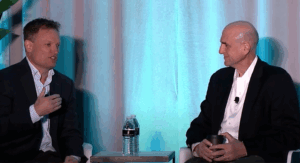
The day’s discussions began with deeply personal reflections from journalist Karen Tumulty and Kathy Giusti, founder of the Multiple Myeloma Research Foundation. The spotlight then shifted to a scientific and policy panel on MCED technologies—where excitement over innovation met the sobering realities of payer expectations, trial design, and system readiness.
The Power of Patient Perspectives
Karen Tumulty’s Journey
Karen Tumulty, a Washington Post columnist, shared her experience of being diagnosed with multiple myeloma in 2018. She credited connections with experts—facilitated by Kathy Giusti—for rapidly directing her to a specialist at Johns Hopkins.
Her story underscored the importance of networks, trusted guidance, and persistence in navigating insurance and HR departments to secure needed scans and treatments.
Kathy Giusti’s Story and Advocacy
Giusti was diagnosed with multiple myeloma in 1996 at age 37, when:
- There was no internet,
- No drugs in the pipeline, and
- A prognosis of three years to live.
Drawing on her pharma background, she founded the Multiple Myeloma Research Foundation (MMRF), which over two decades:
- Built tissue banks,
- Sequenced the myeloma genome,
- Created clinical trial networks, and
- Generated the largest longitudinal genomic dataset in myeloma.
Today, 15 drugs are approved, and survival has dramatically improved—though challenges remain.
Lessons on Navigation and Advocacy
Both Tumulty and Giusti emphasized:
- Patients must often advocate for themselves—armed with NCCN guidelines or trial data.
- Many community hospitals lack disease-specific expertise, requiring navigation to academic centers.
- Navigators, trained staff, and culturally tailored outreach (e.g., Spanish-speaking coordinators) are essential for equity.
The Role of Foundations and Data
Foundations like MMRF play a critical role in:
- Convening academia, biotech, and pharma,
- Generating patient-friendly roadmaps,
- Investing in navigators, and
- Pushing for consensus guidance even when formal guidelines lag.
Information Overload vs. Trusted Sources
- In the 1990s, patients lacked information.
- Today, the opposite problem exists: too much information, not all of it reliable.
Trusted sources include NCI, ASCO (cancer.net), ACS, and foundation websites. Patients must be guided to these rather than unmoderated social media groups.
The Media and Cancer Narratives
Tumulty reflected on how health coverage is often distorted by political framing. Both speakers noted the need for accurate, contextual reporting—to avoid misinterpretation of scientific headlines (e.g., CAR-T risks).
Multi-Cancer Early Detection (MCED): Promise and Challenges
What Is MCED and How It Works
MCED tests analyze circulating tumor DNA and other biomarkers in blood. Machine learning algorithms detect patterns that suggest the presence and tissue of origin of cancer.
Differences in Technologies
- Approaches vary: methylation patterns, mutations, fragmentomics, RNA, proteins.
- Some methods show greater sensitivity; others emphasize specificity to minimize false positives.
Payer Perspectives and Economic Concerns
Payers express interest but worry about:
- Lack of mortality data,
- False positives/negatives,
- Costs of follow-up diagnostics, and
- Unclear pathways for cancers without established early treatments.
Legislation may be needed to create Medicare benefit categories for MCED, similar to mammograms or colonoscopies.
Sensitivity, Specificity, and Clinical Pathways
MCED tests trade sensitivity for specificity—reducing unnecessary workups. Yet, questions remain about:
- What to do when tests are positive but imaging is negative,
- Ensuring repeat testing and monitoring pathways,
- Avoiding “diagnostic odysseys.”
Single-Cancer vs. Multi-Cancer Testing
- Single-cancer tests: higher sensitivity but higher cumulative false positives when stacked.
- MCED tests: lower sensitivity per cancer, but broader reach—targeting cancers that cause ~78% of U.S. cancer deaths but lack screening options.
Implementation and Policy Barriers
- Need for FDA approval and USPSTF recommendations.
- Legislative proposals could allow CMS to reimburse MCED tests once approved.
- Equity concerns: ensuring tests are accessible across populations.
Future Studies and Evidence Needs
Ongoing efforts include:
- NCI pilot study (24,000 patients) leading to a randomized trial of ~250,000 participants,
- Large randomized trials like GRAIL’s 140,000-patient study,
- Calls for real-world data collection to track outcomes and refine pathways.
Conclusion
The final sessions underscored a dual imperative:
- Patients must be empowered—with navigation, trusted information, and advocacy skills.
- MCED technology must prove itself—through rigorous evidence, payer collaboration, and policy reform.
Personal stories like Tumulty’s and Giusti’s remind us why innovation matters, while the MCED panel highlighted the urgency of moving fast but carefully—balancing promise with evidence.
Key Takeaways
- Patient advocacy saves lives: Navigators, guidelines, and peer connections are essential.
- Foundations drive change: MMRF demonstrates how data, tissue banks, and partnerships accelerate progress.
- Information overload is real: Patients need trusted sources (NCI, ASCO, ACS, foundations).
- MCED tests are transformative: They detect cancers that account for ~80% of deaths but currently lack screening.
- Evidence gaps remain: Mortality outcomes, cost-effectiveness, and diagnostic pathways must be proven.
- Policy is key: Medicare benefit categories and payer engagement will determine adoption.
- Equity must guide rollout: Without navigators and cultural tailoring, disparities will widen.
Raw Transcript
[00:00] Is it two minutes?
[00:20] Thank you.
[00:40] Thank you.
[01:00] now. Appreciate it very much. We actually saved the most important and the best sessions until the end to encourage people to stay and it really is the truth.
[01:20] It really gives me great pleasure to introduce the next session, which is usually the most important session of any conference like that, which is the patient perspective on personalized medicine and we're especially privileged to have two
[01:40] people who know much more about that subject than they wish they did and can put it in a larger context for us. It's especially an honor for me to introduce my friend Karen Tumulty from the Washington Post, whom if you
[02:00] don't read her political reporting, you really should. It's among the best in the country if you really want to get below the surface and understand what's going on in, for example, the presidential race today. Her latest column was on Chris Christie.
[02:20] for example. You also may know her from Face the Nation and other TV shows that she often appears on. But she's here not only because she's my close friend, but also because she's a, I like to
[02:40] to say former multiple myeloma patient and so know something about that subject. And I asked her if she would be kind enough to interview a past winner of PMC's leadership award in personalized medicine who of course is Kathy Gusti who has.
[03:00] Cliff leaf referred to a moment ago has been a force of nature in turning around our understanding of that disease and offering solutions for it. So with that, I'd like to turn over the floor to Karen, who will interview Kathy. Thank you so much and really and truly it is.
[03:20] such an honor to be here. I found myself thinking yesterday during the Diagnostics Panel, these are my people. But that's right, I have I've covered politics for many many years which means I have covered health care for
[03:40] many, many years. I am old enough to have covered Hillary Clinton's unsuccessful efforts to reform the health care center system in 94 and Barack Obama's successful one in 2010 and a lot of the steps along the way. But as Ed says, the reason I am sitting
[04:00] here in this white plastic chair is not because of that, talking about a patient's perspective, is because I do have a patient's perspective, which was in 2018 I was diagnosed with multiple myeloma. And while it was my very
[04:20] to have been diagnosed with this disease. It was my very good luck that at Abraham's had been a friend of mine for 40 years. He was a college friend of my then boyfriend, now husband. And so a few days after I was diagnosed, I was dry.
[04:40] his wife, Ruth, home from book club. And I was going, I'm really sick and I have five years to live. Yes, doctors still tell you things like that with myeloma. And I gave Ed my whole tale of whoa and he said, my God,
[05:00] You need to meet Kathy Justine. So I think if I recall this correctly, I was on the phone with Kathy by like Thursday or Friday of that week. And the following Tuesday, I was in the office of a myeloma specialist at Hopkins that Kathy.
[05:20] had recommended and then reached out to. And I discovered that myeloma specialists, when they hear from Kathy, they move very quickly. And really, it just completely changed my life. And that is why it is such an honor to be here.
[05:40] with Kathy. And Kathy has a book coming out in a few months, which I, she was nice enough to get a galley to me and I really do recommend it. It comes out what, in February is it? February 20th. February 20th. And it's an incredible, it's a very
[06:00] remarkable, honest, raw in places memoir of her own issues with not being a two-time cancer survivor, not only myeloma, but more recently breast cancer.
[06:20] a real practical how-to guide for people who are feeling very overwhelmed. But I think the subtitle is really interesting because it's 12 Steps to Beating Cancer in a Broken Medical System.
[06:40] And I'd like to just, one thing that strikes me is that our diagnoses were almost exactly 20 years apart. And the landscape for you versus the landscape for me was so different and in part because of you. And yet
[07:00] we're still dealing with a system that is in many ways broken. So could you go back to the mid-1990s and just sort of tell us your whole story.
[07:20] abbreviated version, but I was diagnosed with multiple myeloma when I was 37 years old. It was 1996. There was no internet. There were absolutely no drugs in the pipeline and there was no hope. So you're basically told back then, I was told, you have three years to live, no ifs, ands or buts. That's going to be it.
[07:40] it. And I had been working in the pharmaceutical industry at Merck and then Suro, which became Pfizer. And so my first instinct as somebody in pharma was to go back and do everything I could to study the pipeline and see what was going on in myeloma. And what I realized was it really was hopeless. I mean, anybody working
[08:00] in pharma back then knew it was going to take 10 years to get a drug to market. So if there was nothing in the pipeline, I wasn't going to see anything. So the more I kind of started engaging, you know, talking to the doctors about what I would do with myeloma, the more I could see how challenging the system itself was in oncology.
[08:20] nobody was talking to each other. And so it's not that I decided with this brilliance of I'm going to start a research foundation. What ended up happening was everyone around me who knew about the diagnosis and how fatal it was had said, I'd love to make some donations and see if there's a kick start to research in my alone with.
[08:40] that we could help you with, classmates from business school, my husband's classmates from business school donated. And next thing I knew, I had a community fund that then became a 501c3 foundation. The goal I really had, though, once I got involved in the whole process was I could see that there is no way.
[09:00] to fix the system. And I still feel like that. I think that's where we all are today. This system that we're dealing with, and I say this today, the science is amazing, the system still sucks. And the gap that we're seeing between what's out there for the patient and the ability for all patients to get it
[09:20] He's just widening. So the reason I actually wrote the book, going back to that just for a second, was I just wanted it to be in writing that you have to take certain steps to extend and save your own life. And I wanted it in writing as a playbook to every patient out there, whether they buy the book or not, doesn't matter so much to me. As long as they go to my site,
[09:40] At the 12 steps, there's a place for them to go. Buy the book. And that's fine too. So as I started moving forward with the Multimilomer Research Foundation and running it, basically the one thing I would say to everybody is if there is
[10:00] a research foundation and if there is one that can be started. I think the most important thing that research foundations can do is to study the landscape of the disease and then work within the community of that disease to decide what is the biggest problem you are facing in that cancer.
[10:20] Every cancer is slightly different. So back then, if you think about it, no drugs at all, right? So the first thing we had to do was, okay, we need scientists working in myeloma. And hopefully drug companies will follow as well. So that was raise the money, do grants. But then the more we brought everybody together, they were saying, we don't understand.
[10:40] understand the basic biology of this disease. We don't get it. And so then I realized it doesn't take long to be a patient and see research scientists waiting outside the door for your fresh biopsy that they're going to run up to the lab to work on to start realizing tissue is gold. So the next phase we had was building our own collaborative tissue bank
[11:00] of thousands and thousands of samples for our scientists to use. That then allowed us to be the first to sequence the myeloma genome. We did all of that at the Myeloma Research Foundation and then we built a clinical network where we've done over 100 phase 1 and 2 clinical trials. And then as we kept working with the team, we realized that
[11:20] We were missing data. We were missing longitudinal data on patients that would also give us the genomic information we needed on them. So we put $50 million into a COMPAS study and built the largest genomic dataset in the field of myeloma that is probably one of the most widely published studies out there.
[11:40] And then that helped us to identify the targets. It helped us to identify what was going on in the disease. Even between African Americans and whites, myeloma actually skews older male and African American. We are not the typical patient population. So I think you know the where we are now, Cara?
[12:00] concern is that was 20 years of life of trying to run a research foundation, but staying in very close touch with academia, the community, really working closely with pharma and biotech, the payer side. And I have to say now, I'm not CEO of the MMRF anymore, I'm still on the board.
[12:20] But I love the whole conversation about the diagnostic space. And I do still feel like the MMR's job is to keep convening and keep building all of that together because there's so much going on in the diagnostic side. And in precision medicine, it's no longer just genomic, it's immune. I mean, in blood cancers,
[12:40] got to understand what's going on with the immune system as much. So fast forward, here we are. We have 15 drugs approved. And myelone patients are living a really, really long time. Keep those drugs coming. I wanted to save some time at the end for some questions.
[13:00] But the clock isn't counting. So, oh, OK, great. It just fixed. OK, thank you. Well, as I've been sitting here listening to these sessions, one thing, and as I listen to people talk.
[13:20] talk about the frustrations in getting things reimbursed and moving ahead and dealing with the regulatory environment. The thought that kept coming to me is that one of the most valuable allies, I think, for the
[13:40] research and pharmaceutical people, I mean the community, would be an informed and engaged and empowered patient population. So I mean like I had never heard of the NCCN until my
[14:00] I got a pet scan denied. And I ended up, my doctor handed me these recommendations. And I marched into, again, it was denied by Aetna and then whoever their middle man is. But it was really my own
[14:20] HR department that I had the beef with. And being able to walk in with those words of what the NCCN recommendations were for a patient in my situation, guess what? All of a sudden it was fixed within 24 hours. And so how do you.
[14:40] Given that most people are gonna be diagnosed in a community hospital setting. Maybe you're consulting with a specialist and an academic health center. But just the information that people need to be their own advocates. How can we help?
[15:00] we make sure it is in the hands of the people who need it the most who are the patients.
[15:20] you possibly can to care about patients. But at the end of the day, who we're seeing frequently is your doctor who's completely overburdened. As everybody said, there's no way they have time to stay caught up on every cancer out there. It's just not going to happen. You as a patient have to do that. The nursing staff, we all know, hospitals
[15:40] cannot hire nurses fast enough. There's just no, they don't wanna come back either. So that's an issue. Or you're on the payer side and you're desperately calling them for help and half the time you're getting referred to a call center that nobody even understands a word of what you're saying. So the challenge becomes how do you help navigate the patient and get them to know you?
[16:00] them what they need. For us at the MMR, we had to start shifting our money over in the myeloma space because now we have 15 drugs approved. We have 500 clinical trials in cancer.gov. And the disease is still considered fatal. So when people are
[16:20] struggling, where are we sending them? Their questions are more like at early diagnosis. They're now sitting there and they've just gotten information and they perhaps got the information on their portal before the doctor saw it. So now they're calling us saying, oh, I just saw my test results and I think I
[16:40] got genomic testing done, it's called FISH. Is that the same thing as genomic sequencing? And we have to sit down and educate them on this is what you're looking for, these are the conversations you have to have with your clinician. So we've had to invest in navigators at the MMRF that are
[17:00] are fully trained that come out of the major cancer centers. And we have to pay for all of that. And I think as we build it out, we have to have more and more of them, especially Spanish speaking, African-American, and kind of make up for what's going on at the community centers and the academic centers where they're trying to bring in support.
[17:20] It's really hard. And also how do you have all those coordinators specialize? Every cancer is different. I mean, what we deal with in myeloma is different than what you're dealing with in pancreatic. So even as you kind of go through the journey of what we were all covering, you know, here over the last day, if you're a myeloma person,
[17:40] patient or any cancer patient, the first thing you're really dealing with is what Karen dealt with, calls me and says, I just got this disease, I don't know where to go. That's like the first question we get, where am I going? And you have to have advice on that because not every center is good at every cancer. So you have to kind of direct the patient to
[18:00] This is the place that has the best myeloma program or in my next case this is the place that has the best breast cancer program. You've got to get the patient moved there. Again, if you can get to an academic center, that's great. Most people can't. And if you're sitting like just even in the community that I sit in, I could be going to in Connecticut.
[18:20] at Stanford Hospital. It's an independent hospital, but it has a relationship, a relationship, I'm not really sure, with Dana Farber. Does that mean you get a second opinion? Does it mean you get a phone call? What is the relationship? Or have you got down the street and they have a relationship with Yale New Haven? Or I can go over this direction and I'm
[18:40] with a hospital that's bought by new ones. And now there's all kinds of issues with that. Most patients don't know any of this. Like they're just sitting there going, what's a hemon? That's what they're still dealing with. So you move them from the moment of where am I going based on what I have? Like if I have this cancer, what center should I be going to? How can my community be able to get there?
[19:00] community take care of me. Then you've got to help them pick their team. Then you've got to move them into the diagnostic testing. And again, like you said, if you don't have somebody guiding you and explaining to you, you're an early stage smoldering patient, you need a PET scan as a baseline. And insurance is not going to love covering that. But you need to go in.
[19:20] in and fight for it because you're going to want that to find out when you go into active disease. So all your testing has to be done. And now on the treatment side in myeloma, patients call us and go, we don't even know if anybody wants to recommend a stem cell transplant anymore. Or they may say, my doctor put me on a three-drug regimen and I heard through the
[19:40] found that a four-drug regimen is now standard of care. Well, it takes time for the standard of care to get from the ASH meeting all the way out to the rural community for them to say, we're going to use a four-drug regimen. In the meantime, who's educating those patients and those doctors? And then even when you get through the journey and maybe you're in
[20:00] remission like Karen and I both are, now you're sitting there doing MRD. Or there's plenty of patients that are getting MRD testing in myeloma. We're so grateful to have that. Like that's incredible progress. But I can promise you of all the patients I talk with, they can be MRD negative time after time again and their doctors are still keeping
[20:20] them on all the drugs. Still staying on. So you got to know what to do. But again, though, so when you were diagnosed, you had to pull out actual physical books and open them. When I was diagnosed, there's a different problem going on, which is the internet.
[20:40] I cannot tell you how many Facebook pages there are where they will tell you, don't listen to the doctor, just take turmeric or something. And so on the one hand, you don't know where the legitimate information is.
[21:00] is, on the other hand, you get flooded. And there's also just all of these like social media pages where people will say, hey everybody, my blood test just came back saying this, what do you think? And you know it's like patients getting advice
[21:20] from patients. I mean, I must say, by the way, there's an incredibly active community of myeloma specialists on Twitter that I have become obsessed with. They tweeted each other under hashtag MMSM, and they are constantly sharing really good information.
[21:40] Mean how much is is that I mean on the one hand there's not enough information on the other hand you're being bombarded Yeah, I was saying to Karen and I have this in in the book because I kept a journal from the day I was diagnosed with my alumnus at the age of 37 until now again. I was thinking
[22:00] that I was going to be dead in three years, so I thought I should leave something for my children, which at this point neither one of them will ever read it because it's 30 journals like this. But I had to go back when I was writing the book and read my life and kind of say, what did I do? Did it right? What did I do wrong? And what did I do at all? And it's really interesting to read it from
[22:20] that perspective of the toll that cancer takes on you, your family, especially when patients are living a lot longer. So in the book it's funny because when I was diagnosed with myeloma, I was in the pharmaceutical industry and I just knew to pick up Harrison's, the Merck manual and read what I could read. It was devastating and crushing.
[22:40] was three years. And then when I got diagnosed with breast cancer last year, I started putting in early stage breast cancer and I got a billion hits. I was like, what do I do with that? Like, what am I going to do with that? So you have to learn, and I think that's why we started putting things in writing, that there are certain places that patients should go.
[23:00] So I feel like one thing we do pretty well at the MMR front I feel is really important to do personally is take a stand. So I think that the NCI has a very good website for patients. I think cancer.net does a really nice job out of ASCO in terms of the patient information they give patients. ACS is good and a lot of the
[23:20] foundations are really good. So at some point you have to take a stand and say to the patients go here, go here. And it's not that I have say in the book anything negative on pharma because I'm very pro-pharma and biotech, but I do say don't go there first like just do a little bit of your basic research, get the information
[23:40] you can. And then when you find out what they're looking at for treatment, then go to those sites and start to understand what's going on with those drugs. So I think you have to be really adamant when you're working with the patients directly to say, stop going over here over here. When you're just in the throes of your diagnosis, you've got to keep yourself highly focused.
[24:00] It's the same thing when somebody sends you to your portal. It's like just so much information. How would you possibly get through it all and know it's important? You just have to ask one of the nurses or the doctor, just give me the five things I'm following. Just tell me. And you'd be amazing how much of a friend your portal can be.
[24:20] following your disease and getting you educated. But I mean, I think that's the whole point is there's so much information, but not all of it is reliable, not all of it's updated. As much as I love patients, sharing information, stories with patients can be very scary. It can really throw people off. I do wish in all.
[24:40] all the cancers, that there was an ability, and I think the foundations play a role in this space too. I wish there was more consensus conference. Like just even if we can't get everybody to agree and put it into the NCCN guidelines, even if we were the leaders in saying based on what we know today, this is what you should be doing.
[25:00] You as a smoldering patient, nowadays they may, and I was a smoldering patient too for a while, it was like don't touch them, don't touch them, let their immune systems work. Well now if you're a high risk smoldering patient, they'll put you in a trial or they'll start treating you, but they don't agree on what high risk is. So at some point you have to get some
[25:20] Unimidity, I guess it is the word, so that you can get everybody saying, we don't have all the guidelines, but based off of the myeloma community and the leadership we have, this is what we think we should be doing, and then get that information back out to the patients and the navigators. And I feel like every cancer has to do that.
[25:40] I think the first medical professional we're going to interact with as a patient is our primary care doctor. And in my case, I had been diagnosed with MGUS all the way back in 2005, and what my primary care
[26:00] doctor had been told was just watch it. And so for 13 years the number was ticking up, but it hadn't yet reached the M spike of a 3, which would have been his, which is what he was told is the, and it was me. Finally after 13
[26:20] years saying, wait, this member only seems to go up. Could we go find out what this is? And only, I don't know if he would have caught it before I had symptoms. But a lot of people find out they have myeloma because they're china.
[26:40] changing the sheets and shaking them out in the bone brakes, or a kidney fails, or something. So are primary care doctors getting the kind of information they need on a condition like myeloma that they probably don't see that often?
[27:00] primary care physicians are overburdened to. So there's, you can do your best and I feel like now because of all the exposure myeloma has had, the primary care doctors really are on their game and it's easy to, ironically it's pretty easy to find myeloma. It's an elevated protein, often you know you're anemic and there's other
[27:20] signs that you can have that. So my internist also found it way, way back in 1996. Fortunately, I mean, sadly, he had had another young female patient, so he was kind of onto it. But in today's world, the primary care doctors are getting much better at some of these cancers that really do have kind of known biomarkers.
[27:40] with myeloma, you can follow it through an M spike. So it's not hard for them to do. But on the other hand, and it's kind of interesting now, my daughter who was one when I was diagnosed with myeloma is now nearly 30 and I had a son after and he's 26. And it's kind of funny because basically all of the kids in our family, my...
[28:00] identical twin had breast cancer, my mom had melanoma, my dad had renal cell carcinoma. So as our kids say, we have a shit show of genes. Like they are just, this is just not good. So that's where you have to kind of move through the next generation and say, and one of the most important things I did was get our kids into this.
[28:20] a really amazing primary care doctor, and then you have to remind them, you have to tell them all the risk in our family. It doesn't mean that my sister and I do not have the brachogine. I ended up high risk for breast cancer because I had radiation to my ribs. So once my identical twin got breast cancer, I had to be on my game for breast cancer.
[28:40] And it wasn't just because she had it. It was because of the radiation that really got me. But I thought to myself, how many times did I fill out medical forms? I never said my grandfather had multiple myeloma, but he did. He died in a fire. But our family just didn't talk about it. And I didn't put all these risk elements in. So now when I'm working with our kids, I'm always saying, what's your problem?
[29:00] It's on you. You need to be doing an annual physical. You need to be watching your blood. When you're ready, you're going to want to make sure you're getting mammograms at the right time. I think that's part of what we have to do as parents as well is show really good efforts in terms of prevention of cancer.
[29:20] because that's really the best way to beat it, and then keep everybody on their game in terms of screening, because that's the next best way to beat it. And I think that's partly on all of us. Well, so, Kathy, you mentioned you have an identical twin, and as somebody who comes out of marketing, Kathy is a huge, huge, huge believer in.
[29:40] data and big data. But she also realized that she and her sister were a case that was going to be especially interesting to researchers. So could you relate the episode you talk about in the book where you go to a medical conference and suddenly realize that
[30:00] The unnamed patient they are talking about on the screen is you.
[30:20] are taught do no harm. So actually doing bone marrow aspirates on healthy subjects and doing for rhesus on healthy subjects is not necessarily what they love to do, but we really did beg them. And so as a result of that, it was really interesting to look at her immune system versus my immune system, what was going on in the two, and then obviously that information got published. But then they all
[30:40] also did a lot of work on the genomic side, what genes were turned on and what genes were turned off in me. And then that obviously helped in terms of publication too and, you know, where are you looking in terms of the myeloma. What I didn't realize, and it was funny, two things happened. Because I was also running the MMRF and getting ready for the ASH meeting, I was getting all the publications.
[31:00] patients and abstractually early and I started reading. I was like, identical twin, da da da, is translocation 414, which at the time was the worst myeloma you could have. Super high risk. You're going to be dead. As soon as you move from smoldering to active, you're gone. And I'm reading it and then I realized it was me.
[31:20] published the information, and so of course I called my doctor at Dana-Farber. I'm like, because he wasn't the one that called me. It was somebody else that saw the abstract out at the Mayo Clinic and called me and said, I think this is you and I'd really like your tissue samples. Cuz I'm working on, cuz I'm working on 414 and I, I need more samples and by the way, would your sister also come in? So I called the doctor at Dana-Farber and
[31:40] I was like, okay, you could have told me. And he's like, I could have. But in all honesty, what are we going to do about it? And I said, well, knowledge is a powerful thing. And fast forward, at the ASH meeting, they did all the genomic work, but what he ended up showing was, having done so much work on my tumor, all the pathways
[32:00] of myeloma and where drug development should go. And so being any kind of a research subject where they can start putting that information together so that pharma can start to identify and just have some hints of the targets is super helpful. It turned out 414s did better on proteasome inhibitors and at that point Velcade was coming out.
[32:20] And I ended up being the first patient on revlimid, valcade, and dex as preinduction therapy. And I do think it really did help me. And again, you as a patient, you got to raise your hand. You got to raise your hand. And I think that's part of why I wrote the book too is don't, in today's world, the doctors, it's not bad intent. Everybody's too
[32:40] busy and so if you have questions you have to come in you have to know what you want to know and you have to take a stand you have to go fight with your insurance company. If you don't you're not going to get what you want and so the whole point was to take some of the burden off the doctors and the nurses and to say it's not perfect but here's at least something as a playbook
[33:00] book that patients can have and it gives them a starting place and I think also because I'm still alive it gives a little inspiration and hope that you can get really tough challenging illnesses and diseases and somehow sometimes you still make it through which I think is important too. And her sister is one of the great heroes.
[33:20] of the book. I mean she is not only her stem cell donor and caregiver, but she also helps redeem the name Karen. So I am so grateful. It is so true. Whenever we're together and tell me what's it so what are your names? Kathy? Karen?
[33:40] She's just like such a bummer. It's like you go into Starbucks and they say, what's your name? You go Karen. It's so true. And she kind of is an attorney. She kind of is a little bit of a Karen. But the other thing that's been interesting, because I also wrote the book, is that it's a book.
[34:00] book is a bit of a caregiver because she ended up getting stage 3 breast cancer. And even now she ended up, and this is what drives us all crazy, she ended up getting a lumpectomy, chemo, radiation, and she's been on anestrous all for years, and she just wants to get off.
[34:20] off. She can barely like if we walk, I can walk three times faster than she can, just the neuropathy and all the stuff on her feet. And when she said to the doctors, can I go off? And they're like, well, you could, but there's no data. So again, this is where patients go nuts. You want to get off these drugs. And that's why even
[34:40] one adaptive was speaking yesterday and you know I've been saying it's so frustrating to be a patient and for the doctor to just say well you could go off or you could stay on it's your choice and you feel like isn't there any data that could tell us what to do and that's why when Karen says I'm a huge fan of
[35:00] to gather the data and answer the questions that patients have so that we don't stay on therapies forever that we don't really need to be on. So if anybody has any questions, we do have a couple of microphones up here. But another issue with being a patient in these.
[35:20] wonderful times in which we are living is that once you kind of get past the initial shock of the diagnosis and once you have a clear path of this is the treatment that is going to work for me.
[35:40] Then you have to start figuring out, okay, now that I'm not thinking all the time about how I'm going to die, you have to make decisions about how you're going to live. And that is another big theme in this book, which I really appreciated because I do think that that is also a big thing.
[36:00] also something that, you know, it's a psychological question for a lot of us, I think. I do say to people when they're reading the book, I would never say there's huge silver lies in getting a cancer diagnosis, but I will say, looking back
[36:20] back on it and having read all those journals all over again. When you're facing your own mortality and everybody's looking at you and saying, you're going to die in three years, so get your act together. Your daughter's one, spend some time with her and your husband. You kind of have to put your life in perspective.
[36:40] it's a really interesting question, what would everybody do? Some people, when I ask people that question, some are like, well, I'd go travel, I'd lay in bed with the covers over my head, and in my situation I felt like I had the right background to actually do something important and try to buy more time. My goal was really just to see an
[37:00] to go to kindergarten, but I obviously got so much more than that. But I also think it's true when you come out through the treatment side and you're sitting there and everybody goes, ring the bell, everything's going to be great now. And you're like, I don't feel great. Like I still feel like- Yeah, I can just say that whole ring in the bell thing. I was not a big fan of that. Yeah. Because you feel like everybody's
[37:20] expecting you to go on with your life and you're still worried about relapse. Especially in my alone where it's fatal, I never walked away and said, oh, I'm cured. Even now I don't say I'm cured. I just say I'm in a very strong remission right now. So yes, sir. Yes. So thank you. This path.
[37:40] panel or discussion is such a powerful story and so such an important part of this conference and thank you both for sharing your stories. So I'm curious, so I'm a journalist, Karen you're at the post. How do you feel like the media does?
[38:00] at telling this story. American media. You know that is and probably because I am a political reporter. I live in a little kind of my bubble is like everything gets boiled down to the polycha.
[38:20] politics of this or the politics of that. And we are at the moment in a situation where people, pardon me, this is way outside this conference, but I mean we do live at a moment where the two sides don't want to find answers to things.
[38:40] anymore and so everything becomes very zero-sum and unfortunately that has also sort of infected a lot of questions right now about health care and you know I I was really
[39:00] stopped quite frankly when the other day Donald Trump said yeah we're gonna go get rid of the ACA as soon as we can and it was interesting because you know the the feelings about the Affordable Care Act are such that as soon as he said that like half the Republicans in the Senate were like we're not talking
[39:20] about that. But it does think, I do think that one problem with the media is things boil down to winners and losers on everything. But I can tell you, the post is, we are, as we're trying to figure out how to do it, we're trying to figure out how to do it.
[39:40] how to solve our own business model problems. We are trying to come up, figure out what our readers really want. And the post is not alone among news organizations, but we are making massive new investments and growth.
[40:00] our health care coverage. I mean we have a whole new section called Well Plus Being and it is incredible the amount of readership that those stories get because I do think there is a great great thirst
[40:20] right now for information.
[40:40] then to say of all that we're bringing in because there's so much going on on the science side and policy too like what am I actually communicating back out to the consumer. So like to give you an example you know one thing that was huge in the press just recently is CAR T and lymphoma right. So CAR T is a huge advancement.
[41:00] blood cancer. It's an incredible advancement, but I can't tell you how many calls I got of patients going, oh no, oh no, I shouldn't do this now, like I shouldn't consider Carti. And it's like no, that's not really the headline that we want you to read. There's more information behind that story. And it's not a negative to let people know, it's just it doesn't always have
[41:20] context. So I think as you start moving through the healthcare side, you have to kind of figure out who can help decide what information is really important to get to the consumer and then what vehicles will you have to get information out to the consumer. So like an example for me, when I do the book in February, one of the people I work with is Katie Couric.
[41:40] because she is a huge following of people that are women that care about health care. She does a lot in oncology, pancreatic, she had breast cancer like me, colon. So working with someone like Katie is helpful for me. I can handle the content from a scientific and health care standpoint, living and breathing in the space.
[42:00] so long, but she can help with the distribution of letting people know important information of how to handle their disease. And I think that's kind of a nice blend when you can get there. And then the other thing that I think is very scary right now is with COVID and the politicization of it, this sort of mistrust of science.
[42:20] that has taken hold of a, you know, unfortunately, a significant share of our population and I do hope that, you know, we do get past that. Yes, ma'am. Thank you. I'm Aubrey Kelly with Rabbe Health, so your pharma turned...
[42:40] kind of research and in pursuing novel therapeutics. I'm far maturing to patient engagement, digital patient engagement. I appreciate the amount of content and that's out there, but really if it's not translated into true empowered patients that ask questions at the right time.
[43:00] in their journey, it gets lost. And my personal experience, I think I mentioned yesterday, my brother was recently diagnosed with glioblastoma. And I sent a note to his oncologist today that said, the molecular testing labs came back suggesting that Gleevec might be an option. And is that an option? And
[43:20] he is also unmethilated, which means that he's not going to respond to chemo as well as he can. So why aren't we actually pursuing a targeted therapy clinical trial versus not? And I say that because people often say, oh, it's great that, you know, he's got you in his corner. And it's like, no, there's a business here because shared decision making actually tranfles.
[43:40] translates to ensuring that patients and loved ones, and I'll just do the fun fact that women make 70% of all healthcare decisions, so if you want to mobilize patients, you want to empower not just the patient, but who's in their community of support. And what do you guys see as an opportunity to actually take a disciplined approach to that shared decision-making?
[44:00] We got a, we have a ton of work together and to do to actually show that it's not just about distribution of content and impressions, but it's actually are we helping people ask the right questions at the right time to move the needle, improve biomarker testing, but also improved the application of targeted therapies. Thank you. Yeah.
[44:20] I think what you're saying is so important. It's kind of like, even when I wrote out 12 Steps, I wrote them as if you were going in treatment right now. And then I bring you all the way back out until you've been in remission. And then what are you doing to tell your family about risk? So that I kind of move you through, because when you're in the thick of where your brother
[44:40] is at right now. You're like in the thick of getting the diagnostic testing done. You're trying to read what's coming up for him and you need to get into exactly what you're saying. Shared decision making, but just about that decision because you're only going to have 10 minutes with that doctor. So you don't want to get back into and then what am I going to be doing?
[45:00] you know, a year from now. You just have to stay in the decision that you're doing at that point in time and then keep coming back in and having the next question and the next one. But, you know, once you start getting into the long things, the doctors, they're just going to have to go. They have to get onto the next patient.
[45:20] Kathy and Karen for a great conversation. Thank you. For sharing so much with us and also by Kathy's book.
[45:40] Thank you.
[46:00] Thank you.
[46:20] Thank you.
[46:40] morning and really of the conference and I think panelists we are all that stands between the attendees and lunch so we will make it worth your while we're going to be talking now with this distinguished group of panelists about multicancer early detection when and how should they be integrated into health
[47:00] I think that's an easy question. We'll answer that right away. But let's start first by allowing each panelist to introduce themselves, give us your name and title and a little background, and we want to get to know you a little bit. Why don't we start down there, Josh, Dr. Offman, towards the end. Hi, everybody. My name is Josh Offman. I'm a physician.
[47:20] I'm actually a gastroenterologist and a health services researcher, and I'm the president of a company called GRAIL that develops multi-cancer early detection tests. Good morning, everybody. Hasn't this been a great meeting? Absolutely. Well, I'm a dismally
[47:40] economist, I hate to say, so I'm a professor of health economics at UCSF. And 15 years ago I found it as centered there on the rubber meets the road for precision medicine. How are we going to implement it efficiently, equitably, and ethically?
[48:00] So I'm a coverage geek and we've done a couple of studies now and M said coverage and reimbursement And I'm looking forward to sharing my thoughts Hi everybody, my name is Tom Baer. I'm a medical oncologist. I see prostate cancer patients at the Knight Cancer Institute
[48:20] at OHSU and my day job is chief medical officer for multi-cancer lead detection at Exact Sciences and I'm really happy to join this group today. Hi everybody, I'm Wendy Rubinstein, I'm a physician scientist and a senior scientific officer at the National Cancer Institute.
[48:40] to say I'm a clinician trained in internal medicine and practice for 15 years, even as a primary care physician a little bit, even in an emergency room way long ago, but really on hereditary cancer is the way I think about things, and went on to really get into genomic databases and real-world data.
[49:00] spent three years at FDA, which is what most people want to hear about as a director of personalized medicine. But now at NCI, I really get to work exclusively almost on multicancer detection tests. Well, you can see that we are perfectly set up to address this question. This is an expert group of panelists.
[49:20] And to set a clear foundation for MSED, I think it's worth talking about the science and the underlying technologies. And let's just ask, what is the underlying science and what are the technologies behind MSED? And Dr. Rubenstein, you've got a lot of experience here. Do you want?
[49:40] want to share something that we can all understand. Sure. I think I can make it fairly simple, I think, in terms of just understanding the technology. So what's sort of special about these tests are they leverage the shared biology of tumors. Really, for so many years, we've been trying this biomarker for that cancer.
[50:00] I don't think we've gotten terribly far, but there's a lot of advantages really sort of integrating this altogether. So the sorts of analytes are most of the tests are focused on circulating tumor DNA and they look at things like mutation profiles and fragmentation.
[50:20] patterns and methylation patterns. But there are many other analytes in pipelines and that includes circulating tumor cells, RNA, there are extracellular vesicles. And so I think as we start to talk about early, I'd like to make the point.
[50:40] point that it's early in understanding which of these will really kind of be right and for what situation. I also want to make the point that it's really not just about the analytes, it's about the complex algorithms that are used to assess these analytes, much of which is
[51:00] not transparent to the physician who's going to get a test result that's positive or negative. But that's a big component of the test. And of course, if we're going to talk about regulation, that has to come into the matter as well. Yeah, thank you. And there are all of these tests that are arising and starting to come out.
[51:20] And Josh, are there differences between the technologies that underlie these, or are there advantages to these various technologies that power these tests? Yes, I think what's interesting is when you apply this new technology, we're really even here talking because of the convergence of real advances in human generation.
[51:40] genomics and machine learning and artificial intelligence. And the convergence of those two fields has really enabled us to develop some of these tests. So again, looking at circulating tumor DNA and circulating DNA, so as cells are growing and dying in your body, they're releasing their DNA into the bloodstream.
[52:00] tumors are growing faster and they're doing the same thing. And so there are lots of ways of interrogating this DNA that's in your circulation and we asked the fundamental question, you know, how do you, what's the best way to interrogate DNA in circulation to find cancer in asymptomatic adults? And we looked at all the
[52:20] relevant methods, methylation patterns which are epigenetic regulation of DNA that turn genes on and off. It's kind of a hallmark of cancer. Mutations, chromosomal changes, fragment lengths. We looked at all of those together and did a head-to-head study and found that the epigenetic methylation
[52:40] pattern recognition was the most effective way to find early cancer. And secondly, it can also tell you where in the body that cancer signal may have arisen from because methylation is also a very sensitive marker for cell type or tissue type. So it kind of gave
[53:00] you the best of both worlds. And so this new technology, and again, RNA, proteins, there are so many ways of assessing it. But finding this shared signal is really what's the big aha moment is that we can find a signal using machine learning to.
[53:20] to identify this pattern that is almost never seen in individuals known not to have cancer. And so you only really see this pattern and so you can recognize the pattern, you can classify it and find where in the body that arose for over 50 different types of cancer. And that's kind of a game changer for cancer.
[53:40] screening because you can have a single false positive rate. So with that, this technology can be incredibly powerful. I know there are multinomic approaches and others that are also going to be very powerful. So lots of interesting insights based on the convergence of human genomics and machine learning. And Tom, anything you'd like to add there?
[54:00] I mean I think Wendy and Josh have said it very well. There are approaches that look at multiple classes of biomarkers, different ways of interrogating DNA and combining readouts from mutation analysis, methylation analysis, fragmentation or aneuploidy analysis with.
[54:20] protein biomarkers and others. And I think it's early days to try to figure out which approach will prove best. I would also note that, you know, when we talk in broad strokes about these approaches, there are also subtle differences under the hood. So there's more than one way to interrogate methylation.
[54:40] There are many ways to interrogate mutations that yield different sensitivities. One can look broadly at thousands or even tens of thousands or millions of sites and combine that into a machine learning algorithm analysis. One can narrow down the set of
[55:00] biomarkers that are most informative and I think it's it's way too early to determine which of these approaches will prove best or if they'll co-exist but all of them are a product of deep understanding of cancer biology and made possible but by incredible advances in technology
[55:20] that make the measurement of those analytes at very low concentrations in the blood possible.
[55:40] We've heard how complex these tests are and often what's said is these are simple blood tests. So I just want you to take a moment and hear what you heard. These aren't simple blood tests. Getting a blood test is simple. Okay and not only that, after you get the test, what happens is not necessarily simple.
[56:00] go on a diagnostic pathway. Okay, so just a little temporary. Yeah, we're going to talk about that. That is quite a pathway. Let's turn to the economist here in the room. Are you ready, Catherine? Now we're getting somewhere. Yeah, so Catherine, you know, what's going on here?
[56:20] These are a basic blood draw that's very complex to make these diagnoses. Do we have cancer? Are we really changing outcomes with this or are we just diagnosing indolent cancers after all? Well, that's what we all want to know, right? Now, I'm not a pair. I've never been a pair of
[56:40] don't throw tomatoes at me, but we spent 15 years trying to understand how do payers think? What evidence do they want? What goes on there in their heads when they make coverage decisions? So we've been doing work with our payer board for years to understand all of that. So we've done it.
[57:00] done some studies on MSED. So what do they say about MSED? Well, they are very interested in it. We all agree this could be a tremendous technology. Really groundbreaking, super important. We actually all care about patients. Yes, payers care about patients.
[57:20] and patient outcomes. So do economists. But of course they have some concerns and some things are going to have to be figured out. They're worried about testing for cancers where we don't have current screening tests, and therefore like Wendy was pointing out, we may have no treatments.
[57:40] or no pathways to do anything with patients. They're worried about inclusion of cancers not demonstrated to benefit from earlier diagnosis. There are a lot of those. I'm afraid. High false negatives and the lack, as we were saying, the lack of care protocols after testing.
[58:00] So there's plenty of work to be done, but payers are definitely very interested.
[58:20] that looking at DNA that's being shed from tumors, that the indolent tumors, the ones that we're worried about over-diagnosing, that aren't killing people, those are exactly the tumors that tend not to shed a lot of DNA. In fact, our own publications show that if you look at the survival curves,
[58:40] of cancers that are shedding DNA, they look exactly like the survival curves that you would expect to see based on SURE and other survival curves. But if you look at tumors that are not shedding DNA, tumors that we miss, the false negatives, those survival curves look much better than you've ever.
[59:00] ever seen before at every stage. And so it's clearly as prognostic as age or stage whether tumors are shedding DNA to measurable levels. So we believe that based on the data that we've looked at with five years of follow-up and over 15,000 people from our stage.
[59:20] study that we're very unlikely to contribute to this problem of overdiagnosis and that we're finding clinically aggressive, meaningful cancers. There's a comment that was made that we don't even know if we have treatments for these cancers. I think that's, there may be a misunderstanding there. All early solid tumors with these
[59:40] conception of prostate and thyroid where you watch and wait have very effective potentially curative treatments in the early stages, all of them. They may not have drugs that are available for them because most drugs are used in later stages. But it's absolutely misunderstanding to say that we don't have treatments for most early cancers. Of course we do.
[01:00:00] you, and many of them are in fact curative. So Tom, what do you think? I think the issues that were just brought up really go to the core why of what we're trying to accomplish. The fact that the large majority of cancers don't have established screening tests that we agree are beneficial.
[01:00:20] is precisely what we're after. That's where we think the greatest opportunity for clinical impact lies. We know from lung cancer, breast cancer, cervical cancer is a wonderful example, colorectal cancer, that we can impact on long-term outcomes.
[01:00:40] effective early screening combined with effective interventions. We've got work in front of us to prove that we can do that for these other cancers. But that is precisely the why. And when we think about how does one get to the national goals of reducing cancer mortality.
[01:01:00] by half. It's hard to imagine accomplishing that without major advances in early detection and early intervention. And it's hard to imagine those kinds of advances one cancer at a time. So that's really the promise, point well taken, that we
[01:01:20] still don't know the answers to how successful we will be that's coming from ongoing and future studies. But I think the perils also identify really the why and the motivation for pursuing this. And maybe just to amplify one thing you said, Tom, is we've just analyzed the latest data again.
[01:01:40] And about 78% of cancer deaths in this country today, 2022, are due to cancers we are not screening for at all. So while we have single cancer tests, three for women, two for men, and one for heavy smokers, they're only finding
[01:02:00] about 15% of the incident cancers in elevated risk adults in this country over the age of 50. That's not going to do the trick. We're not going to bend the mortality curve of cancer, finding 15% of the incident cancers. We need to dramatically increase the cancer detection rate in the population, and most of the
[01:02:20] deaths are not happening from those cancers. They're happening over here where we're not looking. And as it relates to payers, and we hear the same thing, Kathleen, that they'd like FDA approval, they'd like lots of outcomes data, but when you actually look at what payers are doing today, and depending on which payer you look at, somewhere between 70
[01:02:40] to 90% of the genetic tests that they are paying for. They're covering, they're paying for them every day, are not FDA approved, they are lab developed tests, and they're gladly paying for them if you have a diagnosis of cancer. If you don't, they're going to set a very different bar.
[01:03:00] and they will want FDA approval and they might require more outcomes data. But the truth is, most of the genetic tests today have neither of those things and are being paid for every day. So one of the challenges and also opportunities that we're seeing in this space is developing
[01:03:20] having a multi-cancer early detection versus having a single cancer detection. Those are really kind of different kinds of tests with different implications. And Wendy, we would just love to hear your thoughts on the pros and cons to single cancer versus multi-cancer. Well, sure. I mean, for single cancer, what happens
[01:03:40] is that even just look at mammograms, over 10 years of adhering with screening, a woman has a 50% chance of being called back for a positive result. And that may involve interventions. Layer onto that many different types of tests, let's say the five.
[01:04:00] 5 that we have right now and you're getting a lot of false positives. So one big advantage is to try to layer all the false positives onto one single test where if there's a cancer, there's probably one, maybe occasionally there are two, but you then have to find it. So that's an advantage.
[01:04:20] And that's why really there are different approaches to how the tests are tuned. So the single cancer screening approach is tuned to have a very high sensitivity. You get out of a mammogram or a colonoscopy and you're pretty sure there's no cancer there. Multicancer detection tests have to be tuned differently.
[01:04:40] They have to be tuned to high specificity whereby you try to limit how many people you send down that diagnostic pathway because you don't know where to stick the needle. You have to do probably quite a lot of testing to figure that out and that has risks.
[01:05:00] Because of that, the multicancer tests, they sacrifice sensitivity. And by and large, so our group, Levann and Pinsky, they published a systematic review of 20 AMSAD tests. And for
[01:05:20] For one thing, most of those studies are in early phases of development where it really overestimates the performance because it's a little like shooting fish in a barrel when you know that the cancer specimen has something versus lung cancer and COPD and really trying to get the signal right. So overall, there's a
[01:05:40] There's about a 73% sensitivity across all the cancers that all this tests claim to detect that ranges from like 27 to 95. So it really varies a lot. And in speaking with clinicians through focus groups, they're going to have to bend their mind around that.
[01:06:00] because they're really used to high sensitivity and probably sort of patients. Hey, I had this blood test, it was negative for 50 cancers, I'm good to go. So one more point is that the sensitivity for the early stage cancers is lower than that.
[01:06:20] And that's really where we need these tests to work. Yeah, and Tom, so you have both of these in your portfolio. What are your thoughts? Now, we've been thinking very deeply about this, as of course everyone in the field has. I think one thing that we should say very, very clearly is that
[01:06:40] As far as the eye can see, we see these as co-existing classes of products for some of the reasons that Wendy articulated. And point of fact, should people be reassured by a negative MSED test and
[01:07:00] forego proven standard of care single cancer screening. That could be not harmful. So we're very concerned about that and it will require a proactive educational approach from everyone in the field. Certainly the test manufacturers, but also clinicians and investigators to take that message forward.
[01:07:20] There are really clear reasons why it's likely to stay that way. If you think about tests that directly interrogate an organ of interest, like colonoscopy or stool-based colorectal cancer screening, it's very difficult to imagine a blood-based test, single
[01:07:40] cancer or multicancer that could approach the sensitivity of a test that goes directly to that organ and interrogates that organ directly. Not only that, but for colorectal cancer specifically, we know that about 2-thirds of the public health benefit comes from detection of pre-cancer.
[01:08:00] and essentially interception of a cancer before it fully develops. That's a very tall order for blood-based tests of any kind and certainly for multicancer tests. Multicancer tests do have lower sensitivity and we don't know where it's going to settle in. I completely agree that
[01:08:20] small pilot case control studies are not what you're likely to see in the real world in prospective interventions. But they apply that sensitivity to a broad range of cancers and so as a public health tool can have a greater impact than individual cancer tests.
[01:08:40] higher sensitivity. And really it needs to be a program that together is evaluated by its ability to reduce morbidity and mortality from cancer at large. There's not a competition between the two. So these tests are coming. They're being evaluated. They're even being offered in
[01:09:00] some forms. And let's hear about, you know, Josh and Katherine, let's hear about, you know, the pros and cons to implementing this clinically. You know, aren't we going to run into situations where patients have a positive, one of these positive multi-cancer early detection tests, and then their imaging is negative? We can't find it. What do we do about that? And what are some of the other
[01:09:20] scenarios we might encounter versus what are the great advantages. Yeah I think it's great and I'll maybe I'll start then turn it over to Catherine and I thought I thought Tom made a great point. I think just big picture just remember the way we currently screen for cancer is we look at images, shadows, or we directly inspect tissue.
[01:09:40] with our eyes. And those are not very biological in many ways. And the advantage of these new technologies that are multi-cancer is that they're looking at biological signals coming directly from cancers, which is very different than looking at shadows. And that relates to Wendy's point about sensitivity. When you get a mammogram, you're
[01:10:00] looking for anything that you can find, but the positive predictive value, in other words, how many of those positive mammograms are actually breast cancer is very, very low. And you just can't have that with the multicancer test. So what we've done in clinical practice, and we've now, you know, we've done 140,000 tests in actual, you know, clinical practice.
[01:10:20] commercial use. We've done large studies of thousands of patients in the United States. And we've watched this play out. So when a signal is detected, at least with our tests, you then get a predicted origin of where that signal, which directs the doctor to go look there. So it'll say cancer signal detected, predicted origin, pancreas.
[01:10:40] So the doctor knows what to do, or it'll say, predict an origin, esophagus or ovary. Doctor knows where to go look. If they look there and there's nothing there, that's the conundrum and that's what people are worried about. What do you do next? Well, we got to remember one thing. Imaging is not perfect. We've already seen many cases where there was negative.
[01:11:00] imaging and we said maybe you shouldn't stop because we know the sensitivity for pancreas is pretty high go do an ultrasound and they find the lesion an endoscopic ultrasound. So lots of cases and there was one presented at the FDA the other day of an MRI of the gallbladder that said it was gallstones. The woman after a
[01:11:20] positive calorie test, MSED test, and she wouldn't accept that and had the gallbladder removed and there was a large gallbladder cancer in there. And so that, it happens. So what we offer in people who have a negative workup, just one option, a free repeat test. And then if it's negative, you can probably
[01:11:40] probably confidently say that was likely a false positive. We'll see you next year. Our test we recommend it be done every year to have the best cancer detection rate. Many doctors will just wait and say let's re-image you in three or six months, which is a very common practice for people with lung nodules or pancreatic cysts. That's a very common practice.
[01:12:00] do that. And then in some cases the doctor said, okay, we didn't find anything, let's consider it a false positive and we'll see you again next year. In our studies we have not seen these long diagnostic odysseys that are what people are rightfully worried about. That did not happen, largely because they were directed
[01:12:20] about their workup and we offer these free repeat tests that can kind of solve that problem. But there will be some and there will be cases that are difficult and we offer a lot of medical advice. We have a tumor board of experts who can advise and we have experts who can provide advice to doctors about what to do next.
[01:12:40] many larger studies now and will learn a lot more about how this all works and operates in practice. So beautiful and you know I was an investigator on one of these studies evaluating the implementation, as was Tom, and I had one of these patients that was test-positive, imaging-negative, and
[01:13:00] And I worried about how the patient would receive that and it didn't bother her. She was nevertheless grateful that there was, you know, that we went to great lengths to try to figure it out and we took the exact steps that you described. We re-imaged her a few months later and actually repeated the test and then she was comfortable and really happy that she'd had such a thorough evaluation. So Katherine, now here
[01:13:20] Here we are and we have to consider this all-important question about what are the payer considerations in all of this. Are they just lining up to cover this and they're thrilled that it's coming? As usual. As usual, right? Yeah. Salads. Very high margin reimbursements. What's going on? Yeah. A lot of really important points have come up.
[01:13:40] regarding should we be doing single cancer tests or looking for 50 cancers is a critical issue. What endpoints we're going to measure should we rely on the ability to diagnose or do we need an improvement in mortality? And that's going to be a real problem.
[01:14:00] really sticky one. And I have to say there was a paper in JAMA Internal Medicine recently, a meta-analysis that showed of cancer screening that showed that only colorectal cancer screening had a proven improvement in mortality. And that's pretty sobering.
[01:14:20] people in this room that disagree, think there's a poorly done study, but there is dead out there. Will you stop doing mammograms now? No, actually I won't. Nobody will. But these are all issues we have to deal with and I would like to make a plea for, again, I'm not a payer, but for dealing with payers. Payers have
[01:14:40] reasons for thinking what they think. You can't tell them that they're wrong or that they need to be educated. You've got to listen to what they have to say and what they're worried about and meet them on their own turf. That is the only way we're going to make progress so that we can come to a common
[01:15:00] agreement. It's a great point. Just to the economist because I know you're interested in cost-effectiveness, one of the things we've looked at very closely is again what's the problem? We're losing the war on cancer, 600,000 people are dying every year and mostly because we're finding cancers too late, right? So how are we going to fix that problem? Should we just do
[01:15:20] more single cancer screening tests. So we looked at the economics of is it feasible. Let's say we looked at a world with 10 single cancer screening tests instead of five. And instead of looking at the sensitivity, the performance of each individual test, let's look at it as an individual. So let's take you, for example.
[01:15:40] Today you're going to get colon cancer screening, breast cancer screening and cervical cancer screening. Each of those tests have a false positive rate over 10%. So your false positive rate every year is going to be well over 40%. And if you were a smoker, it would be well over 50 or 60%. Nobody would ever approve a test like that.
[01:16:00] So now let's flash forward to a world that has 10 single cancer screening tests. What's an individual's false positive rate going to be? It will be untenable. And the number of false positives will be, you know, it will overwhelm the healthcare system. The number needed to screen will be over 1,000 to find a cancer. The positive predictive value.
[01:16:20] will be less than 1% at the individual level. Forget about the individual test, at the person. So that's not a tenable system. So we think multi-cancer approaches are a much more viable solution to this big problem. Wendy. And it is cost-effective. What do you think? Well, you know, I think there's actually a lot of agreement.
[01:16:40] We're trained here in terms of there's a lot that needs to be improved with the current system of cancer screening. And I think we can all agree that there's an urgency because all the stories we've heard, people are dying, people we know, patients
[01:17:00] We feel what can we do now? The question I think is whether that urgency means that we need to act now with what we have, roll this out nationally, beg the payers, or whether we need to step back a little, gather the data, and apply equipoise.
[01:17:20] Echo-poise means you hold two ideas in your head. This could be bad, this could be good. And I think the urgency makes us tend to say, we need to do it now. There's such an urgency. Okay, so I just wanna make that point. Yeah, so it raises this question of what's coming? Is there new legislation?
[01:17:40] there something emerging with MCED has the USPFTF said you know we actually need to meet less frequently we're gonna go once in a lifetime that's how that was an easy easy one Tom what do you think well I think we've heard a lot of this conference about the importance
[01:18:00] of public-private coordination and partnership and, you know, you said the word legislation. And I think that's a critical piece in this field. There is legislation before Congress that creates a benefit category which would enable
[01:18:20] CMS to consider reimbursing for MSED tests once they are FDA approved. It is not a legislative proposal that would require coverage, but it would create a benefit category I didn't know until fairly recently when I got involved in this field that CMS
[01:18:40] doesn't really have a mechanism to reimburse for these kinds of services unless there's a benefit category or in the preventive area unless there's an A or B recommendation from the USPSTF. The USPSTF wasn't really designed as a body to drive.
[01:19:00] reimbursement decisions. It's a public health advice body. It doesn't operate on the calendar of questions of reimbursement. So we believe it's important to have a benefit category so that CMS leadership could evaluate the performance of these tests and decide whether they make sense for the Medicare population.
[01:19:20] and if they do have a way of reimbursing. Katherine, you want to comment on that? Yes, I want to make a couple, please, more please. Economists love to beg, so, okay, please for evidence. As Wendy was saying, I mean, NCI is taking a big leadership role on providing evidence. We really need that. On things like using
[01:19:40] legislation. We need evidence on whether these policies will actually be implemented and work. We're doing a study on the state biomarker legislation and I have to say that no one is looking at the issue how are we going to implement and enforce these and track whether these new bills actually work.
[01:20:00] So that's really critically important. And then finally, we need to look objectively at these issues. And I've been pleading with ICER to take on MSED as one of their topics. I'm on one of their evidence review committees, and ICER's become incredibly influential.
[01:20:20] control with payers. They really trust the work they're putting out. ICER doesn't typically look at diagnostics, but there's no reason that they can't. So if other people think that's a great idea for getting some objective assessments out there, please join me in making that place.
[01:20:40] So we are going to have, we're going to move to the rapid fire portion, so this is exciting. But we are going to have a few minutes for questions. So we'll be thinking about what questions you'd like to ask the panelists. And, you know, the last thing that I wanted to ask for each panelist is just briefly, what is the one thing that you would do if you.
[01:21:00] could do anything, one thing you would do to move this field forward. Josh, let's start with you and then we'll come forward to Wendy. Yeah, I think we can all agree that what's needed is a much larger evidence base than we have right now. And so if I could snap my... We're doing the largest randomized clinical trial ever conceived of.
[01:21:20] in this field that is going to, it's already completed enrollment, it's 140,000 people randomized. And so if I could snap my fingers, and we're about to embark on a 50,000 person with another 50,000 control group in partnership to Tom's point.
[01:21:40] with CMS in Medicare beneficiaries to do that. So if I could snap my fingers, we'd have that really soon so that we could be more confident in the data that we already have. And that's what I would wish for. Wonderful. Catherine, do you want to? Well, yeah, I'll just reiterate that getting all the stakeholders together are too
[01:22:00] to look at the evidence and to consider everyone's perspectives and to realize there is uncertainty, but that we still have to move forward given how important these tests are going to be. Tom, any one thing you would do? Yeah, I mean, I echo Josh's comments, but I think if I have to pick one thing out, say, legislation.
[01:22:20] I think it's really critically important for allocation of capital towards innovation in this field at large so that legislation would enable folks to see a path to success that currently looks a little bit murky. Do people know that, to Tom's point, do people know the only reason Medicare is not
[01:22:40] Medicare pays for mammograms, colonoscopies, pap smears, and PSA is because special laws were introduced to give Medicare the authority to do that. Most people don't know that. That's true. And that's why, Tom, I think that's a very good plea. Wendy, what's the one thing you would like to see? Well, I'm at NCI, so I'm going to pick evidence.
[01:23:00] NCI is about to embark on a large pilot study of 24,000 people. As a feasibility study for MSEDS is leading up to a randomized control trial of nearly a quarter of a million people. We feel it's important that mortality be the endpoint for reasons that
[01:23:20] that we don't have time to probably get into, but it has been the standard. But I also want to say evidence, I worked at ASCO when Monica Bertanoli was president there and she would say, learn from care for every patient, learn from every patient. I feel that as multi-cancer detection tests are being rolled out into.
[01:23:40] clinical care now, I think there's an urgency to learn from every patient in the real world and I feel that we ought to be having real world data gathered on everybody. Well, this is such great answers. This is such a complicated endeavor. First of all, diagnostics, we've heard about the challenges there.
[01:24:00] Secondly, multi-cancer detection from blood, equally challenging, and yet these four are all doing their part to move this very important field forward. Let's hear questions from the attendees. If you have anything you'd like to ask.
[01:24:20] wonderful. One quick question. I know we talked about the low sensitivity for the multi-cancer center screening. I just wanted to see, listen to your comment, if we set up the intervals two year, five year, whatever that interval is, so we could increase the sensitivity and also
[01:24:40] to predict a value.
[01:25:00] took a look, we had a prespecified subgroup analysis of the 12 deadly cancers that we know shed DNA into blood and the sensitivity for those in stage 2, which are curable localized tumors, was almost 70%. So when you look on average at early stage, to Wendy's point, the sensitivity is
[01:25:20] slow, but you can break it out and look at things a little bit differently. We're most interested in the deadliest cancers. Those 12 cancers account for 2 thirds of deaths from cancer in this country. And so you can get stage 2 sensitivity. Close to 70% is not bad. Extending the interval probably doesn't improve things. It probably makes things worse.
[01:25:40] What we're learning about shedding of DNA is different than what we know about stage progression. Remember, staging is pretty crude based on radiographs, sometimes feeling a tumor in surgery, you know, and other biomarkers. But we're looking at a biological signal, and what we're learning over and over and over again is that
[01:26:00] these signals in DNA coming from tumors are moving quite quickly. So right now we believe we should be looking annually to give us the best chance to find these tumors. I must say that we may learn in three or five years that there's a subset of the population that's at high enough risk we should be looking more frequently.
[01:26:20] And given that it's a simple blood test, but a complex test, and as the costs of these come down, maybe that's feasible. So I think that's the key.
[01:26:40] low for certain cancers that we have no screening, it's better than zero. Zero. Okay, so how high does it have to be, maybe not so high that you think you're scot-free low? But it's better than nothing. And I think Wendy made the point earlier that it's almost inversely
[01:27:00] relation related to the yield. So for example in lung cancer when you just look for lung cancer you may have a very high sensitivity but your yield of cancer is going to be low. If in that same population you screen for multi-cancer you'll have a lower sensitivity but your yield of cancer is going to be five times higher. So the question is
[01:27:20] from a public health perspective, what's the right endpoint to look at? We tend to think it's the yield of cancer. We need to dramatically just improve cancer detection if we want to have a shot at improving outcomes. And that's such a compelling argument. So I take care of pancreatic cancer patients, amongst other things, and the sensitivity on physical, the only real
[01:27:40] screening for pancreatic cancer is physical exam and the sensitivity of that is zero. We don't detect it on physical exam. It struck me you said you can identify cancers for which there is a targeted therapy, but that usually comes in at a later stage. I'm wondering if we're making the right comparison if you could just cut to the chase.
[01:28:00] and treat with that targeted therapy, would that end up in better outcomes overall? Tom, you want to take a shot at that?
[01:28:20] in those cancers where we've not had the opportunity to pick them up. And the core principle in solid tumors is typically local therapy. Surgery and sometimes radiation is the curative strategy. So I think the first question that we wanna ask
[01:28:40] ourselves as we do these studies is can we detect cancers when they have an opportunity for a curative and intended intervention. Now to the extent that systemic therapy may also yield better results early, that's an additional opportunity that may prove
[01:29:00] true, but there's more work to be done to demonstrate that. I do think, you know, we're at very early stages of what could be a new frontier. So we know a lot about what happens when you detect a colorectal cancer early, prostate cancer early. A lot of folks have been anxious
[01:29:20] about the prostate cancer experience. As a prostate oncologist, I lived through those trials and tribulations. And one thing I would say is we've learned a lot and we're a lot smarter about how to respond to that. And I think we'll see the same develop as multi-cancer moves forward. So beautiful. We've got a
[01:29:40] minute and a half for one last question. Alright, thank you again. This was a tremendous panel discussion. I think we heard about some of the many benefits of MSED, but there are many we didn't talk about. And so for our practicing oncologist, we heard Kathy speak. I'm the director of multichancer detection, Dana Farber, but also a multiple myeloma oncologist. When I began my career 20 years ago, the survival was one and a half years.
[01:30:00] now 10 and a half years due to the enhancement of therapies. But cure remains elusive. We heard about checkpoint inhibition for melanoma. Cure remains elusive. We heard about carte cell. Phenomenal therapy. Very expensive therapy. But it does not cure multiple myeloma. And so what's exciting about MSED is that they actually offer the potential for cure in a very busy
[01:30:20] health care system where we're trying desperately to squeeze patients in. Adding therapies for more and more years creates not only an increase in cost but also an operational burden. And so there are so many reasons why MSED is important. So my question is for Wendy. Obviously mortality is the gold standard, but it takes a long time for these
[01:30:40] studies to read out. And we're all very excited about the Vanguard study, but we've heard also how quickly the technology is evolving. And so what are the other endpoints? For example, in myeloma, we use MRD, understanding that mortality is a long term goal. So can you talk a little bit for investigators about other endpoints that might help the field?
[01:31:00] NCI is not adverse to other endpoints or get endpoints. It's just that they're being proposed as if they're the answer and they're not validated. And so we think that stage shift probably matters, but it doesn't matter for all cancers. It's going to matter a lot for some.
[01:31:20] and probably not for others. And the studies that have been done to date have had mortality as the benchmark. Yes, they take a long time. It's also true that in situations where we haven't done that, we've ended up rolling out screening into our healthcare system that later has to be rolling out.
[01:31:40] old back, like PSA screening really is kind of the poster child probably. Maybe we could debate that. Well, I don't know. That's a really fun topic. It will take, but I think if we don't go along that pathway, we may not have a good answer.
[01:32:00] the end of the day. And I think the worst thing would be is that we rolled a clock forward. It's five years from now. And tests are in care. We hear about wonderful stories about people who have early detection, but we don't really know. Did they live longer? Or did they just find out about it and then
[01:32:20] And they sort of die similar to the same amount of time. So we don't want to be in that situation five years from now. We want to know what the answer is. Does this work well? Does it save lives? There are other outcomes. But I think that has been the key.
[01:32:40] please join me in thanking this outstanding group of panelists.
[01:33:00] Thank you.
[01:33:20] issues. And I doubt that 12 months from now we'll resolve them all and therefore I want to invite everybody to come back and join us in Boston in mid-November. I can't promise whether it's nice as this, but I can promise that we will continue this conversation. So again, thank you very much.
[01:33:40] And please join us for lunch in the courtyard out here. Thank you. Applause.